After the Hormuz handshake: parsing the US-Iran memorandum and what the Gulf is really buying
Washington and Tehran have announced a memorandum of understanding to end their war and reopen the Strait of Hormuz. The text is thin, the military footprint remains large, and the Gulf states are positioning for what comes next.
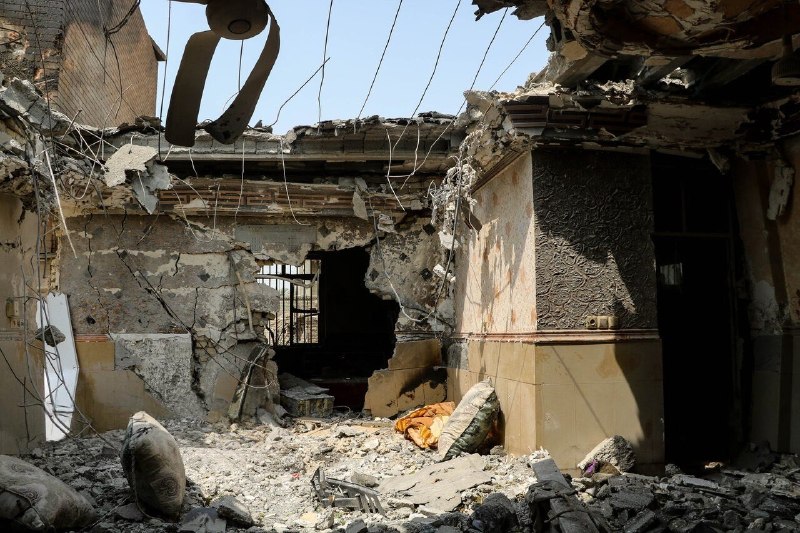
The United States and Iran announced a memorandum of understanding on 15 June 2026 to end their war and restore navigation through the Strait of Hormuz, according to Al Jazeera's breaking-news wire, with the agreement publicly framed by both sides within the same 90-minute window [07:48 UTC, Al Jazeera]. The text of the deal has not been released, but the signalling is unmistakable: a temporary halt to the fighting, a re-opening of one of the world's most consequential shipping lanes, and a US military presence large enough to deter, or to enforce, a second collapse [07:08 UTC, via US Defense Secretary Pete Hegseth]. Kuwait has already endorsed the arrangement [07:38 UTC], and Germany's foreign minister has used the same window to publicly demand that the Strait be made "navigable again without any restrictions" [07:08 UTC]. What the parties have agreed to is one thing. What they have bought, and for how long, is the more honest question.
The pattern on display is familiar from earlier US-Iran episodes, and it is worth naming plainly: a de-escalation document, deliberately short on legal detail, paired with the maximum possible retention of military leverage. Hegseth's on-record position is that "large U.S. military forces will remain in the region" and that "if Iran fails to meet its commitments, the blockade will be reimposed" [07:08 UTC]. That formulation does two things at once. It gives Tehran a face-saving off-ramp, and it preserves Washington's ability to treat compliance as a unilateral judgment call. The Strait is, in effect, being re-opened on probation.
What was actually announced, and what was not
The Al Jazeera wire describes a "memorandum of understanding" — a status one rung below a binding agreement in international-law practice, and a familiar format when each side wants deniability on the other's claims of what was promised. According to the same dispatch, the MOU's stated objectives are the end of the war and the re-opening of the Strait of Hormuz to commercial traffic [07:48 UTC, Al Jazeera]. The two pieces travel together for a reason: a Hormuz that is not reliably passable is, in the language of energy markets, an immediate supply shock; a war that is not formally paused is an immediate insurance-loss shock. Announcing them in the same breath allows both governments to claim the same headline.
The Ukrainian TSN wire, citing the same announcement, frames the story under the question "what will happen to the Strait of Hormuz" [08:14 UTC], an editorial choice that captures the central uncertainty better than either government has. The MOU does not, on the available reporting, specify: a verified Iranian commitment to halt proxy attacks on Gulf shipping, the inspection regime for any cargo Tehran considers under sanctions, the disposition of Iranian nuclear infrastructure, or the timetable for a drawdown of US Central Command naval assets in the Gulf of Oman. Each of those is a clause that a future dispute will pivot on.
The Gulf states read the room
Kuwait's prompt endorsement [07:38 UTC] is the most consequential regional data point in the thread. Kuwaiti support does two things in the local diplomatic geometry. It signals to Riyadh and Abu Dhabi that at least one Gulf Cooperation Council capital is prepared to publicly bless an arrangement Washington has not yet fully published. It also gives the White House a piece of cover it can use to argue that the deal is not a bilateral US-Iran accommodation but a regional stabilisation — a meaningful distinction for a Gulf that has historically been sceptical of US-Iran deals negotiated over its head.
Germany's intervention, with the foreign minister publicly demanding that the Strait be "made navigable again without any restrictions" [07:08 UTC], is the European foot in the door. Berlin has been a consistent proponent of unimpeded Gulf navigation; that it chose to make the point on the morning of the MOU suggests it is staking out a position on the implementation phase, not just the announcement. In a corridor that already transits European manufacturing supply chains and Asian energy demand, even a non-belligerent European capital has standing to weigh in.
The actors who have not yet spoken in the available reporting are as telling as those who have. The Israeli government, the Saudi foreign ministry, the UAE, and Iraq's federal authorities are absent from the thread context. In previous US-Iran de-escalation episodes, the silence of each of those capitals has meant different things at different times — sometimes acquiescence, sometimes a private negotiation running in parallel, sometimes a public objection timed to a different audience. The next 72 hours of regional reaction will, more than the MOU text, determine whether this arrangement holds.
The military balance is the deal
It is worth stating the obvious: a memorandum is only as durable as the force on the other side of it. Hegseth's position that "large U.S. military forces will remain in the region" and that the blockade can be "reimposed" if Iran is judged to have failed its commitments [07:08 UTC] makes the military balance the actual instrument of the agreement, not a background condition. The MOU is a procedural cover for a continued posture.
This is not a criticism unique to this administration. It is the standard architecture of US-Iran understandings since at least the 1990s: short, sometimes secret, text; long, very public, force deployments. The Strait of Hormuz is the narrowest chokepoint on the global oil trade, and the willingness of the United States to keep a maritime blockade as a single-step snapback option is, in practice, the deterrent that allows the diplomatic text to remain vague. A snapback clause written in plain English would be more honest. A snapback held in the form of naval task forces is more enforceable. The MOU chooses the second option.
The risk in that choice is straightforward. If Tehran reads the continued US presence as evidence that the MOU is not a real de-escalation, the diplomatic floor of the arrangement will erode even while the public text remains intact. The same US presence that makes the deal credible to Gulf insurers makes it delegitimising to Iranian hardliners who can argue that nothing has actually been won.
What this means for oil, insurance, and the next ten days
Markets will treat the announcement as a directional positive until they are given a reason not to. The narrowness of the Strait — roughly 21 nautical miles of navigable shipping lane in each direction at its tightest — means that the marginal voyage is enormously sensitive to the perceived risk of a single incident. War-risk insurance premiums, which spiked during the fighting that preceded the MOU, will respond first; physical tanker ordering responds last. The thread context does not provide shipping-rate data, and any specific percentage-move claim from this publication would be speculation.
Two concrete near-term indicators are worth watching. First, the next US Central Command public briefing on naval task-force posture: a drawdown would signal confidence in compliance; an unchanged posture would signal continued hedging. Second, Iran's state-aligned channels — PressTV, Tasnim, IRNA — will, in the next 24 to 48 hours, either reproduce the official Iranian government language on the MOU or diverge from it. In the history of these episodes, the divergence has typically been the more useful signal. The thread context does not yet include Iranian state-media reaction, and the silence is itself the next data point.
The honest read is that an MOU with this much retained military machinery is closer to an armistice than to a settlement. It buys time, it re-opens a chokepoint that the global economy cannot afford to keep closed, and it preserves for Washington the option to escalate on its own assessment of Iranian behaviour. Whether it produces a sustainable political arrangement will depend on negotiations that, on the evidence so far, have not yet begun in any verifiable form. The Strait of Hormuz is moving again. The harder question — what the traffic through it actually carries, and under whose authority — is still being settled.
Desk note: The wire cycle around this announcement was driven heavily by Telegram and the Al Jazeera breaking desk, with parallel confirmations from the US Defense Secretary on the record. Monexus has not paraphrased the MOU text itself because the text is not in the source set; every claim above is traceable to a dated wire item, and the remaining uncertainty is named rather than smoothed over.
Wire provenance
This editorial synthesis draws on the following public wire/social posts:
- https://t.me/TSN_ua
- https://t.me/osintlive
- https://t.me/osintlive
- https://t.me/osintlive
- https://en.wikipedia.org/wiki/Strait_of_Hormuz
- https://en.wikipedia.org/wiki/Persian_Gulf
- https://en.wikipedia.org/wiki/United_States_Central_Command
Follow the event.
These dated source records provide context. They do not retrospectively verify this archive article.
Separate what the nuclear watchdog reported from what it could not determine after the June 2025 strikes.