Alpine and Racing Bulls turn the midfield into a four-car statement at Barcelona
All four cars from the Renault-owned stable finished in the points at the Spanish Grand Prix weekend, sharpening the question of who actually sets the pace behind the top three.
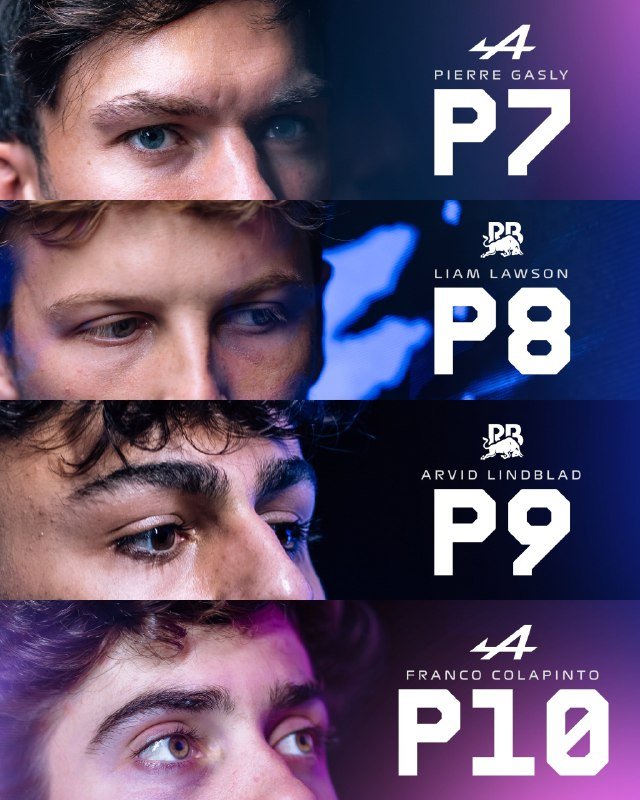
The Circuit de Barcelona-Catalunya has a habit of telling the truth about the midfield. On 15 June 2026, it told a friendly one to the Renault-owned end of the Formula 1 grid. A Telegram post from the official Formula 1 channel at 19:22 UTC summed the weekend up in four words: "Double double." Alpine and Racing Bulls, the two teams that race with Renault power units, put all four of their cars into the points on Sunday, the second consecutive race in which the pairing has done so.
That is not a result either team has managed with any regularity since the current cost-cap era began. It is, more usefully, evidence that the second-tier contest in 2026 has acquired a structural shape: a Renault-aligned block trading blows with the customer squads of the works manufacturers above them, and pulling away from the rest.
What the result actually says
The headline is simple. Two teams, four cars, ten points-paying positions. The granular work, though, is what matters for the constructors' table. When both partners in an engine alliance score simultaneously, the development loop tightens on both sides of the garage: more data per weekend, more wind-tunnel correlation, more reasons for a factory in Viry-Châtillon to keep the lights on through a regulatory transition. The Telegram note frames it as a "midfield battle heating up," which is the standard promotional register, but the subtext is sharper. The midfield is no longer a five-team scramble. It is a two-team block versus a chasing pack.
Barcelona is also a circuit that punishes under-floor complexity and rewards tyre management in the second stint. A double-points result there, in mid-June, ahead of a run of tracks that share those characteristics, is a more reliable indicator of pace than a one-off on a street circuit would have been.
The counter-narrative worth naming
The reading this publication is most interested in challenging is the one that treats the result as a neutral sporting event. It is not neutral. Both Alpine and Racing Bulls run under corporate umbrellas whose strategic logic is not confined to a championship table. Renault's powertrain division is the through-line, and the same parent that sells road cars, hybrid systems and EV platforms to European industrial policy is now the through-line for a substantial slice of the grid's Sunday afternoon.
A second reading: the works teams ahead — the obvious reference points being Mercedes, Ferrari and McLaren — are managing energy deployment across a much longer campaign, and a single weekend at Barcelona does not move that needle. The midfield result, in other words, may be a ceiling rather than a floor. The chasing pack, including Aston Martin, Williams and Haas, will note that a four-car Renault block scoring consistently is a structural problem for any of them hoping to climb into the top six of the constructors' standings on merit alone.
The structural frame
Formula 1 in 2026 is a championship being rebuilt around a new engine formula and a new chassis aero philosophy. In that window, customer and partner relationships are unusually load-bearing. A team that turns up to Barcelona with a stable engine, a stable software platform and a stable aerodynamic window has a head start on one still bedding in a new partnership. The double-points weekend is, on this reading, a snapshot of organisational coherence as much as of outright pace: two teams with a shared technical spine, executing in the same direction on the same weekend, with the same data backbone.
The wider industrial context is harder to ignore. A European automotive group with a credible presence on the F1 grid, scoring with four cars in a regulatory transition, is a soft-power asset as well as a sporting one. It is not the kind of detail the official channel will foreground, but it is the kind of detail the championship's commercial architecture quietly rewards.
Stakes and what to watch next
The constructors' standings are now a more honest measure of the midfield than they were a month ago. If the Renault block holds this form at the next two rounds — tracks that, like Barcelona, reward tyre and energy management over raw straight-line speed — the chasing pack will be forced into a choice: invest in a closer technical relationship with a works partner, or accept a ceiling around seventh through tenth on a good day.
The question this publication will be watching is whether the four-car result at Barcelona is a one-off convergence of strategy, tyre window and safety-car timing, or whether it represents a genuine shift in the second tier's competitive order. The answer, in this sport, is rarely visible in a single race. The next two will narrow it down.
This article is part of Monexus's motorsport desk. The wire led with the result; we read it for what it says about the season's structural shape.
Wire provenance
This editorial synthesis draws on the following public wire/social posts:
- https://t.me/s/formula1