The $3 billion math behind Apple's Beats buy, and why Cupertino paid up instead of building
On 7 June 2026, Jimmy Iovine and Eddy Cue sat down with Kara Swisher and walked through the line items of Apple's largest-ever acquisition. The answer to why buy instead of build is less about streaming and more about a headphone business that did $500M with no marketing budget.
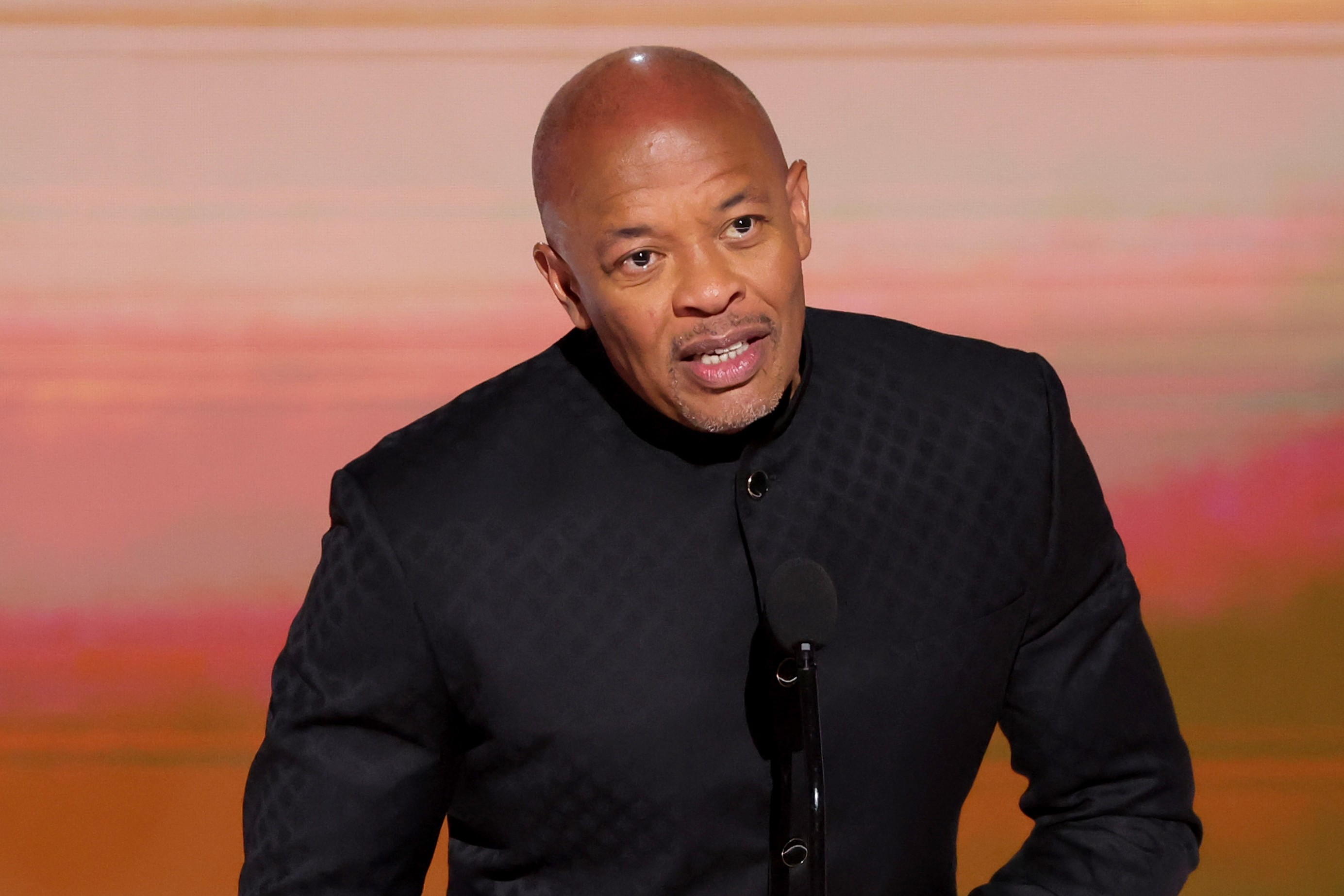
On 7 June 2026, two of the architects of Apple's most expensive acquisition walked a journalist through the line items. Jimmy Iovine, the 41-year record-industry veteran who had co-founded Beats Electronics and Beats Music, and Eddy Cue, Apple's senior vice president of internet software and services, sat down with Kara Swisher for the On with Kara Swisher podcast and methodically unpacked what the company was actually buying when it wrote a $3 billion cheque. The deal, announced in May 2026 and closed the same month, remains the largest single purchase in Apple's history — and Cue spent part of the interview pushing back on the framing that it represented a new posture for the company. Apple, he noted, had acquired 27 companies in the prior year alone. Beats was simply the biggest line item in an active, opportunistic M&A programme.
That framing, though, undersells what Cupertino was actually paying for. The Beats deal has been sold in the press as a streaming-music acquisition, the moment Apple admitted it had fallen behind Spotify and needed to buy its way into a subscription future. The Swisher interview makes the harder case: the streaming service was the smallest of the three things Apple was buying. The bigger line items were a hardware business that had scaled from five employees to 550 and a half-billion in annual revenue with zero paid marketing, and a talent roster — Iovine and Dr. Dre foremost among them — that Apple judged it could not have assembled organically for any reasonable price. The $3 billion, in other words, was a buy-versus-build decision. Cupertino calculated that the build would have cost more, taken longer, and arrived with weaker brand equity.
The $500 million headphone business nobody talks about
Start with the unit economics of Beats Electronics, the side of the company that rarely makes the front page. Iovine told Swisher that in its first three years Beats grew from a five-person shop to 550 employees and reached $500 million in sales — and did so with no marketing budget. The growth was fuelled by product placement in music videos, partnerships with athletes and recording artists, and what Iovine called "harnessing" media coverage rather than buying ads. A premium-audio brand that young consumers actually aspired to own had been built, in effect, on the cheap.
For Apple, that solves a problem the iPod and iPhone ecosystems never had to solve: how to sell an audio accessory at a 50% or 100% premium to a Bose or Sennheiser equivalent. Apple's house brand of earbuds had always been a commodity footnote — useful for unboxing videos, ignored thereafter. Beats gave Cupertino a premium brand with cultural permission to charge $300 for headphones, and an installed base of consumers who already trusted the red "b" logo. The retail channel alone — the Beats shelf in every Apple Store — was non-trivial, and the brand permission to occupy the high end of the category was, by any reasonable build-versus-buy calculation, worth a meaningful slice of the purchase price on its own.
250,000 paid subscribers, 5 million visitors, and a checkout bug
The streaming service, Beats Music, was the deal's public rationale and its most contested asset. Iovine put the early numbers on the record: 250,000 paying subscribers after three months of operation, against 5 million site visits that failed to convert. His explanation for the gap was unusually candid — Beats, he said, had "screwed up" the in-app purchase flow, burying the subscribe button on a second page in a way that killed conversion. The numbers that did convert, though, were competitive with the early-stage traction of subscription products that had since been valued in the billions. Iovine's read was that the product was working; the funnel was broken.
That diagnosis matters because it shapes how Apple valued the streaming asset. A service that converts 5% of visitor traffic at a $10 monthly price is a different asset from one that converts 0.5%. Iovine was effectively telling Swisher — and by extension, anyone modelling the deal — that the $3 billion price tag was not a multiple on 250,000 subscribers. It was a multiple on the subscribers Beats Music would have once the funnel got fixed, once it was distributed against Apple's 800 million iTunes and Apple ID accounts, and once it had access to Apple's hardware footprint. Cue underlined the distribution leverage: 800 million accounts is a payment-instrument, a marketing channel, and a discovery surface, and Beats Music would plug into all of it the moment the deal closed.
Why the algorithm alone can't carry the subscription
The most provocative thing Iovine said in the interview had nothing to do with Apple. It was a direct shot across the bow of the streaming industry's dominant business model. "A lot of this business, not just Spotify, all of it is being funded by venture capital people," Iovine told Swisher. "There's not a real business model underneath it. It's going to cave." The free, ad-supported tier of streaming, in his reading, was a venture-funded illusion propped up by massive advances from the major labels — advances that would eventually have to be recouped, and that would eventually retract. The economic model underneath the music was, in his phrase, missing.
Iovine's companion claim was sharper still. Spotify, he argued, "should have 10 million paying subscribers in America alone, not worldwide" — implying that the real measure of a streaming service was paid conversion, not gross free-tier scale. The implicit diagnosis is that the streaming wars, as currently scored, are measuring the wrong number. A service with 50 million free users and 10 million paid users is, by Iovine's accounting, healthier than a service with 100 million free users and 6 million paid. The valuation logic that the public markets have applied to streaming, in this view, is upside down.
His alternative is human curation. "Algorithms can't do the job alone," Iovine said — a sentence the Beats Music launch was built around. The curated playlist, the human editor who knows the difference between a song that's appropriate for a Saturday morning and a song that's appropriate for a Tuesday evening commute, was the differentiator. Whether or not that thesis holds at scale is an empirical question Apple is now uniquely positioned to test.
The 800-million-account distribution argument
Cue's half of the interview was the more conventional defence of the deal's logic, and it rested on a single number: 800 million. That was Apple's installed base of iTunes and Apple ID accounts at the time of the interview — the active payment relationships, the addressable audience for a subscription product launch. Beats Music, both men confirmed, would remain cross-platform after the acquisition, available on Android and Windows Phone as well as iOS, distinguishing it sharply from iMessage and FaceTime, which Apple kept inside its own ecosystem. The bet was not that Beats Music would win by being Apple-only; it was that Beats Music would win by being the best-in-class subscription product distributed against the largest payments footprint in consumer technology.
Cue also pushed back on the narrative that iTunes itself was collapsing. iTunes had crossed 35 billion songs sold in the week of the interview, he said — a number the press had stopped reporting because the download story was presumed dead. The rate had levelled off, but it had not fallen off a cliff, and the freemium iTunes Radio product had reached just over 40 million listeners in the US and Australia with international expansion planned. Apple's music business, Cue argued, was bigger than the obituaries suggested — and the Beats acquisition was layered on top of an existing operation, not a replacement for one.
What $3 billion actually justified
The arithmetic of the deal, set against Cue's framing, becomes clearer. The $500 million headphone business, multiplied by a reasonable hardware multiple, is worth a couple of billion on its own. The streaming service, with 250,000 paying subscribers and a fixable funnel, plus 800 million accounts of distribution leverage, plus a brand that had already proved it could move product on a celebrity-viral marketing budget of zero, justifies a second billion. The remaining billion is a talent and capability buy — Iovine, Dr. Dre, Trent Reznor and the Beats Music curation team, all of whom Apple would have struggled to recruit at any cost. The fact that Apple kept the Beats brand intact after the deal — unusual for a company that historically subsumes acquired products into its own lineup — is the tell. The brand was a load-bearing asset, not a marketing liability to be retired.
The strategic question the interview doesn't fully answer is whether Iovine's bet on curation, and his warning about venture-subsidised free streaming, will age well. The free tier has, in the decade since, contracted; subscription has won the format war. Whether the winning subscriptions are the algorithmic ones or the curated ones is the empirical contest the Beats acquisition put Apple at the centre of. The $3 billion was the entry fee. The argument about whose model wins is just getting started.
The structural pattern
What the interview reveals, beneath the deal mechanics, is Apple's mature posture toward its own constraints. The company had been told for two years that it had missed streaming. Cue's response was that Apple had acquired 27 companies in the prior year, and the Beats deal was simply the most expensive one — not a strategy shift but a continuation. The reason the Beats purchase got done and the streaming rebuild did not is that the build was, in Apple's calculation, the more expensive option once talent scarcity, brand permission, and time-to-market were priced in. The interesting question is not whether the $3 billion was a good price. It is whether Apple's competitors can run the same calculation and reach the same conclusion — or whether the window for buying your way into a category with this kind of capital efficiency has, like the Beats retail shelf, already closed.
Wire provenance
This editorial synthesis draws on the following public wire/social posts:
- https://www.youtube.com/watch?v=B0dQeUHsILk