Araghchi puts Israel and Hezbollah on notice: any attack makes them parties to the Iran-US framework
Iran's foreign minister says the first phase of negotiations is over, that Friday marks the start of official implementation, and that any Israeli strike on Lebanon or continued occupation will be treated as a breach of the memorandum by both Israel and Hezbollah.
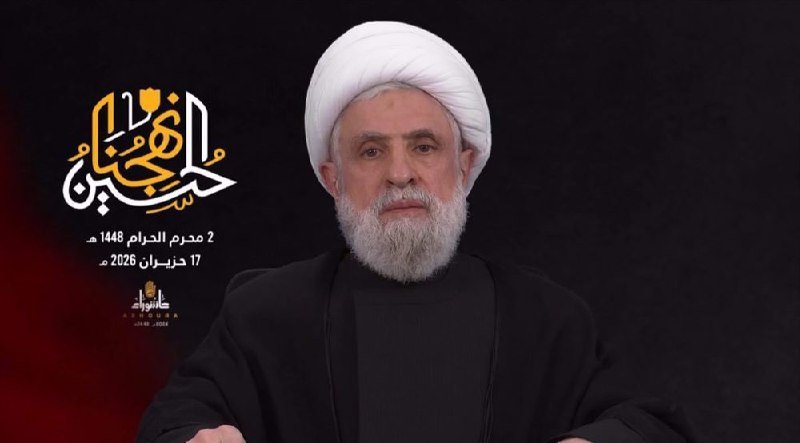
Iranian Foreign Minister Abbas Araghchi set the terms of a new diplomatic phase on 16 June 2026, telling state-aligned outlets that Israel and Hezbollah are now co-parties to the memorandum of understanding signed with the United States, and that any Israeli military action on Lebanon, or any continued occupation of Lebanese territory, will be treated as a violation of that document. Speaking from the start of an ambassadors' consultation meeting in Tehran, Araghchi said the first phase of Iran-US negotiations has concluded and that Friday will mark the beginning of official implementation of the framework. The remarks, transmitted by Iran's Tasnim News Agency and by Hezbollah-aligned outlet Al Mayadeen among others, put Washington and Tehran in the unusual position of jointly underwriting a guarantee that extends to a non-state actor — Hezbollah — over the territory of a third state, Lebanon.
What Araghchi is describing, in plain terms, is a sequence: negotiations between Iran and the United States have produced a written understanding, the first stage of which is complete, and the implementation of which is now a matter of days away. The unusual feature is the explicit designation of two non-signatories — Israel and Hezbollah — as parties whose conduct will be measured against the document. Iran is, in effect, making the ceasefire in Lebanon a condition of the wider deal, and binding the Lebanese front to the Iran file rather than treating it as a parallel track.
The sequencing Tehran is selling
The Iranian account, as relayed by Tasnim and by The Cradle Media, runs as follows. The negotiations between Iran and the United States were divided into two phases because of the dimensions of the regional war. In the first phase, after roughly three months of talks from the middle of the war, the two sides reached a memorandum of understanding. The second phase — a final agreement — will now be negotiated separately, with a new round of talks beginning on Friday. Araghchi told ambassadors that "the official implementation of the memorandum of understanding will begin on Friday" and that "the end of the war on the Lebanese front is one of the basic requirements of the Iran agreement."
That sequencing matters because it changes the unit of analysis. The Western wire frame tends to treat the Iran file and the Lebanon file as adjacent but separable: a nuclear-and-sanctions track on one side, an Israel-Hezbollah track on the other, each with its own mediators, timelines and pressure points. Araghchi is collapsing them. The Lebanese front, in his telling, is a load-bearing pillar of the wider arrangement, not a residue of it. Without a quiet border in the south, the framework does not function. That is also why Tehran is willing to name Hezbollah as a party to be bound by the memorandum — the concession is not being given by Hezbollah to Iran, it is being made by Iran on Hezbollah's behalf, in exchange for Israeli restraint.
What Araghchi actually said about Israel and Hezbollah
The most pointed language came in two formulations. The first, reported by Al-Alam and by Abu Ali Express, holds that "any military attack by the Zionist regime on Lebanon from now on and continued occupation of Lebanese territory" will be treated as a breach of the framework, with Israel and Hezbollah both designated as parties. The second, reported by War Forum Witness from the same address, frames the war in Lebanon as "an integral part of the complete end of the war" — meaning that an unfinished Lebanese file means an unfinished war.
The Cradle Media's headline summary captures the political geometry: "Araghchi: US, Israel on one side, Iran, Hezbollah on the other in ceasefire framework." The phrasing is notable. It does not describe four equal parties to a quadrilateral; it describes two pairs. On one side, the United States and Israel. On the other, Iran and Hezbollah. The memorandum is the rule the two pairs have agreed to operate within. The question the address poses — and does not resolve — is what happens when one pair decides the other has broken the rule.
The counter-narrative from Tel Aviv and Washington
The Iranian framing is not the only one in play. Israeli officials have consistently maintained that operations in Lebanon are conducted on the basis of national security decisions, not in coordination with — or in deference to — a third-party understanding with Tehran. The standard Israeli line is that the right of self-defence is non-negotiable, that Hezbollah's disarmament is the operative objective, and that any framework that preserves Hezbollah's military status quo is, by definition, insufficient. From that vantage point, a memorandum that elevates Hezbollah to the legal status of a co-party — even rhetorically — is a concession dressed up as a constraint.
The American position, as reported across the regional press in recent weeks, has been to keep the two tracks separate enough to negotiate each one. A single document that conditions the Iran file on the Lebanese file, and that names Hezbollah as a party, is a different architecture than the one Washington has historically preferred. The structural risk for the United States is that any Israeli action in Lebanon — even a limited one — now carries an explicit Iranian veto. The structural risk for Iran is that, by tying the deal to Hezbollah's behaviour and to Israeli restraint simultaneously, Tehran has handed itself two failure modes rather than one.
The most plausible alternate read of Araghchi's address is that it is calibrated for a domestic Iranian audience and for Hezbollah's leadership rather than for Washington. Reading the address as signalling, the language performs two functions at once: it tells the Iranian public that the negotiation has produced a written outcome worth defending, and it tells Hezbollah that Tehran has secured its standing inside that outcome. Whether the signal survives contact with Israeli and American decision-making is a separate question, and one the address does not attempt to answer.
What remains uncertain
The most consequential missing piece is the text of the memorandum itself. Iranian-aligned outlets describe its contents; no Western wire has published the document or confirmed its specific provisions on the Lebanese front. Without that text, the question of what "any military attack" or "continued occupation" actually triggers — a return to negotiations, a sanctions snap-back, a military response, a quiet suspension of cooperation — cannot be answered from open sources. The framing suggests a graduated response, but the sources do not specify a mechanism.
A second uncertainty is the relationship between Friday's "official implementation" and the second-phase final agreement. Araghchi's remarks treat the start of Friday as a discrete event, but it is not clear from the reporting whether that means a ceremony, a text exchange, a working-group convening, or a unilateral Iranian announcement. The Western wire coverage available does not specify. A third uncertainty is the role of the Lebanese state itself, which is the sovereign on whose territory the ceasefire is supposed to operate and which has not, in the source material, been designated a party in the same explicit way Israel and Hezbollah have been.
Stakes over the next 72 hours
The immediate operational window is short. If Friday is the implementation date, the practical question is whether the Lebanese front stays quiet long enough for the framework to be tested at all. A single Israeli strike inside Lebanon, even a tactical one, would force Iran to choose between enforcing the framework — and thereby exposing its leverage — and absorbing the violation, with the cost that absorbs inside the wider negotiation. The diplomatic arithmetic favours restraint on all sides. The military arithmetic, particularly in the south, has not historically been a slave to diplomatic arithmetic, and the sources do not indicate that any of the parties has offered a public commitment to operational silence.
The wider pattern this event sits inside is the gradual migration of regional security questions out of bilateral state-to-state channels and into documents that bind non-state actors alongside them. That is not a new development, but the explicit naming of Hezbollah as a party — in an Iran-United States memorandum — formalises a status that has, until now, been handled by indirection. The next 72 hours will say more about whether the architecture is real than the previous 72 hours of televised addresses have.
This publication framed the story around the Iranian reading of the document because the address and the memorandum are being released by Tehran, while reserving the Israeli and American counter-position as a structural counter-weight in the section that follows. The Lebanese state's absence from the explicit party list is treated as an open question rather than a finished omission.
Wire provenance
This editorial synthesis draws on the following public wire/social posts:
- https://t.me/tasnimnews_en
- https://t.me/TheCradleMedia
- https://t.me/wfwitness
- https://t.me/wfwitness
- https://t.me/alalamfa
- https://t.me/JahanTasnim
- https://t.me/abualiexpress
Follow the event.
These dated source records provide context. They do not retrospectively verify this archive article.
Separate what the nuclear watchdog reported from what it could not determine after the June 2025 strikes.