Bangladesh's $3.2bn bank bailout and BlackRock's quiet right-sizing: a tale of two balance sheets
Dhaka is spending 400 billion taka to keep its banks alive while the world's largest asset manager trims 200 roles and prepares a Bitcoin-income ETF — two balance-sheet stories that say something about where capital feels safe in mid-2026.
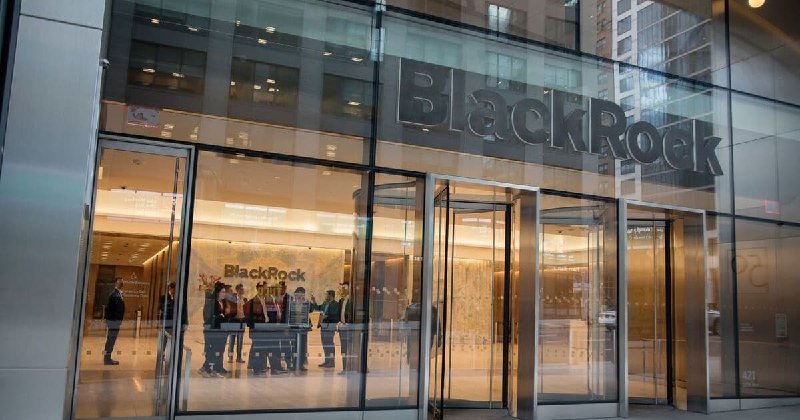
On 16 June 2026, two balance-sheet stories hit the wire within hours of each other, and read together they sketch an uncomfortable picture of the global financial order. In Dhaka, the government of Bangladesh earmarked 400 billion taka — roughly $3.2 billion — in its next budget to recapitalise a banking sector groaning under non-performing loans. In New York, BlackRock, the world's largest asset manager, began a fresh round of cuts trimming roughly 200 roles across its investment and private-credit businesses, the latest move in a multi-quarter right-sizing cycle. The same morning, a smaller item crossed the wire: BlackRock's spot-Bitcoin income ETF is set to begin trading on Nasdaq on 16 June. The juxtaposition is the story.
Bangladesh is not a peripheral market. It is the world's second-largest garment exporter, a country of more than 170 million people whose manufacturing base underpins a meaningful share of European and North American retail supply chains. The decision to deploy 400 billion taka in emergency support reflects how exposed Dhaka has become to a familiar emerging-market pattern: state-owned commercial banks loaded up on loans to politically connected industrial groups, those loans soured, and the regulator has been left holding the bag. The Nikkei Asia reporting is clear that the money is meant to keep the banks functioning, not to fix the underlying lending culture. That distinction matters.
A bailout without a reform
The mechanics are well-rehearsed. Capital injections in Bangladesh's commercial banking sector have historically followed a familiar script: the state tops up balance sheets to keep the payment system running, regulatory forbearance is extended to borrowers who happen to be politically wired, and the structural causes — directed credit, weak supervision, board capture — are parked for another budget cycle. Nikkei Asia's reporting is explicit that the 400 billion taka package is being framed as a confidence measure, not a clean-up. The word "reforms" sits in the headline and then disappears from the body of the announcement. That is itself a tell.
There is a counter-narrative worth taking seriously. Bangladeshi finance ministry officials and sympathetic domestic commentators will argue — and have argued in past budget cycles — that the country needs breathing room to let growth do the heavy lifting, and that a clean-up now would strangle credit to the very export manufacturers the government is trying to protect. That position has intellectual weight: the IMF's own reviews of banking crises in Korea, Indonesia, and Thailand in the late 1990s noted the social cost of moving too fast. The honest read is that Bangladesh is somewhere between these positions, leaning toward the soft option because the political economy of state-owned banks makes a hard option unaffordable in an election year. The package is a holding action, and holding actions are the most expensive kind of policy because they compound.
BlackRock's quiet contraction
The other side of the wire tells the opposite story. BlackRock is not bailing anything out. It is contracting on its own terms. The 200 roles being eliminated across investment and private credit, reported by Crypto Briefing on 16 June 2026, are part of a rightsizing cycle that has been running since at least 2024 across the asset-management industry — Vanguard, State Street, and several large hedge fund complexes have all trimmed headcount as fee compression on passive products and a slower deal pipeline in private credit squeezed margins. BlackRock's position is unique only in scale: it is the firm that turned index investing into infrastructure, and when infrastructure firms trim, the message is that the easy money is gone.
Two qualifications matter. First, BlackRock is not shrinking in revenue terms — its assets under management continue to grow, and the firm remains the dominant voting shareholder in most large U.S. public companies. The 200 roles are a margin move, not a strategic retreat. Second, the firm is simultaneously pushing into product categories that did not exist five years ago. A spot-Bitcoin income ETF trading on Nasdaq is a vote of confidence in the institutionalisation of digital assets by the single most important gatekeeper of institutional capital. The Crypto Briefing wire on 15 June 2026 noted the ETF was set to launch the next day; the launch itself, if it occurred on schedule, will draw regulatory attention and possibly fresh SEC commentary. None of this contradicts the layoff story. The two stories are the same story: mature asset management is consolidating its core and harvesting the new asset class on the side.
What the structural pattern says
Set the two stories side by side and a familiar pattern comes into view. In Dhaka, a sovereign borrower is using public money to absorb private losses. In New York, a private capital manager is using a labour-market correction to protect margins while extending into a new product. The capital is moving in the same direction it has moved for the better part of two decades — toward balance sheets that can clear their own books, and away from balance sheets that cannot. Bangladesh's 400 billion taka is, in effect, a payment by a low-income sovereign to a banking system whose creditors include foreign commercial banks and whose depositors include the Bangladeshi middle class. BlackRock's 200 layoffs are a payment by an employer to its own cost base, with the savings accruing to shareholders and to the firm's capacity to launch products like a Bitcoin income ETF.
This is not a moral claim. It is a description of where capital feels safe in mid-2026. The dollar-based financial architecture that emerged after 2008 has worked extraordinarily well for the institutions at its centre; it has worked less well for the sovereigns on its periphery. Dhaka's recurring banking crises are a structural feature of that asymmetry, not an accident. The same wire that reports on Bangladesh's $3.2bn support package also reports on the U.S. government transferring $349,000 in cryptocurrency assets the same day — a rounding-error line item next to a sovereign bailout, but a reminder that the architecture itself is being re-tokenised at the edges.
What the next budget cycle will tell us
Two things to watch. First, whether Bangladesh's finance ministry couples the 400 billion taka with a credible resolution framework for the non-performing loans themselves — asset management companies, write-downs, board changes at the state-owned banks — or whether the money goes in and nothing else changes. The Nikkei Asia reporting suggests the latter is the more probable path, which would mean the package is a down payment on a larger crisis in 2027 or 2028. Second, whether BlackRock's rightsizing extends into its private-credit franchise in a way that signals a broader retreat from direct lending, or whether the 200 roles are the last cut before the firm pivots to growth. The launch of the Bitcoin income ETF will be a useful tell: if the vehicle attracts meaningful AUM in its first 90 days, the institutionalisation of crypto as a yield-bearing asset class is no longer a prediction but a settled fact.
The honest uncertainty here is that the Bangladeshi package and the BlackRock layoffs are not formally connected. A bank's balance sheet in Dhaka and an asset manager's headcount in New York are linked only by the global financial system that intermediates between them. The connection is structural, not transactional. The sources reviewed for this piece do not specify whether any of the Bangladeshi banks receiving support have exposure to BlackRock products, nor whether the trimmed private-credit roles touch emerging-market lending. Those links may exist; they may not. What can be said with the available sourcing is that the two announcements, taken together, describe a system in which capital is concentrating at nodes that can clear their own books, and in which sovereigns that cannot are being asked to pay the difference.
How Monexus framed this: the wire treats the Bangladesh story as a regional banking item and the BlackRock story as a U.S. asset-management item. Read together, with the Bitcoin income ETF as the connecting tissue, they describe a single global pattern — and that is the framing the desk has put on the page.
Wire provenance
This editorial synthesis draws on the following public wire/social posts:
- https://t.me/NikkeiAsia
- https://t.me/nikkeiasia
- https://t.me/CryptoBriefing
- https://t.me/CryptoBriefing
- https://t.me/CryptoBriefing