Cape Verde's 0-0 draw with Spain is the World Cup's loudest small-country statement
A nation of roughly half a million held Europe's pre-tournament favourites to a goalless draw. The result, more than the result alone, is the story.
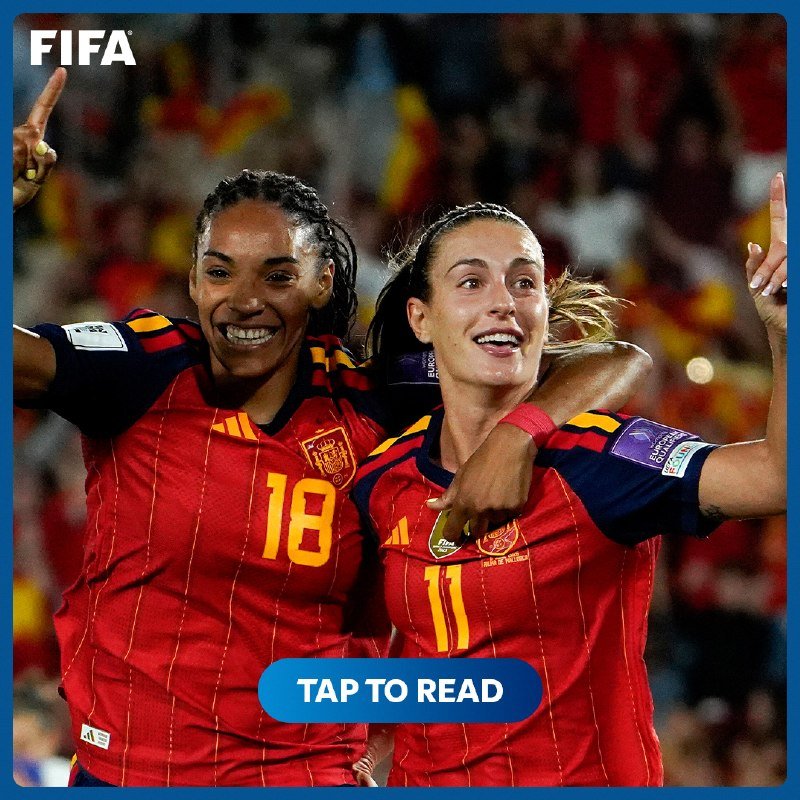
On 15 June 2026, in a stadium somewhere on the eastern seaboard of the United States, a country smaller than most European cities walked out against Spain and left with a point. The Cape Verde Islands — an archipelago of around ten inhabited islands off the West African coast, with a population of roughly half a million — held Luis de la Fuente's La Roja, one of the pre-tournament favourites, to a 0-0 draw. The final whistle was treated, in the words of one African football channel, less as a point earned and more as a tournament won. The framing is hyperbolic; the underlying result is not.
The draw is the loudest single result of the World Cup's opening week, and the easiest to misread. It is not, on the evidence, a tactical upset in the classic sense — Spain did not capitulate, and Cape Verde did not simply absorb pressure. It is, more accurately, a marker of how the global game's centre of gravity has shifted: a small African federation that did not even have a senior national team before 1976, and that has qualified for the World Cup only twice in its history, has become structurally competitive with a European power whose football budget dwarfs its entire GDP.
A point, not a fluke
Cape Verde's draw sits inside a Day 5 of the tournament defined, in the recap carried by The Indian Express, by an unusually high number of stalemates. The newspaper's headline — Cape Verde deny mighty Spain on historic day of draws — captures the framing. "Deny" is the operative verb. It is the language of an African side taking initiative against a European opponent, not the language of a side parking the bus and praying.
That distinction matters. In the 21st century, African national teams have built a habit of reaching World Cups and then writing themselves out of the script by conceding late. Cape Verde's profile under their current manager is different. The federation's player base is drawn from a diaspora anchored in Portugal, the Netherlands, France and Italy, where a generation of Cape Verdean-heritage professionals has come through top European academies. The talent is not imported; the networks are. The country is now exporting footballers the way it once exported migration.
What the result is, and what it is not
The temptation, particularly in European press, is to read the 0-0 as a Spanish failure: a stalled attack, a tactical misread, a star forward who did not turn up. The Indian Express's recap does not lean on that frame; the African football channel that carried the news on 16 June 2026 likewise framed the result as Cape Verdean achievement rather than Spanish collapse. Both readings are partial.
Spain under de la Fuente have been, in qualifying and in the lead-up tournaments, among the most possession-dominant sides in the world. A 0-0 against them in a World Cup group game is, in cold football terms, the kind of result that smaller federations dream of for decades and rarely execute. The reading that does the work of explaining it is structural: Cape Verde's squad is, on most metrics of the 2025–26 European club season, in the second tier of African sides, and a clear tier below the continent's traditional powerhouses. That they are now drawing with Spain is the consequence of a decade of federation-building, a credible coach and a generation of players who learned their football in the academies of Porto, Lisbon, Amsterdam and Marseille.
The geopolitics of the small flag
The reading worth resisting is the romantic one. Cape Verde is not, despite the celebratory tone of the African football press, "the next Iceland." Iceland's 2018 run was a national project; the country's football infrastructure was rebuilt, at enormous relative cost, around a single qualifying campaign. Cape Verde's model is closer to Ghana's a generation ago: a diaspora that turns migration into a talent pipeline, and a federation disciplined enough to hold the pipeline together.
This is also where the result carries weight off the pitch. The 2026 World Cup, expanded to 48 teams, has given smaller African federations a more realistic route to the group stage than they have ever had. Cape Verde's qualification, and their behaviour once there, is a usable argument in favour of the expansion. The counter-argument — that expansion dilutes the field, lengthens the tournament and produces more draws — is real, but Day 5 has not, on the evidence, produced an obviously fraudulent result. Cape Verde against Spain is not dilution. It is a small federation using the slot it earned.
What the result does not yet prove
The honest reading is that one 0-0 does not yet move Cape Verde from "plausible knockout-round side" to "dark horse." The group stage has only just begun. Spain have not yet had to play from behind against Cape Verde, and the Spanish bench, by most pre-tournament assessments, is the deeper one. A draw earned in the opener can become a point dropped in the third game if the manager misreads the table.
There is also a question the available reporting does not answer. The Indian Express recap treats the result as a clean defensive performance. The African channel's framing treats it as a celebration. The two frames are not mutually exclusive, but they are not the same. The honest version is that the 0-0 was, in all probability, both: a disciplined defensive showing, and a federation's confirmation that it now belongs on this stage. Either reading alone understates what happened in the stadium. Together, they are closer to the truth.
Desk note: Monexus has read the result as a Cape Verdean achievement rather than a Spanish failure, on the principle that small-federation breakthroughs at the World Cup are more often the consequence of a decade of federation-building than of a single European side underperforming. The wire recap published by The Indian Express supports that reading; the African press coverage carries the same framing. Where the two diverge is in tone — the Indian Express keeps it clinical, the African channel allows the celebration. Monexus has erred toward the celebratory without abandoning the structural explanation.
Wire provenance
This editorial synthesis draws on the following public wire/social posts:
- https://t.me/myLordBebo