Drone strike hits Moscow oil refinery as Ukraine widens long-range campaign
A drone struck the Kapotnya refinery in southeast Moscow in the early hours of 16 June, the latest in a deepening Ukrainian long-range campaign that is now reaching the Russian capital's fuel supply.
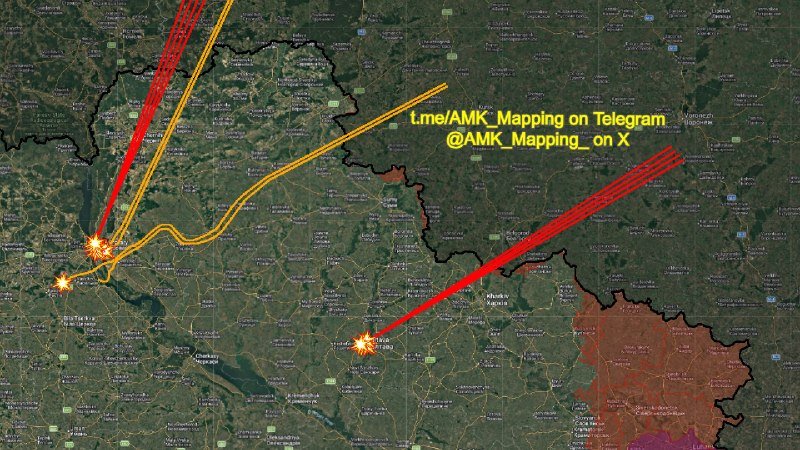
A drone struck an oil refinery in Moscow's Kapotnya district in the early hours of 16 June 2026, setting the facility ablaze and pushing Ukraine's long-range campaign deeper into the Russian capital's fuel supply chain. The strike was reported by Iranian state broadcaster Press TV at 06:30 UTC and corroborated within minutes by Ukrainian war correspondent Andriy Tsaplienko, who published what he said was footage captured by residents of high-rise buildings overlooking the plant. A channel affiliated with Ukraine's Armed Forces claimed the refinery meets roughly 40 percent of Moscow's gasoline demand and 50 percent of its diesel demand, and is the principal supplier of fuel to the capital's airports.
The Kapotnya strike is the most consequential single hit on Moscow's fuel infrastructure since the campaign of long-range Ukrainian drone attacks began targeting Russian energy assets, and it lands at a moment when Russia's refining sector is already running close to seasonal limits. The Kremlin has framed Ukraine's deepening reach as terrorism; Kyiv frames it as legitimate strikes against the logistics that bankroll an invasion. Both framings are now part of the daily information contest around the war — and the underlying numbers, as much as the rhetoric, will shape what comes next.
What was hit, and why Kapotnya matters
The Moscow refinery in Kapotnya is one of the four largest processing facilities in the Moscow region and a critical node in the fuel logistics of central Russia. According to a Telegram channel associated with Ukraine's Armed Forces, the plant provides roughly 40 percent of Moscow's gasoline and 50 percent of its diesel, and serves as the main fuel supplier for the capital's airports. Independent confirmation of those specific percentages was not available in the immediate aftermath, and Russian officials had not, as of the latest reports on 16 June, published a full damage assessment.
The strike matters less for any single refinery than for the cumulative pattern it extends. Russian domestic fuel prices have been creeping upward through 2026 as Ukrainian long-range drones and missiles have chewed into refining throughput. Moscow has responded with intermittent export curbs and quiet redirection of product from Black Sea and Baltic terminals to the domestic market. A serious disruption at Kapotnya would, on the face of the claim from the Ukrainian-affiliated channel, compress a fuel market that is already being managed by administrative hand.
The counter-narrative from Moscow
The Kremlin's framing of strikes on Russian soil has hardened over the course of the war. Ukrainian drones reaching the Moscow region are routinely described by Russian officials as attempts to terrorise the civilian population, and Russian air defences claim near-daily interceptions. Press TV's report of the Kapotnya fire — sourced ultimately from Russian state-aligned channels — should be read in that light: the fire is real, but the political framing attached to it is part of an established Russian information line designed to keep the war legible to a Russian audience as aggression directed at the homeland, not as a contest over battlefield logistics.
The Western wire consensus, where it has engaged with the strike pattern at all, has tended to treat Ukrainian long-range strikes inside Russia as a legitimate response to an invasion — a position consistent with the broader international-law framing of Ukraine as the invaded party. The two framings are not symmetrical: one is a claim about legality, the other a claim about moral effect on a domestic audience. Both need to be on the page because both are doing real work.
The structural frame: a grinding, year-round logistics war
What is unfolding is a slow, attritional contest over fuel, not a single dramatic exchange. Ukraine's domestic drone industry has scaled to a point where producing and launching long-range one-way attack drones is now a routine battlefield output, and Russian refineries, rail hubs, and ammunition plants are the named targets. Russia, for its part, has run a sustained strike campaign against Ukrainian power infrastructure and, more recently, Ukrainian fuel storage — with the same intent of compressing the adversary's logistics.
The result is a war in which neither side can plausibly claim sanctuary for its economic hinterland. That is a strategic shift from the opening phase of the invasion, when Russian refineries operated almost untouched. It is also a shift with second-order effects that are easy to miss: insurance markets for Russian energy assets, the cost of capital for Russian midstream operators, and the willingness of foreign buyers to take long-dated contracts on Russian petroleum products are all being repriced, even when a given strike's direct damage is contained.
Stakes and what to watch next
If the Kapotnya strike has done meaningful damage to throughput, the near-term signal will appear in Russian wholesale fuel prices, in any tightening of the informal export ban that Moscow has used periodically in 2026, and in movement at airports serving the capital. Russian refineries have absorbed previous strikes by drawing on strategic reserves and re-routing crude from sister facilities, and the system has, so far, bent rather than broken.
Three things to watch in the next seven to ten days: official Russian statements on fuel supply to the Moscow region; the cadence of further Ukrainian long-range strikes on refining and storage infrastructure; and whether NATO capitals adjust their public framing of the strikes — a shift that would, in turn, signal a more permissive operational envelope for Kyiv. The deeper question is whether the cumulative pressure on Russian refining starts to bite hard enough to constrain Moscow's ability to fund the war from energy receipts. That is the metric the campaign is ultimately aiming at, even if no individual strike decides it.
Desk note: wire reporting on overnight strikes inside Russia remains fragmented. Where independent verification was not available on 16 June, Monexus has flagged the claim rather than smoothed it over — in particular the specific share of Moscow's gasoline and diesel supply attributed to the Kapotnya plant, which originates with a Ukrainian-affiliated channel and awaits independent confirmation.
Wire provenance
This editorial synthesis draws on the following public wire/social posts:
- https://t.me/presstv/
- https://t.me/Tsaplienko/
- https://t.me/operativnoZSU/
- https://en.wikipedia.org/wiki/Moscow_Oil_Refinery
- https://en.wikipedia.org/wiki/Russian_strikes_against_Ukrainian_infrastructure_(2022%E2%80%932026)
Follow the event.
These dated source records provide context. They do not retrospectively verify this archive article.
Separate what the nuclear watchdog reported from what it could not determine after the June 2025 strikes.
A dated voting record is evidence of one decision. Use the original UN record before turning it into an alignment label.
Visual explainer · historical vote of 2022-03-02 →