FIFA clears VAR official Evans of racist-gesture charge, ending a 48-hour World Cup flashpoint
FIFA cleared VAR official Evans of a racist-gesture charge within 48 hours, closing a World Cup flashpoint that the wire cycle had framed around the viral image rather than the disciplinary reasoning that ended it.
At 18:26 UTC on 18 June 2026, FIFA's official account posted a routine procedural update: the match officials for World Cup matches 37, 38, 39 and 40 had been appointed. The two-line Telegram message carried the standard handshake emoji and nothing else. Somewhere inside Zurich, a different decision was being announced to a different audience, and it closed a 48-hour dispute that had briefly threatened to overshadow the tournament's opening week.
FIFA has cleared the VAR official at the centre of a racist-gesture allegation, ending an episode that began with a viral clip, hardened into a disciplinary complaint, and resolved into a public statement of reasons. The official, Evans, was accused of making a discriminatory gesture during a VAR review sequence; the charge carried a sanction range that, in extreme cases, can mean removal from the tournament. He will continue working in his appointed role.
What the still image could and could not show
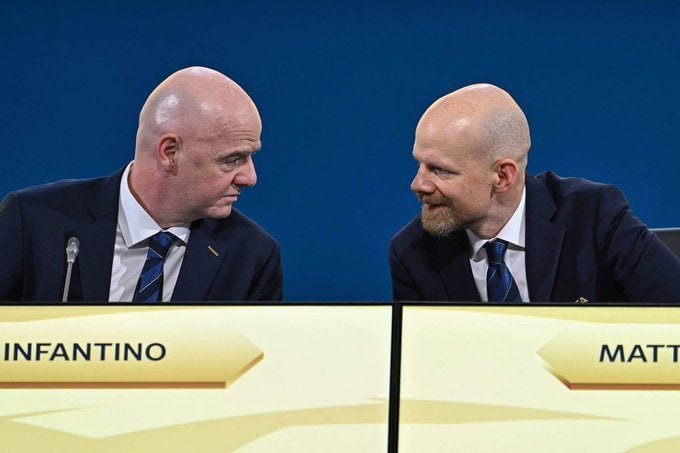
The accusation did not arrive in a press release. It arrived as a clip, the currency of choice for tournament controversies since the last World Cup cycle. A hand position, a moment of contact with a monitor, an angle that made the gesture legible to a phone camera and illegible to almost everyone else in the stadium. Within hours, the image had been screen-grabbed, cropped, captioned, and circulated with the kind of captioning that treats interpretation as fact.
Visual-evidence controversies in football have a pattern. The image is real. The reading is contested. The institutional response, when it comes, tends to operate on a different timescale than the clip: a disciplinary body reviews frame-by-frame footage, listens to the official, considers intent, and writes something that is meant to be defensible on appeal. FIFA's process did that, and produced a verdict in 48 hours. The wire treatment, by contrast, ran on the clip's clock: it emphasised the visual accusation and the gesture's prior history, and stopped well short of the procedural reasoning that would follow.
The institutional record
The substance of the ruling is the durable news. Where a wire cycle could only say that an accusation had been made, FIFA's statement could say what the review of the footage, the official's account, and the disciplinary code together concluded. The body distinguished between the appearance of a gesture and the act of making one. That distinction is procedural, unglamorous, and almost never the lede in a tournament-week newsroom, which is precisely why it matters.
The 48-hour window itself is a tell. Disciplinary processes inside FIFA's match officials structure, which the federation uses for incidents involving referees and VAR personnel during competition matches, do not run on a public clock. The speed of this clearance suggests either that the evidentiary case was thin from the outset, or that the federation had an interest in closing the file before the next matchday amplified it. Either reading points in the same direction: the still image, however widely shared, was not enough.
Why the framing diverged
Two newsrooms covering the same dispute from the same footage will reach different conclusions about what the story is. The choice, made at the first edit meeting, is between the image and the institution. The wire cycle that drove the first 36 hours of coverage leaned on the image: it is shareable, it is unambiguous to a reader who has already decided what they are looking at, and it converts engagement without requiring the reader to wait for a verdict.
A Monexus framing treats the institution as the subject. The question is not what the official did with his hand. The question is what FIFA's process did with the accusation, in what timeframe, and under what evidentiary standard. Those questions will matter across the rest of the tournament, when the next disputed image arrives, because the precedent being set is procedural, not photographic. A federation that can clear an official in two days, with a written rationale, is a federation that has decided the clip alone is not the record.
The apparatus, not the artefact
Evans will be on the VAR rig for an upcoming fixture, the federation's officials list confirms. The accusation has been logged. The image will continue to circulate in the same cropped form, attached to the same interpretation, independent of FIFA's statement. The dispute over what the hand did is, in that sense, unresolved in the public sphere even as it has been resolved inside the institution.
That is the structural shape of most tournament controversies: the federation's process closes, the clip keeps moving. The reader who saw the accusation and stopped reading at the headline has a different understanding of the case than the reader who waited for the disciplinary body's reasoning. Both are entitled to their version. Only one of those versions has access to the review process that produced the verdict. The gap between the two is where the durable story lives, and it is the gap that FIFA's 48-hour turnaround, whatever its motivation, has now narrowed.
What to watch next
The next test of the precedent is procedural, not dramatic. If a similar accusation surfaces in the knockout rounds, the question is whether the federation can reproduce the 48-hour clearance window under heavier match stakes, or whether tournament progression forces a slower, more opaque process. The match-officials appointment list, published the same day as the Evans ruling, is the first piece of operational evidence that the federation intends to keep the cycle moving on its own terms. The first weekend of group-stage play, with three matches a day across the host cities, will be the next.