FIFA markets host-city jerseys as World Cup 2026 retail cycle enters final stretch
A limited host-city jersey drop on 16 June 2026 closes FIFA's collector phase for the 2026 tournament, turning 11 host cities into a single national merchandising proposition weeks before kickoff.
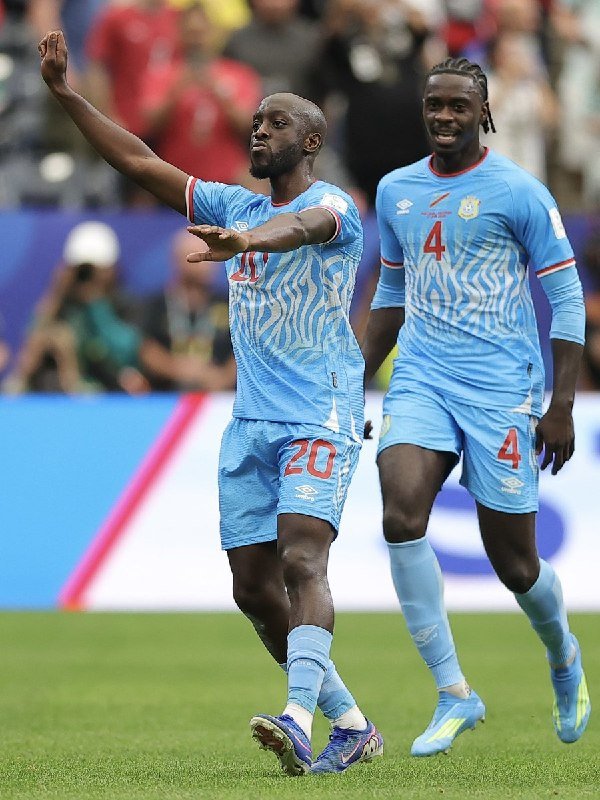
On 16 June 2026, at 14:03 UTC, FIFA pushed the same six-word pitch to two of the most-watched channels in international sport: "FINAL DROP: limited-edition FIFA World Cup 2026™ jerseys." The Telegram post, distributed via FIFA's official channel and amplified by The Athletic's, frames the release as the closing move in a host-city merchandising cycle that has run for most of the year, and positions the jerseys as "collector exclusives" tied to the cultural identity of the 11 host cities that will stage matches from 11 June 2026 onward.
The pitch is short. The economics behind it are not. A "final drop" label converts a soft launch — a long-tail retail cycle running across the spring and early summer — into a forced decision point for buyers. FIFA is signalling that the host-city line will not be replenished once the stock advertised on 16 June sells through, and it is doing so in the same week that national-team kits, training wear and stadium editions have been moving at scale through federation stores, league outlets and tournament retail partners across the United States, Canada and Mexico.
What FIFA is actually selling
The thread copy, distributed through FIFA's verified Telegram channel and The Athletic's, describes the items as "limited-edition" pieces that "honor the bold cultures that make these Host Cities legendary." That language is deliberate. The 2026 tournament is the first to use 11 host venues spread across three countries — Atlanta, Boston, Dallas, Houston, Kansas City, Los Angeles, Miami, New York/New Jersey, Philadelphia, San Francisco Bay Area and Seattle in the United States, with Guadalajara, Mexico City and Monterrey in Mexico, and Toronto and Vancouver in Canada. FIFA has spent the build-up tying each shirt to the local visual vernacular of the city it represents, a marketing structure that mirrors the way the 1994 and 2010 tournaments used national symbols to give global merchandise a local handle.
The collector framing does two jobs. It pushes the price point above a standard replica shirt — limited runs justify a premium SKU — and it manufactures scarcity in a market where replica jerseys are already commoditised by global sportswear partners. For buyers, the implied promise is that the design tied to, for example, the Atlanta jersey will not return once this drop is closed. For FIFA and its commercial partners, the "final drop" tag is a clean way to wind down a long-tail release before the tournament shifts attention to the on-pitch competition, national-team replica sales, and the match-worn memorabilia market that tends to spike once the first ball is kicked.
The retail cycle the drop closes
Host-city merchandise has been the most visibly marketed non-team product of the 2026 build-up. Federation and tournament retail partners have run phased releases since 2025, each one timed to a ticketed milestone — host-city confirmations, group-stage draws, schedule releases and visa-related fan-travel advisories. A "final drop" on 16 June 2026 lands roughly a year after the first wave of host-city shirts went on sale, and roughly a week before the tournament's 11 June opener shifts the marketing mix from collector purchase to live event.
This is the structural pattern: limited apparel runs function as a pre-tournament sales accelerant because the demand curve for tournament-adjacent merchandise peaks in the four to six weeks before kickoff, when media coverage intensifies, casual fans move from awareness to purchase, and corporate buyers stock up for hospitality programmes. Labelling the 16 June release as "final" does not necessarily mean the product line ends there — tournament-overruns and re-issues are common in FIFA's commercial history — but it does compress the remaining purchasing window for buyers who want a specific city design.
The counter-read: scarcity is a marketing choice, not a capacity constraint
The obvious counter-narrative is that "limited edition" is a sales lever rather than a production fact. Apparel runs are scaled to demand forecasts months in advance; the label is applied at the marketing stage, not the factory floor. A buyer who misses the 16 June drop may well find the same shirt on the secondary market at a markup within weeks, particularly for the most distinctive city designs. FIFA's commercial partners have an incentive to keep the host-city line culturally resonant beyond the tournament window, because collector resale is itself a marketing channel — it keeps the design in circulation long after the on-pitch product is forgotten.
There is also a distributional question. Host-city pricing in the host countries tends to be set in a band that places these shirts above standard replicas and well above the entry-level training wear that most casual buyers in the United States, Mexico and Canada reach for first. A drop that closes the official retail window tends to push marginal buyers into secondary marketplaces, where prices drift upward and the primary licensee loses the margin. The dominant framing — "collector exclusivity" — is, on this read, a polite description of price discrimination between committed fans and casual ones.
What the drop tells us about the tournament commercial stack
Read alongside the rest of FIFA's pre-tournament signals, the 16 June jersey release is a small but legible data point. It confirms that the host-city line has been treated as a discrete merchandising track running in parallel to the national-team kit cycle, and that FIFA is willing to compress that track into a labelled "final" window before the tournament starts. The 11 host cities, in this reading, are not just venues; they are sub-brands inside the broader 2026 commercial stack, each given a distinct visual identity and a finite retail life. The closing of that retail life on 16 June is the marketing operation's way of converting the host-city thread into a clean archival line — one that can be referenced, reprinted and resold for the duration of the tournament and, if the 1994 pattern holds, for the collector cycle that runs years beyond the final in 19 July 2026.
Stakes and what remains unclear
For FIFA, the bet is straightforward: that the host-city framing, closed out cleanly on 16 June, gives the 2026 tournament a permanent retail artefact that survives the on-pitch product. For the host cities, the bet is that the design chosen to represent them — and the volume of collector demand it generates — translates into a measurable tourism and brand-equity dividend over the next decade. For buyers, the immediate question is whether the designs marketed on 16 June are genuinely limited, or whether the same shirts will surface on a tournament-overrun list later in the summer.
The thread context does not specify the unit count, the per-market pricing, or the licensee structure for the 16 June drop. The source material confirms the existence of the release, the channel distribution (FIFA and The Athletic Telegram posts at 14:03 UTC) and the collector framing, but the granular commercial data — retail partners, geographic allocation, expected sell-through window — is not contained in the wire inputs. The story, in other words, is closed on the marketing beat and open on the commercial ledger.
Desk note: Monexus framed the 16 June drop as a closing move in a year-long host-city merchandising cycle rather than as a standalone retail event, on the view that the structural significance sits in the cycle, not the SKU.
Wire provenance
This editorial synthesis draws on the following public wire/social posts:
- https://t.me/FIFAcom
- https://t.me/TheAthletic