Mines in the water: a Hormuz deal takes shape, but the tanker trade is not out of the woods
A reported arrangement to reopen the Strait of Hormuz cut US petrol below $4 a gallon, but the world's biggest tanker operator warns transit will take weeks to normalise and the US President concedes mines may still be drifting in the water.
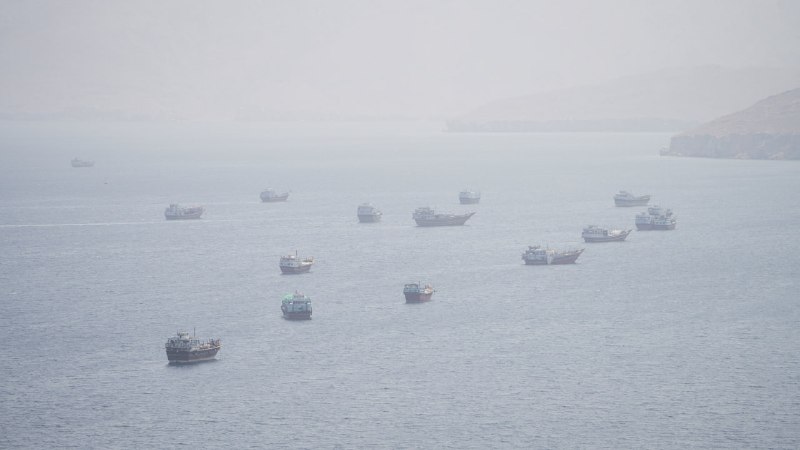
On the morning of 16 June 2026, the arithmetic of a global energy shock began to bend back the other way. The Financial Times reported that the world's largest tanker operator had privately told clients that, even on the most optimistic reading of a freshly announced arrangement to reopen the Strait of Hormuz, normal transit would take "weeks" to resume, not days. Reuters carried the same FT reporting in the prior hour. The market had been bracing for a slow recovery. Then it got one — sort of. Within hours, the American petrol price slipped back below the symbolic $4-a-gallon mark, an outcome that, in any normal week, would be the lead on the business page and nothing else. This is not a normal week. By the evening of 15 June, the US President had publicly acknowledged that "a couple of mines" might still be adrift in the waterway, leaving the world's most consequential oil chokepoint simultaneously reopening, contested, and undelivered.
This is a story about a corridor, and corridors do not get to be ambivalent. Roughly a fifth of seaborne crude, plus a meaningful share of liquefied natural gas, transits Hormuz on any given day. When that lane closes, even briefly, freight rates do not just rise — they detach from the marginal cost of moving a barrel and start pricing the chance of the lane staying closed. The reopening matters less for what it is than for what it replaces: the fear that the lane is permanently compromised, which is the price that does the most damage to the global economy and the least to compensate producers.
The picture as of 16 June is best read in three frames, none of them comfortable.
A deal, with a tail
The first frame is the deal itself. The US and Iran have, on this reading, reached the outline of an arrangement under which Iran steps back from the active harassment of commercial traffic in the strait and Washington loosens a portion of the sanctions pressure that has been tightening for months. The mechanism is not on the page; the FT report that filtered through Reuters and the Polymarket tape on 15 June described the consequences — falling pump prices, a calmer futures curve — without publishing the text. That is normal for this kind of deal, and it is also the problem. Markets, like ships, move on what they can see, and what is on view here is a price reaction rather than a treaty.
The second frame is the engineering. The tankers were always going to be the bottleneck. Even after mines are cleared, the world's largest tanker operator has signalled that transit will take weeks to normalise — a phrase that, in shipping, means rerouting vessels, re-issuing insurance, re-staffing crews who were dispersed when the lane was hot, and re-bidding port calls that were cancelled mid-cycle. None of that is mysterious, and none of it is fast. The Reuters dispatch on the morning of 16 June carried the warning in plain terms: weeks, not days. That is the gap between the headline of a deal and the moment a barrel actually lands in a European refinery.
The third frame is the US President's own caveat. On 15 June, the President told reporters that there may still be "a couple of mines" in the water, a sentence that did two things at once. It lowered the temperature — by acknowledging that the mine threat is finite and visible — and raised the premium on the unknown. A chokepoint is only as open as the next vessel in the queue can verify. The same press appearance that confirmed the deal in principle also confirmed, in the President's own words, that the threat had not been fully lifted.
The other half of the picture
The Western wire line is straightforward: a destabilising closure has been resolved, markets have re-priced, the consumer is better off by roughly thirty cents a gallon overnight. That is the lead on most of the morning's news flows, and it is not wrong. It is, however, incomplete.
The Iranian side, in this construction, is being read as the party that blinked. The closure was, on the dominant Western framing, an act of economic coercion designed to force a sanctions concession — and the concession, when it came, was the price of reopening. There is genuine evidentiary support for that reading: tanker traffic did fall, insurance did spike, the futures curve did bend in ways consistent with a sustained, politically driven shock.
The counter-reading is more uncomfortable. The same chokepoint that Iran can squeeze is the same chokepoint that the United States, on any honest map of naval deployments, can squeeze harder. The sanctions architecture that the deal loosens is, in the Iranian framing, the underlying cause of the confrontation: a closure that is best understood not as aggression but as leverage, applied by a state that has fewer and less efficient tools available to it than the country that built the order it is pushing against. The closing of a corridor, in this view, is what an asymmetric actor does when the symmetric instruments have been taken off the table. That reading does not make the closure any less costly to third-party shippers. It does make the moral arithmetic of the deal more complicated than a single market reaction can capture.
A third view, increasingly common in Global South commentary, treats the episode as another data point in a longer pattern: the energy security of the world outside the Hormuz littoral is hostage, in real time, to the bilateral relationship between Washington and Tehran. A deal that opens the lane without changing the structural condition — that the lane can be closed again on the next escalation, by either side — is a settlement of the immediate dispute, not a settlement of the underlying vulnerability. A vulnerability that repeats tends, over time, to find its way into the construction of new infrastructure: pipelines that bypass the strait, refineries built closer to source markets, and reserve policies that price in the next closure rather than the last one. Those are slow, capital-intensive adjustments, and they are how the world eventually prices in the fact that the strait can be, and now has been, switched off.
The structural reading, in plain language
The most consequential energy shocks of the past half-century have not been caused by the absence of oil. They have been caused by the absence of a guarantee that the oil in question will move. The 1973 oil shock was a production cut wrapped in a political decision; the 1979 shock was a revolution that closed production; the 1990 Gulf shock was a physical blockade in the same waters that are back in the news this week. In each case, the price did not reflect the loss of barrels so much as the loss of confidence that the remaining barrels would reach the dock.
What is happening in the strait in June 2026 is recognisably the same pattern, with a different cast and a more crowded field. The closure did not arise from a producer choosing to leave barrels in the ground. It arose from a political dispute over who gets to determine which ships move through which corridor, with the disruption to the global supply chain as the disputed terrain. The deal, when it holds, will not return the world to the pre-shock baseline. It will return the world to a baseline that prices in the fact that the shock happened. That is a more expensive baseline, in shipping rates, in insurance premia, in strategic petroleum reserves, and in the political weight carried by countries that sit on the corridor or on the alternative routes.
The structural shift is also visible in the market reaction itself. The fall in the US petrol price below $4 a gallon was sharp enough to read as a single, discrete event — the deal landing — but the relief was not uniform. Diesel and jet fuel, which price off the same crude but with thinner inventories, did not fall as far. Asian benchmarks, which price off a different mix of grades, did not fall as fast. The deal, in other words, was a North American consumer event with global supply-chain aftershocks. The lane is the same lane. The markets downstream of it are not.
What is genuinely at stake
If the deal holds, the immediate winners are legible: American consumers at the pump, European and Asian importers relieved of the worst-case tail, the Iranian state recouping some access to oil revenues, and the shipping industry returning to a recognisable operating environment. The losers are the marginal refiners and the developing-country importers that funded the spike, and the shippers and crews who absorbed the worst of the closure while the deal was being negotiated.
If the deal does not hold — and the President's own caveat about mines still in the water, however casually delivered, is the reason the word "if" is doing real work in that sentence — the stakes are not symmetric. Iran can absorb a renewed closure politically in ways that a US administration facing an election cannot. A second closure, even a brief one, would also harden the case for the long, slow infrastructure rewiring that the first closure only began: alternative pipelines, more strategic reserves, deeper diplomatic hedging by major Asian importers. The next time the lane closes, the world will close around it differently. That is what the deal, if it lasts, is buying: time. Time for which the bill will come due in the next round of capital allocation, in the next insurance cycle, in the next port that decides to build redundancy rather than trust the corridor.
The honest reading is that the corridor is open, the deal is real, the mines are not all accounted for, and the transit will not be normal for weeks. None of those statements contradict the others. All of them are sourced. The market is pricing the first two. Insurance markets are pricing the third. The shipping industry is living the fourth. The only question that matters — and it is the question the morning's reporting does not answer — is whether the underlying condition that allowed the lane to be switched off in the first place has been addressed, or merely deferred.
This publication treated the reopening as a discrete event with structural causes, rather than as a market story followed by a foreign-policy story. The wire led with the pump price. The shipping industry is leading with the mine count, and the two tells are not the same.
Wire provenance
This editorial synthesis draws on the following public wire/social posts:
- http://reut.rs/4uOdsso
- https://x.com/reuters/status/4uOdsso