The Vanishing APC: How an IDF Decoy and a $300bn US-Iran Deal Are Reshaping Lebanon's Battlefield and Washington's Ledger
A remotely detonated Israeli armoured vehicle in southern Lebanon has become the visual shorthand for an information war — and a $300 billion reconstruction proposal is now at the centre of Washington's push to keep the buffer zone intact.
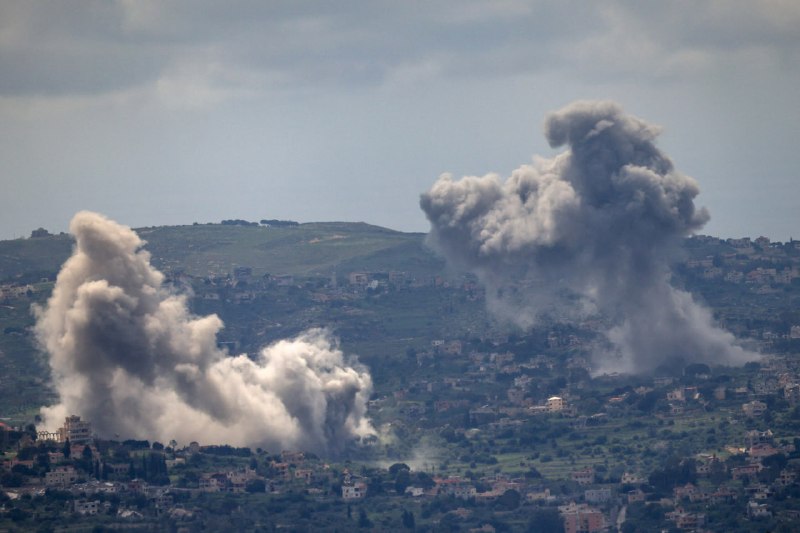
On the morning of 16 June 2026, residents of a southern Lebanese village posted a short, jubilant clip: an Israeli armoured personnel carrier, they claimed, had been struck and immobilised by "the resistance." Within hours, the same clip — circulated first by the Telegram channels @englishabuali and @abualiexpress — carried a different caption. The vehicle, both channels reported, was not an active troop carrier at all. It was an unmanned Israeli decoy, loaded with explosives and triggered remotely the moment fighters approached, in order to kill or wound them. The frame that looked like a battlefield trophy was, on this telling, a trap.
What makes the episode more than an oddity of information warfare is the diplomatic weather around it. On 15 June, Prime Minister Benjamin Netanyahu said publicly that Iran had pressed Israel to withdraw from the Lebanon buffer zone, and that the request had been refused. The same day, a separate report surfaced suggesting that a prospective US-Iran deal under discussion in regional back-channels could include a reconstruction package for Iran valued at roughly $300 billion. A remotely detonated decoy in one valley, and the financial architecture of a Middle East settlement in another, are now part of the same conversation. The two threads are connected by a single question: what does Israel keep, what does it concede, and what does Tehran get in return for not pushing harder?
A battlefield engineered for the camera
The southern Lebanon front has been, since the November 2024 ceasefire, a place where kinetic events are carefully choreographed for two audiences — Lebanese domestic opinion and Israel's northern border residents. The decoy story fits that pattern. A vehicle left exposed along a known route, broadcast as a kill, then revealed as a booby-trap: each version serves a constituency. For Hezbollah-aligned media, the original claim sustains a narrative of continued capability; for the IDF, the corrected version is itself a deterrent, signalling that any approach to Israeli positions is being watched and weaponised.
The mechanics are not new. Remotely detonated armoured decoys, sometimes called "explosive APCs" in Israeli military parlance, are part of a broader playbook in which uncrewed platforms are used to bait an enemy into a kill zone. Their value is twofold. Operationally, they conserve soldier lives. Informationally, they weaponise the act of filming: any cell phone footage of a strike is, if the target turns out to be a decoy, itself a piece of Israeli messaging. The channels that first carried the corrected framing — @englishabuali and @abualiexpress — are openly critical of the armed groups that claimed the original "kill," which suggests the corrected account is being pushed to puncture, not flatter, the local resistance narrative. The contested object is not the vehicle; it is the story.
The episode also complicates a familiar press reflex. Western wires tend to report Israeli military actions in southern Lebanon through the IDF's own after-action statements; Lebanese and pan-Arab outlets tend to report the same incidents through the lens of the armed groups operating in the villages. A decoy straddles the two: it is an Israeli tactical innovation that the Lebanese camera documents as a triumph, and that Israeli spokespeople then reframe as a failure for the people who approached it. Neither framing is wrong; neither is complete.
The buffer zone and what Iran asked for
The diplomatic backdrop matters because the decoy did not appear in a vacuum. In a statement reported on 15 June 2026, Netanyahu said that Iran had pushed for an Israeli withdrawal from the Lebanon buffer zone and that "that didn't happen." The buffer zone — the strip of southern Lebanese territory where Israeli forces have continued to operate under the terms of the November 2024 arrangement — has been the single most contested piece of geography in the eight months since the ceasefire. Israel's position, restated by the prime minister, is that the zone remains non-negotiable until the Lebanese state demonstrably disarms the militia infrastructure north of the Litani.
Iran's reported request, as paraphrased by the prime minister, is straightforward: take your troops back across the line. The Israeli refusal, equally straightforward, is that no such withdrawal will occur while the armed groups north of the border retain rocket, drone, and anti-tank capability. Between those two positions sit the villages where this week's decoy was filmed. The Israeli tactical posture inside the buffer zone is not, on this reading, a residue of unfinished war; it is a deliberate bargaining chip.
This is also where the second piece of the picture enters. On 15 June, the same 24-hour window in which Netanyahu spoke, reporting surfaced indicating that a US-Iran deal under negotiation could include a $300 billion reconstruction fund for Iran. The figure, if accurate, is roughly comparable to the cumulative value of Iranian state spending on regional proxy networks over the past decade — a sum large enough to recast the regional balance of payments around Tehran, and large enough to give Washington a lever that has nothing to do with Lebanon directly.
A $300 billion lever and what it actually buys
A reconstruction fund of that scale, even on the slow timetable of US-Iran negotiations, would do several things at once. It would refill Iranian state finances at a moment when sanctions enforcement and oil export constraints have thinned them. It would give Tehran the fiscal space to either continue or wind down its regional posture depending on which political faction in Tehran prevails. And it would give the United States a continuing interest in Iranian compliance — a financial architecture that, like the 2015 Joint Comprehensive Plan of Action, ties American and Iranian state interests together through ledgers rather than treaties.
For Lebanon specifically, the calculus is indirect but real. Iran's leverage over Hezbollah's posture in the buffer zone is the principal pressure point that has kept the post-November 2024 ceasefire from collapsing. A reconstruction package tied to Iranian restraint in Lebanon — never publicly named in such terms, but structurally implied — would be the financial twin of the buffer-zone refusal Netanyahu described. Israel keeps the troops in place; Iran keeps the funds flowing; Hezbollah keeps the line frozen. The villages in the south become the price of an arrangement that is, in aggregate, larger than Lebanon itself.
The structural pattern is familiar from earlier Middle East settlements. The 1979 Egyptian-Israeli peace was anchored by US aid commitments scaled to Cairo's strategic alignment. The 1994 Jordanian-Israeli peace carried an attached US economic package of similar logic. The current draft appears to extend the same model in a different direction: not aid to a peace partner, but aid to a sanctioned rival in exchange for the rival's restraint. The novelty is the scale and the adversary.
What the sources leave unresolved
Two uncertainties sit on top of this picture, and this publication wants to name them plainly. First, the $300 billion figure is reported as a component of a deal under discussion, not as a concluded commitment. Reporting of this kind, particularly when it first surfaces in the regional back-channels that have historically carried Israeli and Gulf leaks, is often a negotiating position dressed as a fact. The figure should be read as a marker of how much the parties think the settlement is worth, not as a number already on a treasury spreadsheet.
Second, the contested APC in southern Lebanon is, on the available sourcing, a real object — a remotely detonated Israeli decoy — and a real event. But the field record here is thin: the two Telegram channels cited above are the only direct sources for the corrected framing, and neither has been independently corroborated by a wire service in the materials available to this publication. The most that can be said with confidence is that an uncrewed, explosive Israeli decoy operating in the southern Lebanese buffer zone is consistent with the Israeli military's stated doctrine and with the post-ceasefire pattern of engagements in the area. The full operational record of the incident — how many people approached the vehicle, what the casualties were, whether the device functioned as designed — is not yet in the public record.
The decoy, in other words, is a small, sharp image of a much larger negotiation. Israel is broadcasting that the buffer zone is defended not just by soldiers but by traps designed to be filmed. Iran is signalling, through the reported reconstruction fund, that it has the financial leverage to wait. The United States is positioned as the broker whose dollars decide which side of that line the next year falls on. Until those three signals resolve into a single text — a deal document, a withdrawal announcement, or a renewed exchange of fire — the villages of southern Lebanon will keep producing images, and the cameras will keep producing stories, and the decoys will keep blowing up on cue.
This publication framed the southern Lebanon incident through the corrected Israeli account carried by @englishabuali and @abualiexpress, and contextualised it against Netanyahu's 15 June statement on Iran's buffer-zone request and the reported $300 billion US-Iran reconstruction package. Wire services had not, as of publication, carried independent on-the-ground reporting of the specific decoy incident.
Wire provenance
This editorial synthesis draws on the following public wire/social posts:
- https://t.me/englishabuali
- https://t.me/abualiexpress
- https://x.com/polymarket/status/1921142000000000001
- https://x.com/polymarket/status/1921142000000000002
- https://t.me/englishabuali
- https://t.me/abualiexpress
Follow the event.
These dated source records provide context. They do not retrospectively verify this archive article.
Separate what the nuclear watchdog reported from what it could not determine after the June 2025 strikes.