The Indian Express wires that tell you more about modern India than the think-pieces do
Four small stories — a missing woman, a research breakthrough, a worried diabetic, a marathon runner's heart attack — say more about contemporary India than most long-form coverage dares to.
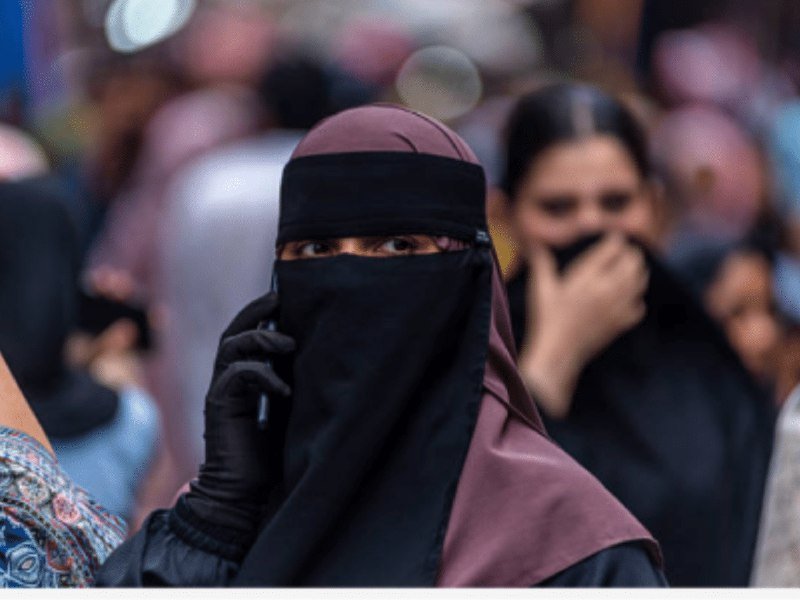
On 16 June 2026, between 02:52 UTC and 04:52 UTC, the Indian Express's newswire moved four dispatches across Telegram that, taken together, sketch a country with extraordinary self-confidence and equally extraordinary anxiety. A grandfather in some unnamed town broke down on camera defending his granddaughter's career. Korean researchers claimed to have cracked the shimmer of ancient sea silk. A reader with an A1C reading of 7.7% asked how worried to be. A marathon runner whose blood pressure, blood sugar and cholesterol all read normal suffered a heart attack anyway. None of the four is, on its own, a story. Read in sequence, they are a portrait.
The pattern is not sentimental. It is structural. India's English-language press has, over the last decade, learned to function as a clearing house for the contradictions of a society that is simultaneously industrialising, ageing, professionalising and digitising — sometimes inside a single family, sometimes inside a single body. The wire that surfaced at 04:52 UTC, carrying the grandfather's lament that his granddaughter "didn't have a godfather, she had work," is the most legible of the four. It is a quiet repudiation of the patronage economy that the country's new professional class claims, in surveys and earnings calls, to have left behind. The wire is silent on the industry in question, on the location, on the grandfather's name; those are the Indian Express's editorial decisions, not this publication's to second-guess. But the sentence itself is doing work that a thousand op-eds on meritocracy cannot.
The Korean research piece, moved at the same 04:52 UTC timestamp, sits oddly in an Indian news feed, and that oddness is the point. Sea silk — a textile drawn from the filaments of pen shells in the Mediterranean, prized in antiquity for an iridescence that no modern loom has reproduced — was "recreated" by a Korean team, the wire reported. The Indian Express ran the story because Indian readers are interested in heritage science even when the heritage is not their own, and because any claim of material reproduction matters to a textile economy that still treats hand-loom quality as a national asset. The structural frame is straightforward: research power has decentralised, and Indian readers now consume Korean, Chinese and Japanese laboratory breakthroughs with the same attention they once reserved for MIT. That is the same pattern visible in the country's chip-design and pharmaceutical generics industries — competence is no longer a Western monopoly, and the press has stopped acting as if it were.
The two health wires, moved at 02:52 UTC, are where the picture hardens. The first frames a clinical case — A1C of 7.7%, fasting glucose of 152 mg/dL — and asks the question that an estimated 100 million Indians with pre-diabetes or diabetes ask their doctors, their chatbots and, increasingly, news sites, every week. The Indian Express's answer, by publishing the question and inviting experts to respond, is to treat the reader as a patient and a citizen at the same time. The second wire, reporting a marathon runner whose routine markers were all normal and who nonetheless had a heart attack, performs the same function in reverse. It tells the fitness-conscious middle class — the cohort that buys smartwatches, pays for half-marathons, and posts its morning HRV graphs — that the body is not an engineering problem, and that medical authority still has things to say that the wrist cannot. Both stories run on the same editorial engine: a question, a partial answer, an invitation to the reader to read further. It is the modern Indian newspaper's version of the village well.
The counter-narrative, worth naming, is that none of these wires is, in the strict sense, news. The grandfather's interview is human interest; the sea-silk piece is a research round-up; the health items are service journalism. Critics — and there are many in India's English-language commentariat — will say that the Indian Express's wire has been pulled, like much of the global press, towards the soft middle: stories that drive engagement without demanding verification, that flatter the reader's self-image without disturbing it. That critique is not wrong. But it misses the larger function the wire performs. In a media environment where television news is increasingly captured by political patrons, and where regional-language papers are stretched thin, the English wire is one of the few national spaces in which an Indian reader can encounter a Korean science result, a personal medical dilemma and a working-class grandfather's grief on the same morning, in the same tone of voice, and be trusted to draw the connections unaided.
The structural frame, in plain terms, is the slow normalisation of a country that no longer asks the West to translate the world for it. Indian readers consume Korean materials science with the same appetite as Bollywood gossip. They post their own A1C numbers in comment sections and argue about HbA1c cut-offs with a fluency that would have been unthinkable fifteen years ago. They are also, the marathon-runner wire suggests, learning the limits of quantification — the lesson that a body is more than its biomarkers, and that medicine retains an authority the quantified-self movement cannot abolish. None of this is unique to India. But the speed at which all four currents are running in the same news feed on the same morning is.
The stakes are modest on any given day and considerable over a decade. If the Indian press continues to perform this clearing-house function credibly — translating Korean science, dignifying working-class grief, demystifying medicine, and doing all of it in a register the reader trusts — the country's democratic conversation has a foundation that several peer societies are losing. If it drifts further towards engagement-optimised soft content, or if it is captured by the political patrons who now fund large slices of Indian television, that foundation thins. The grandfather's sentence — she had work — is, in the end, a demand on the press as much as on the economy: a demand to be taken seriously as a country of labour, not a country of fate. The wire that carried it has, on the evidence of one morning's output, decided to answer.
What remains uncertain is whether the pattern is sustainable. The four wires do not specify circulation, paywall conversion, or advertiser mix. They do not say how many of the readers who clicked the A1C story are the same readers who clicked the marathon-runner piece, or whether the grandfather's interview travelled beyond the Telegram channels that carried it. Indian media research is thin enough that the empirical answer to those questions is, for the moment, a matter of inference rather than measurement.
Desk note: this publication has taken four unrelated Indian Express wires from a single UTC window and read them as a single editorial artefact, on the working assumption that a newsroom's output is itself a form of reporting on the society it serves. The Indian Express is not a party to the argument.