Indonesia shakes again, and the aid architecture shakes with it
A 6.7-magnitude quake off Indonesia on 16 June 2026 forced hospital evacuations and reignites a familiar question: who actually shows up when the ground moves, and on whose terms.
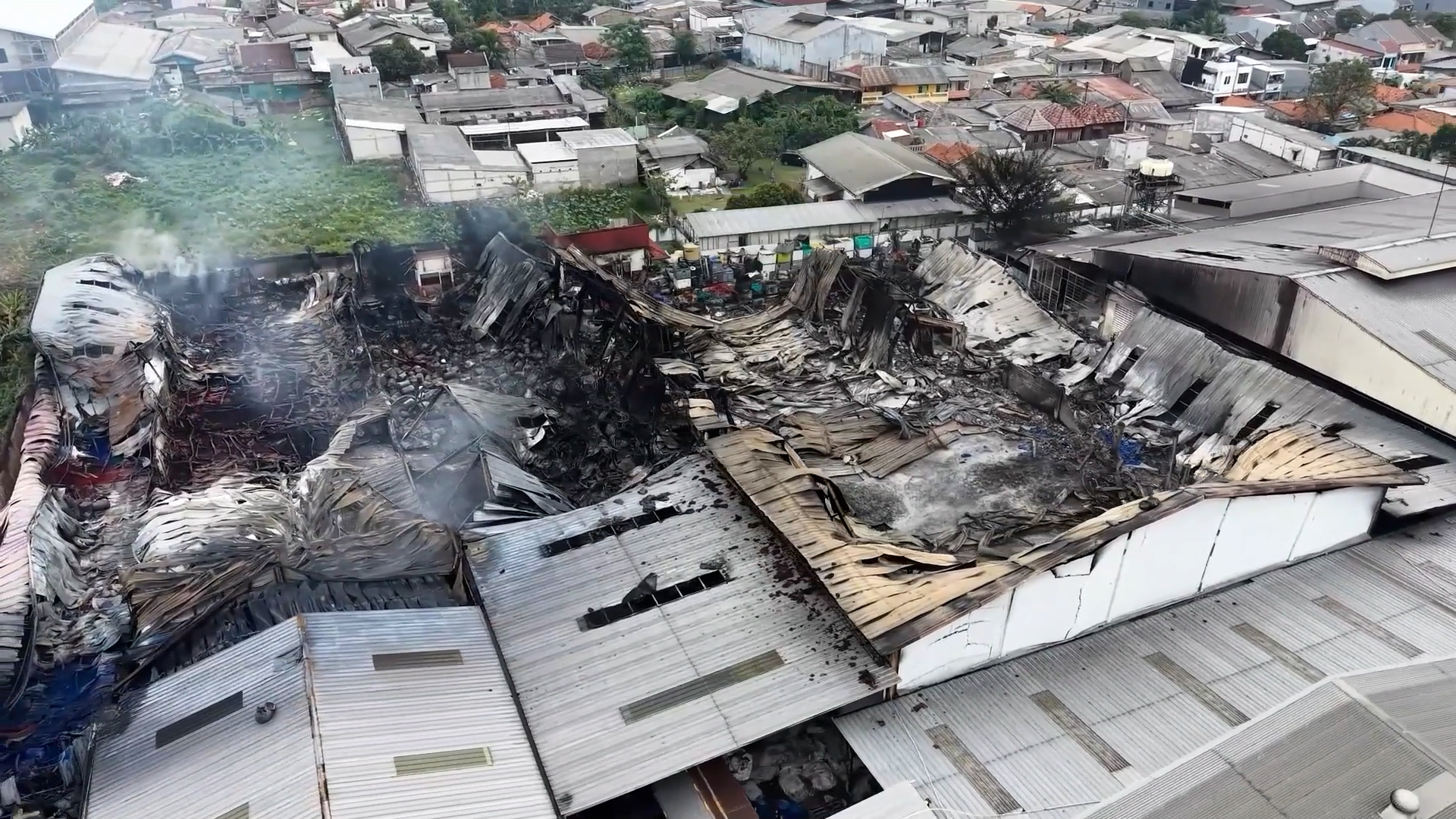
A 6.7-magnitude earthquake struck Indonesia on 16 June 2026, with strong aftershocks following the main shock and at least one hospital evacuating patients — some still attached to IV drips — into the open air, according to a Telegram post from the channel myLordBebo timestamped 09:26 UTC. The image is uncomfortably familiar: gurneys pushed onto hospital forecourts, nurses steadying drips, the particular choreography that Southeast Asian hospitals have rehearsed, in practice rather than theory, every time the ground moves.
Indonesia sits on the Pacific Ring of Fire, and the country's disaster-response system is, by most honest measures, among the most practiced in the world. But practice is not the same as permanence. Each major event exposes a tension that has less to do with seismology than with the architecture that arrives afterwards: foreign aid teams, donor priorities, insurance markets, and the political economy of reconstruction.
The shock, and the immediate arithmetic
Initial reporting on 16 June 2026 described a 6.7-magnitude main shock with strong aftershocks, severe damage to at least one hospital, and patient evacuations to outdoor areas. The single thread item available to this publication does not specify the epicentre's coordinates, the depth, or the exact province affected, nor does it give casualty counts, displacement figures, or damage estimates. The picture it paints is of an event in motion, with hospitals operating in degraded conditions — a meaningful indicator in any quake, because it means the system designed to absorb the next wave of injuries is itself compromised in the first minutes.
The standard news cycle will fill those blanks within hours, as it always does. The more durable question is what fills them on a longer horizon.
Who arrives, and on whose terms
When a quake of this magnitude hits Indonesia, the response is rarely a single national effort. It is layered: the national disaster agency BNPB mobilises, provincial governments swing into gear, and then a familiar cast of foreign responders arrives — ASEAN partners under the AHA Centre framework, UN agencies, Red Cross and Red Crescent networks, and bilateral teams from countries with their own geopolitical reasons for being present.
The track record is mixed. Indonesia's domestic response capacity has grown measurably over two decades, and the country now exports disaster expertise as much as it imports it. But the financing model still tilts heavily toward post-event reconstruction loans, particularly through multilateral development banks — a structure that can lock recipient governments into years of debt service on infrastructure that the disaster itself was meant to destroy and rebuild. Donor priorities, in other words, do not always match reconstruction priorities. Schools get rebuilt where airports were prioritised. Seismic-resistant housing codes get written into loan conditions that local contractors cannot meet. The result is a permanent tension between speed of disbursement and quality of build.
The pattern inside the pattern
This is not a story unique to Indonesia. The Pacific Ring of Fire runs from Chile to Japan, and on a long enough timeline, the same negotiations repeat themselves: which donor countries send search-and-rescue teams, which send cash, which send loans, and which send the kind of long-horizon structural support that actually changes what a community is sitting on top of the next time the earth moves. Indonesia is unusual only in the frequency with which it runs the drill.
Two structural points deserve to be made plainly. First, the global disaster-finance architecture still treats earthquakes as discrete, insurable events rather than as recurring features of a known geological landscape. Insurance penetration across Southeast Asia remains low; most households and most small businesses absorb losses in cash and credit, and reconstruction debt compounds at the household and municipal level. Second, the loudest political argument after any major Asian quake is usually about who should accept whose help, and on what conditions. That argument is real. It is also downstream of the quieter question of why reconstruction financing is structured in a way that makes the argument recur.
What remains genuinely uncertain
A single Telegram post is not a survey, and the first hours of a disaster are a poor place to draw conclusions about response. The sources available to this publication at the time of writing do not specify the affected province, the depth or precise location of the epicentre, the casualty count, the number of displaced households, or the activation status of BNPB and AHA Centre coordination. The hospital evacuation is a verified fact; the scale of what surrounds it is not yet. Sensible reporting waits for the next wave of information — the seismological bulletin, the BNPB update, the cross-checked casualty figures from wire services — before it commits to a frame.
What can be said now is that the ground moved, the hospitals emptied, and the response machinery has begun its familiar turn. The question worth asking is not whether the machinery will function. It is whether the financing underneath it, the year after and the decade after, will leave Indonesia better prepared for the next event, or merely better insured against this one.
Desk note: Monexus is treating the 16 June 2026 Indonesia earthquake as a developing story. Where this article makes claims about the disaster-finance architecture, it is drawing on the structural pattern visible across previous Indonesian events, not on data specific to today's shock. Updated figures from BNPB, the AHA Centre, and wire services will replace the descriptive gaps above as they become available.
Wire provenance
This editorial synthesis draws on the following public wire/social posts:
- https://t.me/myLordBebo/