The inference wars: Why Nvidia's Blackwell may be peak GPU
A $1.4T Abu Dhabi AI bet, a $91.5B payments giant, and the first credible challenge to Nvidia's GPU dominance are converging on the same bottleneck: inference.
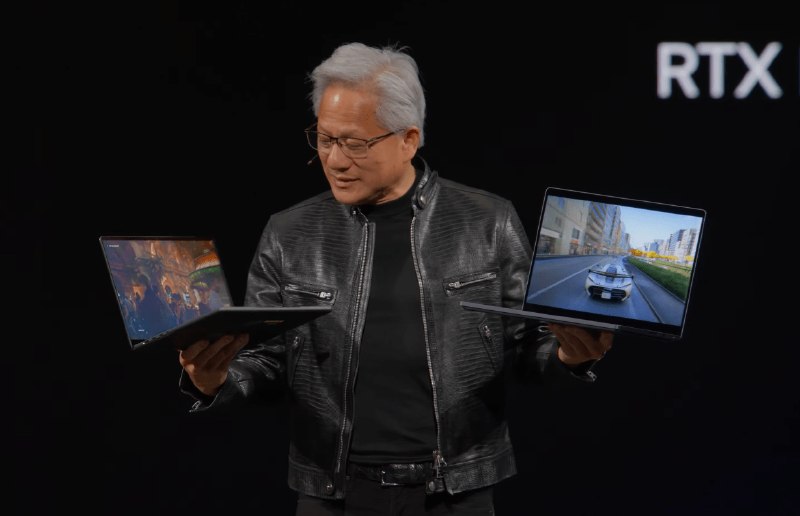
On 10 June 2026, the same hour that Nvidia's Q4 earnings beat consensus estimates, the stock dropped more than 6% — a split-screen that told the real story. The market had stopped pricing Nvidia as a training-cycle monopoly and started pricing it as one contender in a far more crowded race: inference. Dylan Patel of Semi Analysis put the shift bluntly. "Nvidia's performance gains for Blackwell are much larger in inference than they are in training… The vast majority of our compute today is actually inference, and Blackwell takes all of that to a new level. We designed Blackwell with the idea of reasoning models in mind." Inference is no longer the cheaper cousin of model-building. It is the workload. And it is the workload that four well-funded challengers — Cerebras, Groq, Sambanova, and Etched — are now attacking from four different angles.
The training-to-inference pivot is the structural story of 2026. Jensen Huang, quoted in a Wall Street Journal profile read aloud on TBPN the same day, made the case for why inference compute is growing rather than shrinking: reasoning models, he said, can require 100x more computing power than standard inference because they "think through answers step by step." If true, the total addressable market for inference silicon expands with model sophistication, not against it. That is the single most important assumption in Nvidia's bull thesis — and the single most contestable one. Each of the four challengers is, in effect, a bet that the assumption is wrong for a specific bottleneck inside that workload.
The most philosophically aggressive challenge comes from Etched, whose co-founder Robert Walkov drew a clean analogy on the broadcast. Bitcoin mining went CPU → GPU → FPGA → ASIC, and each jump created a category-leader that the prior incumbent could not match. Inference, Walkov argued, is reaching the same transition. "Sharpening the Swiss army knife only gets you so far. You have to build specialized hardware if you want to get maximal performance. You're hitting a wall here." Etched's bet is the most radical of the four: a chip with the Transformer architecture baked directly into silicon. If the dominant model family is going to be Transformer-class for the next product cycle, the argument goes, then dedicating silicon to that family is not a constraint — it is the product. The risk is obvious. Bake the wrong architecture into the wafer, and the moat becomes a coffin. Nvidia's defence — articulated implicitly by Huang's emphasis on Blackwell's general inference gains — is that no single architecture will remain dominant long enough to justify the specialisation tax.
The other three challengers pick narrower fights. Cerebras is going after the memory-bandwidth wall with wafer-scale integration, a single piece of silicon the size of a pizza box that eliminates the off-chip communication overhead which caps conventional GPUs. Groq is going after latency with a deterministic, compiler-driven architecture that runs inference in a single clock-tick pass — the bet being that real-time agentic applications will pay a premium for predictable response times. Sambanova is positioning for the enterprise on-prem market, arguing that data-sovereignty concerns and latency-sensitive inference at the edge will reward reconfigurable dataflow hardware that Nvidia's all-in-HBM model does not serve. Each of these is, in its own way, a thesis that the GPU is the right shape for training and the wrong shape for a specific slice of the inference pie. None of them is a bet against Nvidia. All of them are bets that Nvidia's pricing power on inference will compress in their respective niches the way IBM's did on commodity servers in the 1990s.
The $1.4 trillion man from Abu Dhabi
The most consequential capital allocator in frontier AI right now is not a Silicon Valley fund. It is Sheikh Tahnoon bin Zayed al-Nahyan, chairman of two Abu Dhabi sovereign wealth funds that together control more than $1.4 trillion in assets, according to a New York Times profile read on TBPN the same day. Tahnoon personally tracks large language model progress on a custom dashboard he has maintained since the early 2000s. He funded a chess AI called Hydra in the 2010s; when AlphaZero beat Hydra after four hours of self-play, he read it as a Sputnik moment and went deeper. In 2018 he tapped MicroStrategy CTO Peng Xiao to start G42, which has since become the UAE's flagship AI vehicle.
The geopolitical weight of that bet became visible when G42 was forced to rip out Huawei routers and replace them with Western equipment as the price of a $1.5 billion Microsoft investment that came with a board seat, structured to align G42 with US export-control regimes. Tahnoon's new AI fund MGX is set to receive $50 billion or more from his personal wealth and other Abu Dhabi sources, and has participated in the Stargate data center project — a figure originally announced at $500 billion that has since been dialled back to $100 billion in public references, a scaling-back that has drawn little commentary but says much about the gap between AI capex announcements and AI capex reality. Sheikh Tahnoon's "your size is not size" remark, borrowed from the Do Kwon's Luna playbook, is doing more work in 2026 than the original ever did.
Stripe as the index of the internet economy
The third thread from the same broadcast is the cleanest read on whether the AI boom is real. Stripe's 2024 letter, released earlier this year and read aloud on TBPN, disclosed $1.4 trillion in payment volume — up 38% year on year — against Adyen's $1.34 trillion (33% YoY), processing 1.3% of global GDP. Stripe is valued at $91.5 billion on 8,200 employees; Adyen at $56 billion on 4,300. Stripe processes roughly 4% more volume than Adyen with roughly double the headcount and roughly double the valuation — a metric the Stripe letter uses to position itself as "the index of the internet economy" rather than a payments company.
Two numbers inside the letter are the real story for 2026. First: the median time to annualise a revenue milestone for the top 100 AI companies on Stripe in 2024 was 24 months, against 37 months for the top 100 SaaS companies in 2018. Cursor hit $100 million ARR in three years. Lovable hit $17 million ARR in three months. Second: the Bridge acquisition — a deal worth more than $1 billion, framed in the letter as a potential "Instagram-style" platform — gives Stripe access to 40 million monthly active stablecoin wallets, with transaction volumes doubling between Q4 2023 and Q4 2024, and an existing SpaceX use case repatriating Starlink revenue from Argentina and Nigeria. The company used the O-ring framing to fend off the "LLM wrapper" critique: in a process with interdependent tasks, the overall output is limited by the least effective component. "Stripe's mission," the letter states, "is to grow the GDP of the internet… payment volume represents 1.3% of global GDP." Stripe Billing alone is on a $500 million revenue run rate, manages nearly 200 million active subscriptions, and is used by half the Fortune 100, 80% of the Forbes Cloud 100, and 78% of the Forbes AI 50.
Stakes
The convergence of these three threads is what makes 10 June 2026 a date worth marking. Inference demand is exploding upward as reasoning models mature. The capital to fund that demand is being concentrated in a handful of sovereign and corporate hands — Tahnoon's MGX, Stargate, the hyperscalers. And the workloads themselves are bifurcating into specialised niches that the GPU is not optimised to serve, with measurable revenue velocity to prove the demand is real. The bull case for Nvidia remains intact: Blackwell's inference gains are real, and reasoning compute scales the market. The bear case is structural. When four serious challengers each attack a different bottleneck — wafer scale, memory bandwidth, compiler determinism, baked-in transformers — and the sovereign capital behind them is denominated in trillion-dollar funds, "peak GPU" stops being a punchline and starts being a working hypothesis. The next twelve months will tell us which side of that line the industry lands on.
Wire provenance
This editorial synthesis draws on the following public wire/social posts:
- https://www.youtube.com/watch?v=spr7leoBnrA