Iran's World Cup squad meets FIFA chief in Tehran as a US-Iran deal reshapes the politics around the pitch
Gianni Infantino travelled to Tehran to greet Team Melli days into a 60-day US-Iran understanding brokered in Doha. The fixture list is unchanged; the diplomatic backdrop is not.
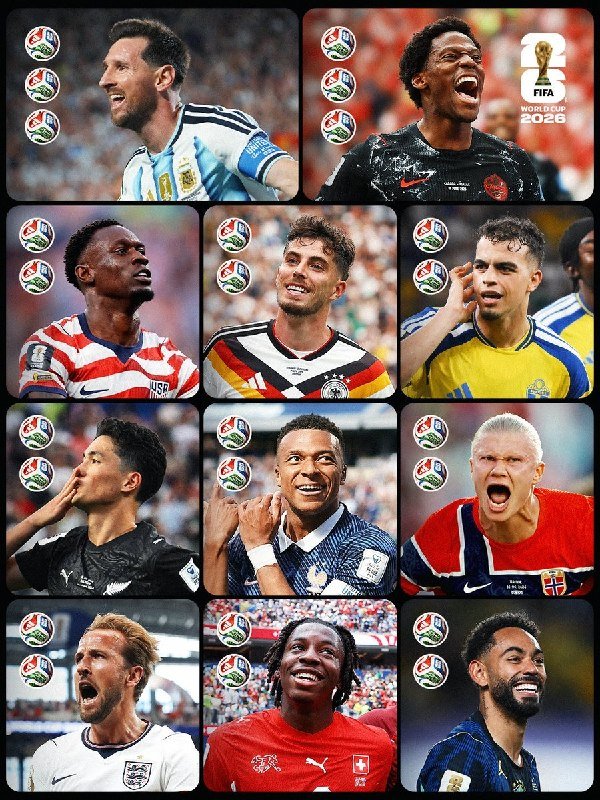
At a meeting in Tehran on 16 June 2026, FIFA president Gianni Infantino told Iran's men's national football team that he understood the pressures the squad had endured in the run-up to this winter's World Cup, a gesture that put the world's most-watched sporting federation at the centre of a fast-shifting diplomatic picture. Infantino, who travelled to the Iranian capital in the days after a US-Iran deal emerged from talks hosted in Doha, framed the visit as a show of solidarity with a team whose presence at the tournament had become a political question in its own right. The visit, reported by Al Jazeera English, lands while the sporting calendar for Iran's group stage is already fixed: Iran is scheduled to face Belgium, Egypt and New Zealand in Group G of the 2026 FIFA World Cup, which begins in the United States, Canada and Mexico on 11 December 2026.
That a federation president feels the need to make such a trip at all says something about the year Iran's footballers have had. The squad is preparing for a tournament staged in three countries whose governments include the United States — the same government that spent the spring trading direct threats with Tehran and that, in May 2026, entered a 60-day arrangement with Iran mediated in part by Qatar. Infantino's presence in Tehran is therefore both sporting and diplomatic: he is reassuring players that the political weather around the World Cup will not determine whether they take the field, while signalling to two governments that the pitch remains a usable channel when other channels are narrow.
The deal that put the trip on the calendar
The 60-day US-Iran arrangement that Qatar helped broker landed in late May and, according to Al Jazeera English's framing, has been read as much for its optics as for its specifics. Doha's role has been to keep both sides talking through a period in which a direct exchange would have been politically expensive for either capital to acknowledge. Qatar's renewed mediation, also reported by Al Jazeera English on 16 June, makes clear that Doha's calculus is regional: a stable understanding between Washington and Tehran reduces the chance of a wider escalation that would put the 2022 World Cup host's neighbourhood back on the front pages for the wrong reasons. The 60-day clock, in other words, is not just about nuclear file technicalities; it is a holding pattern that buys the World Cup, and the investments behind it, a calmer run-up.
For Iran, the visit from FIFA's president arrives as quiet validation. A national team that, in earlier years, was unsure whether visa and travel logistics would clear in time to attend a North American tournament now finds its federation chief on Iranian soil. Al Jazeera English's reporting on the meeting quotes Infantino as telling the players, "I know what you've been through," a line that lands harder when one remembers that, as recently as 2018, Iran's then-coach had used a World Cup press conference to push back on geopolitical pressure. The federation's presence in Tehran is a softer version of the same argument: international sport cannot be a hostage of bilateral disputes.
Counter-narrative: optics, not leverage
The dominant Western framing of Infantino's trip treats it as decorative — a photo opportunity in a city under sanctions, timed to coincide with a deal whose terms remain opaque. The Al Jazeera English line of 16 June leans in the opposite direction, treating the same visit as evidence that Qatar's mediation is producing visible dividends in non-military domains, and that Iran is willing to host senior Western institutional figures on its own soil. Both readings can be true. The harder question is whether the diplomatic air cover is real or rented. The 60-day clock is short, the US-Iran technical track has a history of collapse, and Iran's team, should it qualify past the group stage, will still need US visas to play matches in US territory. There is no public guarantee yet that the political weather of December will match the weather of June.
There is also a counter-narrative closer to home in Iranian politics. Domestic hardliners have, in past cycles, used the national team's international appearances as a stage for political messaging; reform-aligned supporters of the squad have, just as often, used those same appearances to push back. Infantino's visit does not resolve that internal argument. It does, however, give both sides something to point to: a sitting FIFA president treating Team Melli as a normal member of the world football family.
Structural frame: the pitch as a pressure valve
Major tournaments have, for two decades, been a venue at which governments that cannot meet openly still manage to meet publicly. The 2026 edition is unusually weighted for that function because the host set includes the United States, the political gravity in the room is heavier than for a tournament staged in a single neutral jurisdiction, and several qualified teams — Iran, but also, in different ways, Ukraine and Israel — carry their own bilateral disputes on to the pitch. When FIFA's president travels to a capital under sanctions to shake hands with a squad whose participation has been questioned, he is doing more than sports diplomacy; he is signalling that the federation sees its role as a stabiliser of a calendar that governments, left to themselves, would struggle to keep intact.
That role is contested. Some analysts argue that international federations should stay out of geopolitics altogether and that such visits reward the very governments whose policies the rest of the sporting calendar is being asked to absorb. The counter, visible in Infantino's own framing to the Iranian players, is that sport is already inside geopolitics and that pulling the institution out is not an option; only the choice between an active or a passive role remains.
Stakes over the next sixty days
The 60-day window that frames the current US-Iran arrangement will close in late July 2026, well before the World Cup kicks off. If the deal holds, Iran's team travels to North America with a quieter bilateral backdrop and Infantino's Tehran visit looks, in retrospect, like an early down-payment on that stability. If the deal collapses, the trip risks being read as a high-profile last gesture before a return to escalation, and the question of Iranian participation becomes a live political issue in Washington, Ottawa and Mexico City in the weeks before kick-off. The sporting fixture — three group games in December — is fixed. Everything around it is not.
The honest caveat: the sources reviewed for this piece do not specify the exact terms of the US-Iran arrangement, the identity of the Iranian officials Infantino met beyond the squad, or the visa arrangements for Iranian players and travelling fans. Those are the points that will matter most between now and December, and they remain, for now, undisclosed.
Desk note: the wire coverage of 16 June framed this story as a meeting between a federation president and a national team. Monexus has read it as a small but legible signal inside a much larger diplomatic holding pattern — a pitch being used, as pitches often are, to keep a difficult conversation going.
Wire provenance
This editorial synthesis draws on the following public wire/social posts:
- https://t.me/aljazeeraglobal
- https://t.me/aljazeeraglobal
- https://t.me/aljazeeraglobal
- https://en.wikipedia.org/wiki/2026_FIFA_World_Cup