Hormuz as leverage: how Iran turned a chokepoint into a negotiating weapon
A declassified US assessment circulated on 16 June argues Tehran can shut the Strait of Hormuz at will, reframing a long-running threat as an operational capability and a diplomatic lever.
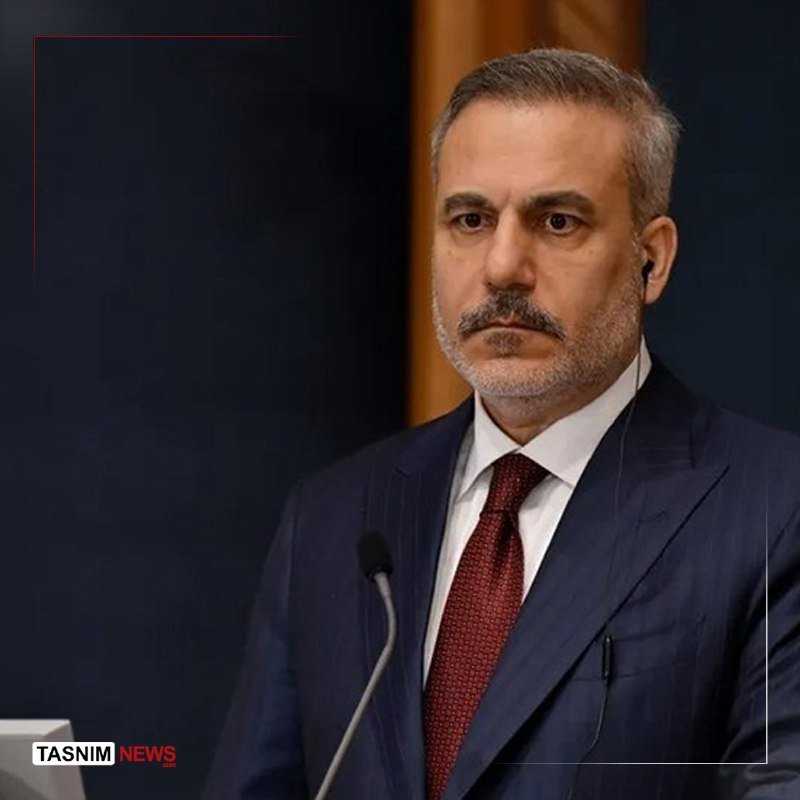
A US intelligence assessment circulated on 16 June 2026 has reframed the long-running question of whether Iran could close the Strait of Hormuz from a matter of capability to one of intent. According to summaries posted by Iranian state media and relayed through Telegram channels, the assessment concludes that Tehran now possesses the operational means to disrupt shipping through the strait at a time of its choosing — and that this capacity, in the agencies' own words, constitutes a more potent instrument than a nuclear weapon would be.
For more than four decades the strait has sat at the centre of Gulf security planning, treated by Western navies as a contingency rather than a live tool of statecraft. The new reading — that Iran has, in the words of one US official cited by CNN, "discovered" the strait as a lever — turns that contingency into a recognised fact and binds it directly to the diplomacy of sanctions, enrichment and regional deterrence. The economic logic is straightforward: roughly a fifth of global oil passes through the 21-mile shipping lane. Even a partial closure would move prices within hours and would impose costs on importers, exporters and insurers out of proportion to any kinetic action Iran could take on land.
From threat to instrument
The Iranian signalling has been unusually direct. The Mayor of Tehran, speaking on the same day the assessment was summarised, said Iran would close the strait "every time the US fails to fulfil its commitments", language relayed by an Iran-focused Telegram account and consistent with messaging from the foreign ministry in recent months. Western coverage has tended to treat such statements as boilerplate; the intelligence reassessment appears to take them at face value.
The shift inside Washington is best read as an admission that decades of sanctions, sanctions enforcement and naval presence in the Gulf have not degraded Iran's anti-access capability so much as relocated the contest. The weapons — fast-attack craft, shore-based anti-ship missiles, naval mines, submarine activity — are familiar. What is new is the willingness of US agencies to describe the package as decisive rather than nuisance-grade. That distinction matters: it changes the risk premium on every tonne of crude that leaves the Gulf.
What the counter-narrative looks like
The dominant Western reading treats the assessment as a warning shot, with Iran cast as an aggressor finding new ways to coerce its trading partners. The Iranian counter-narrative, carried by outlets aligned with Tehran, is the inverse: that sanctions and the extraterritorial enforcement that accompanies them amount to economic warfare, and that closure of the strait would be a response to that warfare rather than an act of aggression. The Mayor of Tehran's formulation — closure conditional on US compliance — is built to keep that frame alive internationally, particularly with major Asian buyers of Gulf crude who have reason to resist any framing that paints Iran as the sole source of instability.
A third reading, less prominent in either feed, holds that the assessment is less about present capability than about bureaucratic positioning inside the US system. By declaring Hormuz Iran's most powerful weapon, an intelligence community with a history of high-profile misjudgments on Iran is also making the case for its own relevance and budget. That explanation is not flattering, but it is plausible, and it coexists with the substantive shift the assessment describes.
Structural frame: chokepoint politics in an oversupplied market
Stripped of its drama, the Hormuz story is a familiar one in the political economy of energy: a state with a long coastline and limited blue-water reach uses a narrow maritime corridor as a force multiplier. The same playbook has appeared in the Black Sea, the Bab el-Mandeb and the Malacca Strait, with varying results. What is distinctive here is the timing. Global oil supply is not short; inventories in major importing economies are at multi-year highs. That should, in theory, dull the price impact of any disruption. The intelligence assessment, and the diplomatic response it provokes, suggest US agencies judge the opposite — that even in a well-supplied market, the optics of an Iranian closure would be enough to move prices, freight rates and political coalitions.
For Tehran the lever is most useful in the negotiation phase and least useful in the kinetic phase. A credible threat of closure raises the cost to the United States of any escalation short of war, and raises the cost to Gulf neighbours of any alignment with US sanctions enforcement. A actually executed closure, by contrast, would invite the very naval response Iran is trying to deter. The intelligence finding, read carefully, is about credibility rather than imminent action.
Stakes and the forward view
The near-term consequence is diplomatic. Asian importers — China, India, Japan, South Korea — will treat the assessment as a prompt to deepen insurance, storage and bilateral supply arrangements that bypass the Gulf where possible. Gulf monarchies already hedging against US security guarantees will accelerate those hedges. European governments, still digesting the energy price shock of 2022, will push for explicit US clarification of what a Hormuz disruption would mean for tanker escorts, war-risk insurance and Strategic Petroleum Reserve releases.
For Iran, the assessment creates an asset that has to be defended from overuse. Every public reference to the strait as a weapon erodes the ambiguity that makes the weapon useful. The Tehran mayor's blunt formulation is, in that sense, a high-risk move: it locks Iran into a posture where anything less than follow-through reads as bluff, and follow-through invites war. The most likely path is calibrated threats tied to specific diplomatic moments — sanctions snapbacks, IAEA board meetings, prisoner exchanges — with the strait held in reserve as the escalation that does not have to be used to be effective.
The sources do not specify which US agency produced the assessment, the precise wording of the underlying document, or how the intelligence community reconciled the finding with public US Navy posture statements emphasising freedom of navigation. What is clear from the cross-channel reporting is that the framing has moved: Hormuz is no longer a contingency on a planning chart. It is an instrument in a live negotiation, and the rest of 2026 will be shaped by how each side chooses to price that fact.
Desk note: Monexus has treated the US assessment as reported through CNN, the Iranian framing as carried by Tasnim-aligned channels, and the mayoral statement as direct quotation from an Iran-watcher Telegram thread, with explicit sourcing rather than collapsing all three into a single wire line.
Wire provenance
This editorial synthesis draws on the following public wire/social posts:
- https://t.me/JahanTasnim
- https://t.me/ukrpravda_news
- https://t.me/englishabuali