Iran drifts into Moscow's monetary orbit as sanctions recede and a refinery burns
Tehran's central bank governor flew to Moscow on 16 June 2026 to widen monetary cooperation, hours after a drone struck a refinery in the Russian capital and US officials reportedly signalled no new sanctions on Iran.
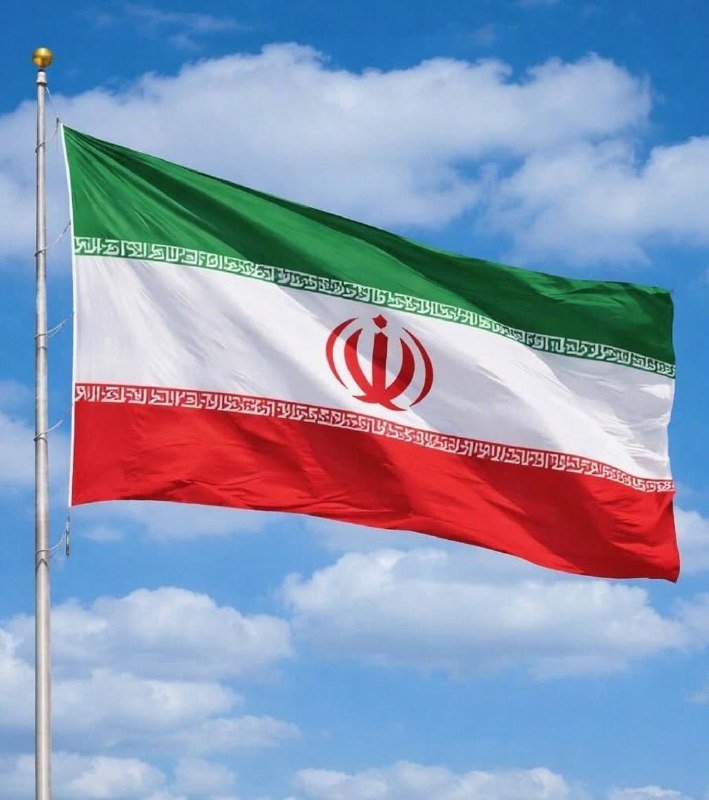
Three threads converged over the first sixteen hours of 16 June 2026, and each one tightened the same knot. A drone strike on a Moscow oil refinery, recorded by residents of surrounding high-rise buildings and circulated by the Ukrainian war correspondent Andriy Tsaplienko, sat less than a day before the head of Iran's central bank departed Tehran for the Russian capital to expand monetary cooperation. Hours before that, Iranian state outlet Tasnim reported that the United States had committed to no fresh sanctions on the Islamic Republic — a claim that, if true, redraws the financial perimeter of a war still grinding into its fourth year on the European steppe.
Read together, the signals are less a series of incidents than a single reorganisation: Iran sliding into Moscow's financial gravity, Moscow absorbing punishment at home while extending patronage abroad, and Washington choosing forbearance over escalation at exactly the moment its own pressure regime on Tehran was supposed to tighten.
The Moscow strike and what it changes
The refinery strike, captured in footage Tsaplienko posted to his Telegram channel at 06:00 UTC on 16 June 2026, marks the second time in recent weeks that the Russian capital's energy infrastructure has come under direct aerial attack. The footage shows a low-altitude impact followed by a fire plume rising above the residential blocks that ring the plant. Russian authorities have not, in the material available to Monexus, publicly attributed the strike; the framing on the Telegram post, originating with a Ukrainian correspondent with a long track record of frontline reporting, leaves the operator unnamed. Ukraine's armed forces have, throughout the full-scale invasion that began in February 2022, treated strikes on Russian energy and military-logistics infrastructure as a legitimate response to an aggressor's war-making capacity — a position consistent with the established international-law premise that Ukraine is the invaded party and that strikes inside Russian territory are defensive, not offensive, in character.
What matters for the wider story is not the fire itself but its timing. A refinery burns in Moscow on the same morning that Tehran's central bank chief is preparing to land in the same city to discuss, in the words of Middle East Eye, "expanding monetary cooperation." The optics are unflattering for the Kremlin, but the strategic read is more ambiguous: a Russia that is being hit at home has additional reason to court partners who can settle trade in currencies other than the dollar and who can be weaned away from the Western financial architecture that has, since 2022, been the principal lever of the G7's pressure campaign.
Tehran's Moscow trip
Middle East Eye reported at 07:12 UTC on 16 June 2026 that the governor of the Central Bank of Iran was travelling to Moscow to widen monetary cooperation with Russian counterparts. The substance of the agenda, as described in regional reporting, is the slow stitching together of a non-dollar payments spine between two heavily-sanctioned economies: bilateral settlement in national currencies, correspondent-banking arrangements outside SWIFT, and the kind of barter-tinged trade finance that Iranian and Russian state banks have spent four years learning to operate.
The visit lands at a delicate moment. Iran's economy has spent the better part of two decades inside an American sanctions cage, and the country's reintegration into global oil markets — formal or informal — has always hinged on the willingness of US Treasury to renew or relax waivers. The Tasnim report cited via Unusual Whales on 15 June 2026, claiming Washington has committed to no new sanctions, is the kind of single-source claim that demands a second confirmation before being treated as fact. But the timing fits a pattern: the Biden-administration inheritance, the post-October 2023 regional recalibration, and the cost to the United States of sustaining maximum pressure on every axis simultaneously have all pushed Washington's Iran policy toward selective forbearance.
That posture, if it holds, has an obvious counterpart. Iran gets breathing room. Russia gets a customer with oil-sector expertise, drone-procurement leverage, and four decades of sanctions-circumvention tradecraft. Both governments get a small, working proof-of-concept for a financial architecture that does not run through New York.
The sanctions signal
The Tasnim report, distributed in English-language form by the market-intelligence account Unusual Whales on 15 June 2026, frames the US commitment as a confidence-building measure rather than a formal policy reversal. That distinction matters. Treasury has not, in any document Monexus has reviewed, publicly renounced the sanctions toolkit against Iran. What the report suggests is a quiet convergence: an administration that has concluded the marginal cost of a new tranche of secondary sanctions outweighs the marginal benefit, and an Iranian government that has, by any honest reading of its balance of payments, earned the right to a quieter quarter.
The counter-read is straightforward, and it is the one that hawks in Washington and in the Gulf capitals will advance: forbearance now is capitulation deferred. A Tehran that can bank with Moscow, sell oil to customers who settle in yuan or rubles, and operate drones through proxies in the Levant and on the steppe is a Tehran that is harder, not easier, to deter. The Tasnim framing is, of course, the Iranian state's preferred framing — state-adjacent outlets are not neutral observers of their own government's negotiating posture. But the structural fact, that the United States is choosing not to add new pressure at a moment when its Middle East policy is already overextended, is a fact regardless of who first described it.
What this sits inside
The bigger story is a slow re-plumbing of the global financial system. The dollar's dominance has, for half a century, rested on a particular political bargain: the United States sets the rules of the payments system, and other countries tolerate the cost of that bargain in exchange for access to the deepest capital markets on earth. That bargain is being renegotiated in slow motion. Iran and Russia are the most visible edges of a broader pattern that includes Chinese settlement in yuan, Gulf petrodollar recycling under stress, and a long list of mid-sized economies quietly building the plumbing for non-dollar trade.
A drone on a Moscow refinery is a tactical event. A central bank governor in Moscow is a financial event. A reported US forbearance on new Iran sanctions is a political event. The convergence of all three on a single June morning is something rarer: a structural one. What Monexus is watching is not the end of dollar hegemony — that framing is too dramatic for the evidence on the page — but a slow accumulation of workarounds that, taken together, change the cost-benefit calculus of every actor in the system, including the United States.
What remains genuinely uncertain is whether the Tasnim report will be confirmed by Treasury action, whether the Moscow monetary talks will produce a concrete settlement architecture rather than another memorandum of understanding, and whether the refinery strike will be repeated on a scale that forces Russia to redirect air-defence assets from the Ukrainian front. None of those questions can be answered from the materials currently in hand. They are the questions worth asking over the next thirty days.
This publication framed the Moscow strike through a Ukrainian correspondent's on-the-ground footage and read the Tehran–Moscow financial track through regional reporting, in line with Monexus's practice of leading with sources from the invaded party and from the regional press most directly engaged with the story.
Wire provenance
This editorial synthesis draws on the following public wire/social posts:
- https://t.me/Tsaplienko/200000
- https://twitter.com/unusual_whales/status/
Follow the event.
These dated source records provide context. They do not retrospectively verify this archive article.
Separate what the nuclear watchdog reported from what it could not determine after the June 2025 strikes.
A dated voting record is evidence of one decision. Use the original UN record before turning it into an alignment label.
Visual explainer · historical vote of 2022-03-02 →