Tehran's exit ramp: Iran's post-war fiscal bind, and the blockade test that will decide who pays for it
With the war winding down, Tehran faces an embittered public and a US naval blockade that Iranian media says tankers are already slipping through. The next month decides who pays.
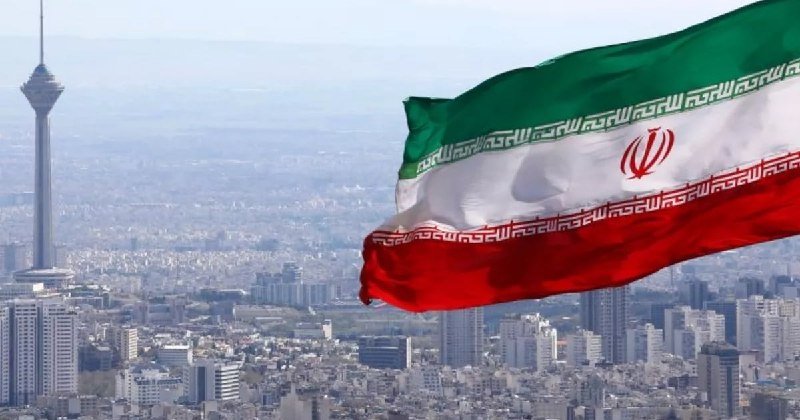
On the morning of 16 June 2026 UTC, the operational picture out of the Gulf is not a battle but a queue. According to Iranian state-aligned media relayed by Middle East Eye's live coverage, three oil tankers and two vessels carrying essential Iranian goods have "passed" through a US naval blockade intended to choke the country's principal export route. The framing is Tehran's own, and the use of "passed" — rather than "sank," "captured," or "turned back" — is itself a piece of information. Inside Iran, the question is no longer whether the Islamic Republic can project force. It is whether it can project cash.
That question is the through-line of the next phase. The war that the Iranian regime appears to have largely lost on the battlefield is ending on a fiscal terrain the regime does not control: a Strait of Hormuz chokepoint held, for the moment, by the US Navy, and a domestic public that Reuters reporting from 15 June 2026 UTC describes as "angry, embittered," and now demanding accountability from rulers who led them into a conflict they cannot easily explain winning. The combination — a blockade plus a legitimacy crisis — is the canonical recipe for a post-war regime losing the peace.
The blockade as fiscal weapon
A naval blockade is, in the first instance, a balance-of-payments instrument. Iran's budget is structurally short of foreign currency; the country is among the most oil-dependent large economies in the world, and the only hard-currency source of any scale is crude exports moved almost entirely through the Strait of Hormuz. A sustained US interdiction therefore does not need to "win" in a kinetic sense. It needs to sit there long enough for Tehran to choose between selling oil at a discount through secondary channels, drawing down central-bank reserves to defend the rial, or letting fuel queues return to the streets of Tehran, Isfahan and Mashhad.
The Middle East Eye live thread of 15 June 2026, 22:34 UTC, captures the Iranian counter-frame: tankers "passing" the blockade. That is a claim of partial success, not a rebuttal of the blockade's existence. The interesting question is which tankers, with what cargo, under what insurance, and at what discount to dated Brent. None of those specifics are yet on the wire. The Iranian framing, taken at face value, suggests that some throughput is being sustained — probably through a combination of flag-of-convenience transfers, ship-to-ship transfers in the Gulf of Oman outside the main blockade box, and reliance on buyers in the Chinese and Indian mid-refining belt who have historically discounted sanctioned crude. That is enough to keep a regime's lungs working. It is not enough to fund a recovery.
The public-facing bind
Reuters' 15 June 2026, 23:31 UTC, dispatch frames the second pressure point: the population. The Iranian state, in this reading, is heading into a post-war political economy that mixes (a) a partially working blockade, (b) a partially working missile and proxy deterrent that deterred escalation without delivering victory, and (c) a public that has paid a war price in sons, fuel and inflation, and is now being asked to accept that the strategic outcome is "we survived." Survival is not a programme.
The domestic-credibility problem is compounded by who pays and who is seen to pay. Subsidies on fuel and bread, foreign-currency rationing for importers, and the privileged access of state-connected trading houses to hard currency are the three well-documented pressure valves the Iranian system uses when reserves fall. Each one is regressive, each one is unpopular, and each one is more politically expensive after a war that the public believes the leadership chose. The Reuters line — that Iranian rulers "must face" demands from an angry population — is the polite version of an argument that some Western and Gulf analysts have been making for months: that the regime's biggest risk is the next nine to twelve months, not the next round of fighting.
What a partial blockade teaches Tehran
The third layer is structural and is worth saying plainly. Even a leaky blockade teaches an oil exporter something useful: that a single chokepoint, patrolled by a single peer navy, can be turned into a sovereign fiscal instrument on demand. The lesson for Tehran is that export-route diversification — pipelines through the north, refining capacity inside Iran that does not require seaborne crude, and a deeper sanctions-resistant shadow fleet — is now a national-security question, not an energy-policy question. The lesson for Iran's customers in Beijing and New Delhi is that single-vendor exposure to a sanctioned supply chain is also a national-security question for them. Both sides will adapt. The adaptation is the long story; the blockade is the short one.
The Iranian-aligned framing of the same events tends to read the leakiness as a victory: the US did not achieve a clean stranglehold, Iran is still exporting, the system is bending but not breaking. There is something to that. A blockade is a binary political instrument only in marketing copy. In practice, the leak rate is the policy, and the policy is being set by insurance markets, by Chinese refiners' willingness to discount, and by Iran's own tolerance for the political cost of cheaper crude. The dominant Western framing — that the blockade is a decisive squeeze — and the Iranian framing — that it is porous — are not strictly incompatible. They are describing the same artefact at different points on the curve.
Who pays if the trajectory continues
The forward view, on the available evidence, splits into three scenarios. In the first, the blockade is lifted within weeks as part of an off-ramp deal, the rial stabilises, and the regime buys a year of political breathing room by spending down reserves. In the second, the blockade holds for a quarter or more, leak rates stay in the 30 to 50 per cent range, and Tehran returns to subsidy reform under duress — politically combustible, economically necessary. In the third, escalation returns: a tanker is hit, a US or partner vessel is hit, the blockade tightens into a quarantine, and the fiscal bind converts into an open military one. Nothing in the source material points cleanly to a single outcome, and the Iranian-aligned coverage of tankers "passing" the blockade is, in this reading, most consistent with scenario two — a slow squeeze that Tehran hopes to ride out and Washington hopes to weaponise.
Two things are genuinely uncertain. The first is the volume that is actually moving: the Iranian claim of five vessels passing is a count, not a barrel figure, and the difference matters. The second is the political floor inside Iran — at what level of fuel-price inflation and currency depreciation does the regime's usual subsidy toolkit stop working. Neither is knowable from the wire today. Both will be visible within thirty days.
The structural read, stripped of theorist labels, is straightforward. A regional power has lost a war, kept its regime, and is now negotiating the transition from wartime command economy to wartime-besieged command economy. The terms of that transition are being set, in the first instance, by a US Navy flotilla in the Strait and, in the second, by the patience of Iranian households queuing for subsidised petrol. The third term — how much of this Tehran can successfully convert into a longer-run reorientation toward east-of-Suez customers and overland export routes — is the bet the regime is making. The 16 June 2026 picture is the opening price of that bet.
Desk note: Monexus treats the Iranian regime's post-war fiscal exposure and the US blockade as a single story, on the reading that the blockade is the operational expression of the fiscal pressure. Iranian state-aligned framing is given space as primary counter-claim material, with explicit sourcing, rather than relegated to a footnote. The piece deliberately separates verifiable from contested claims rather than smoothing them into a single narrative voice.
Wire provenance
This editorial synthesis draws on the following public wire/social posts:
- https://t.me/farsna
- https://x.com/reuters/status/43GLNhN
Follow the event.
These dated source records provide context. They do not retrospectively verify this archive article.
Separate what the nuclear watchdog reported from what it could not determine after the June 2025 strikes.