Iran deal hands Tehran an oil export window, and gives Washington a sequencing problem
Six tankers through Hormuz the day after signature showed the deal was already doing its commercial work. The harder problem is sequencing: sanctions relief, verification and political messaging now have to move in lockstep, and the only mechanism enforcing that lockstep is the oil market itself.
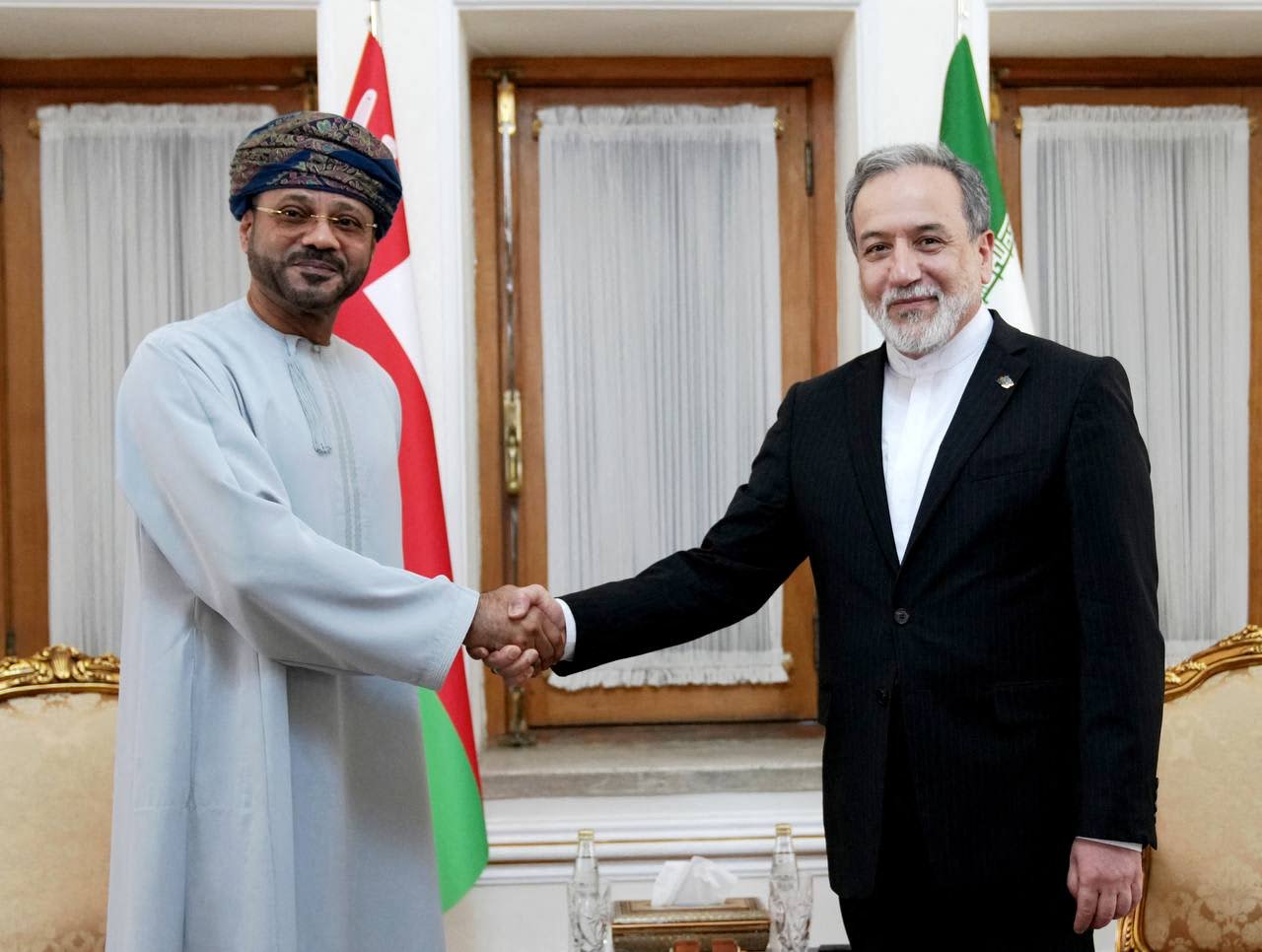
At least six oil tankers transited the Strait of Hormuz on 18 June, the day after Washington and Tehran signed a memorandum of understanding halting their war, according to shipping traffic reported by Nikkei Asia. The resumption was the first visible market signal that the agreement is doing what its drafters claim: opening a controlled channel for Iranian crude back into global supply. It also surfaced the second-order problem the deal has already created, which is that the United States now has to sequence sanctions relief, oil licensing, and political messaging without letting any one of those levers collapse the others.
The MOU was signed remotely and digitally on 17 June by President Masoud Pezeshkian and President Donald Trump, the unusual format itself a small signal of how thin the paper is at this stage. The Wall Street Journal reported, via @unusual_whales, that the United States intends to issue waivers permitting Iranian oil exports soon after the MOU is formalised, and that Washington will not impose new sanctions on Iran pending a final deal. A separate WSJ item, again circulated through @unusual_whales, goes further: under a final agreement, the United States would terminate all Iranian sanctions. If accurate, that is a structural change to the architecture of US sanctions enforcement against the Islamic Republic, not a tactical adjustment.
The Trump administration is moving quickly to manage expectations. In a post on X, the president rejected reports of a $300 billion payment to Iran as "Fake News" and framed the deal's payoff to the United States as "Success, Lower Oil Prices, and Victory," telling supporters to look at the stock market. That formulation matters because the political durability of the agreement now rests on a price signal at the pump and on equity benchmarks, not on a written verification regime for Iran's nuclear and missile programmes. The verification function the IAEA and multilateral inspections used to perform has been, for the moment, replaced by tanker counts and benchmark spreads. It is a different kind of guarantee, and a cheaper one for Washington, but it is also the kind that reverses the first time a Brent print goes the wrong way.
The money already moved
The market read the MOU as a supply story before it read it as a foreign-policy story. Six tankers through Hormuz in a single day, the day after signature, tells you the commercial side had been preparing for the announcement rather than reacting to it. Chartering decisions, insurance pricing, and reflagging arrangements run on lead times measured in weeks, not hours. Operators had effectively pre-positioned for an opening, which suggests they had either received private guidance or judged that the diplomatic signalling had become unmistakable enough to bet on.
The sequencing question for Washington is now sharp. If sanctions termination comes first and verification architecture comes second, the United States gives up leverage before it gets anything durable in return. If verification comes first and sanctions termination comes second, Tehran has every incentive to slow-walk implementation, since the diplomatic momentum and the oil-export window are already producing revenue. The administration appears to have chosen a third path: announce the big moves, run the licences in parallel, and let commercial flows create facts on the water that constrain both sides from walking back.
A different kind of guarantee
For two decades the US-Iran sanctions regime functioned as a financial chokehold with a verification tail: inspectors on the ground, snap-back clauses in UN resolutions, secondary sanctions on third-country buyers. That architecture is built on the premise that the pressure has to be multilateral to be politically sustainable at home and operationally watertight in practice. What the MOU proposes, on the reporting so far, is closer to a market-based verification regime: Iranian oil flows are observable in real time through tanker tracking, port data, and freight rates; any deviation from agreed volumes would show up in benchmarks within days.
The shift is not costless. A market-based regime punishes cheating after the fact rather than preventing it in advance, and it gives the side with the more liquid financial plumbing (in this case the Gulf trading houses, Chinese refiners, and a handful of Indian buyers) outsised influence over how the deal actually functions. It also rewards speed: the first movers through Hormuz capture the widest spreads, which is why six tankers on day one is the story and not, say, a senior Iranian technocrat at the IAEA in Vienna. Tehran understands this. So does Beijing.
What Tehran wants from the next ninety days
For Iran, the immediate objective is straightforward: get sanctioned crude onto chartered hulls and into bonded storage in Fujairah, Kharg Island feeders, and Chinese teapot refineries before any political reversal in Washington. The longer objective is to make those flows large enough, and visible enough, that a future administration would pay a domestic price for disrupting them. That is the textbook Iranian strategy under sanctions: convert episodic relief into structural dependence on Iranian barrels.
The risk for Tehran is the symmetry of the bet. If the MOU holds and oil flows normalise, Iran's fiscal position improves quickly and the regime's internal coalition of Revolutionary Guard-linked trading networks and technocratic oil ministry officials reasserts itself. If the MOU fractures, either because of a nuclear-programme dispute, an Israeli action, or a US political shift, Iran loses the revenue but keeps the doctrinal lesson that US commitments are reversible. Either outcome is useful to Tehran in some way, which is itself a kind of leverage.
The sequencing problem in Washington
The harder political work is happening inside the United States. The president has publicly tied himself to lower gasoline prices and a rising stock market as the deal's deliverables. Vice President JD Vance, by the president's own joking attribution in an X post, is the designated fallback if the deal falters. That division of credit and blame is a tell: the administration has not yet decided whether the MOU is being sold as a peace dividend, a price-dividend, or a geopolitical realignment, so it has hedged across all three.
The next inflection points are narrow and visible. Watch the WSJ reporting on the licence schedule, the first post-MOU IAEA report (which will set the verification benchmark), and any Israeli statement on enrichment activity at Natanz or Fordow. If sanctions termination proceeds faster than inspectors return, the political coalition behind the deal on the US side will fray. If inspectors return but licences lag, Tehran will treat the gap as a negotiating failure and begin probing. The administration's bet is that tanker traffic through Hormuz produces a self-fulfilling momentum strong enough to keep all three tracks moving in the same direction. Markets can do that. They can also undo it in a week.
The text of the agreement is still being written
The MOU is, at this point, a framework around a framework. The signed document is thin; the operational meaning of it is being assembled by customs notices, treasury licences, and the routing decisions of a small number of commodity traders. That is not, in itself, a reason to be cynical about the deal. It is a reason to be precise about what is and is not yet settled. The war is paused. The sanctions architecture is bent, not broken. The nuclear file is open. And the only verification mechanism currently in force is a fleet of oil tankers moving through one of the world's narrowest chokepoints, watched in real time by everyone who matters. That is enough to keep the deal alive. It is not yet enough to keep it honest.
Desk note: Monexus carried the Cointelegraph wire and the Polymarket-circulated Trump posts as the sourcing backbone for this piece, and used them to test, not to amplify, the deal's claimed scope. The structural argument, that commercial incentives are doing the work multilateral verification used to do, is offered as a frame, not as a verdict. The text of the agreement is still being written.
Sources
- https://t.me/NikkeiAsia, "At least 6 oil tankers sail through Hormuz following US-Iran deal" (2026-06-18)
- https://x.com/unusual_whales, WSJ summary: US to issue waivers for Iran oil exports soon after MOU deal (2026-06-18)
- https://x.com/unusual_whales, WSJ summary: US to terminate all Iranian sanctions under final deal (2026-06-18)
- https://x.com/unusual_whales, WSJ summary: US will not impose new sanctions on Iran, pending final deal (2026-06-18)
- https://x.com/unusual_whales, Trump statement rejecting $300bn payment report, framing US benefit as lower oil prices and market gains (2026-06-18)
- https://x.com/unusual_whales, Trump remark on credit/blame allocation for the Iran deal (2026-06-18)
- https://x.com/unusual_whales, Report on Pezeshkian-Trump digital remote MoU signature (2026-06-18)
Follow the event.
These dated source records provide context. They do not retrospectively verify this archive article.
Separate what the nuclear watchdog reported from what it could not determine after the June 2025 strikes.