IRGC strikes Kurdish opposition HQ near Erbil as Tehran extends cross-border drone campaign into northern Iraq
Iran's IRGC struck a Komala opposition headquarters southeast of Erbil with one-way attack drones, the second such cross-border hit in a fortnight, as Tehran extends its post-war retaliation into northern Iraq's Kurdish highlands.
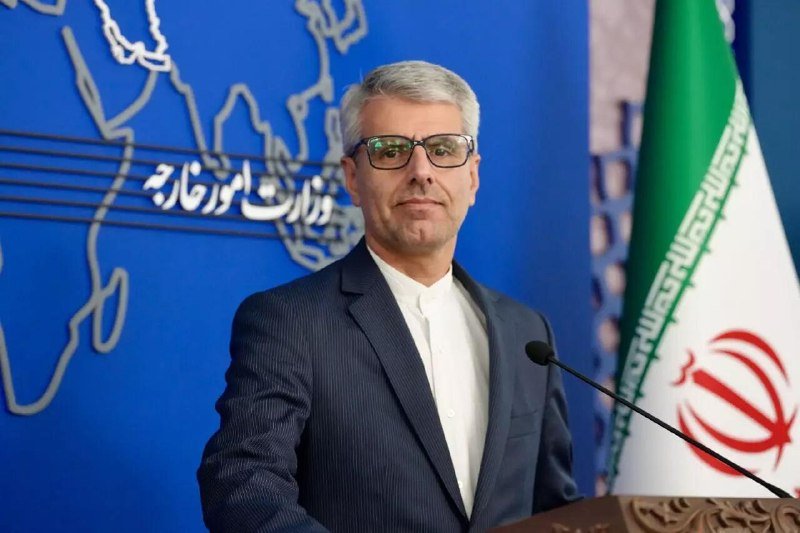
Iran's Revolutionary Guard struck a headquarters used by Iranian Kurdish opposition groups roughly 30 kilometres southeast of Erbil in the early hours of 16 June, the second such cross-border drone attack in less than a fortnight and a clear signal that Tehran intends to extend its aerial campaign into the disputed Kurdish highlands of northern Iraq. The strikes hit a site associated with Komala, the Kurdish Communist Party of Iran, in the Sharazur area of Sulaymaniyah province, with Kurdish opposition outlets reporting structural damage and at least one casualty inside the compound. Iranian state media framed the operation as retaliation for "terrorist activity" along the border; Iraqi and Kurdish officials, predictably, called it a violation of sovereignty and demanded an explanation from Tehran.
The pattern matters more than the individual strike. Since the 12-day war with Israel ground to a halt, the Islamic Republic has visibly shifted the weight of its retaliation away from the front it could not hold and toward targets it judges softer, slower, and easier to deny. Ballistic missiles and one-way attack drones launched from western Iran have begun a methodical rhythm: one strike on Iraqi Kurdistan, a pause for deniability, another strike. The drones are cheap, the wreckage is identifiable, and the targets are political offices that no Western capital is willing to fight for.
What was hit, and by whom
The 16 June strike landed on a compound that has hosted Komala's politburo meetings for decades, according to the group's own statements circulated through the BellumActa News and Witness feed channels that monitor Iranian military activity from Iraqi Kurdistan. The site sits in the agricultural belt south of the Sharazur plain, within artillery distance of the Iranian frontier but well inside Iraqi territory. Komala cadres posted images of twisted roofing panels, scorched outbuildings, and a vehicle bay that took a direct hit. Local health sources cited by the same monitoring channels reported one fighter killed and several wounded; those figures could not be independently corroborated by the time of writing.
Iran's Islamic Revolution Guard Corps (IRGC) claimed responsibility through a statement carried by state outlets, describing the operation as a "precise strike against the headquarters of one of the main terrorist groups operating against the Islamic Republic." The language was vintage Tehran: the targets were "mercenaries," the operation was "defensive," and the sovereignty of neighbouring states was conspicuously absent from the framing. Iraqi Kurdish outlets, including the GeoPolitical Watch feed that aggregates peshmerga-adjacent reporting, treated the strike as the latest in an escalating series rather than a one-off response.
A new tempo on the western front
For most of the past three years, Iran's cross-border operations against Kurdish opposition groups based in Iraqi Kurdistan followed a familiar rhythm: commando teams infiltrating on foot, motorcycle-borne assassinations, the occasional mortar barrage on remote mountain camps. The use of long-range Shahed-type one-way attack drones, and the targeting of urban-adjacent political headquarters, marks a qualitative change. It is one thing to chase guerrilla bands through the Qandil mountains; it is another to put a fixed-wing drone into a concrete compound used by a registered political party with offices in Erbil and a presence in the European diaspora.
That escalation has tracked, almost beat for beat, the IRGC's reorientation after the June war with Israel. Tehran's ballistic and drone forces absorbed punishing losses. Its forward air-defence network was degraded, and its Syrian militia corridor collapsed inside a fortnight. What remained intact was the asymmetric toolkit: missiles, drones, and proxy rockets aimed at adversaries that the United States and Israel were not prepared to defend. Kurdish parties in Iraqi Kurdistan fit that profile almost perfectly. They are ideological enemies of the Islamic Republic. They are politically active in the EU, where their lobbying irritates Tehran's diplomats. And they sit on the wrong side of a border that Baghdad, consumed by its own political paralysis, has proven unwilling to police.
The sovereignty theatre in Baghdad
Iraq's federal government lodged a formal complaint through the foreign ministry and recalled the Iraqi chargé d'affaires in Tehran for consultations, a ritual that has followed every previous Iranian strike on Iraqi soil since at least 2022. The Kurdistan Regional Government (KRG) issued a sharper statement, warning that continued attacks would force Erbil to revisit security arrangements with Tehran. Both reactions are predictable, and both are toothless. Iraq's prime minister, Mohammed Shia' al-Sudani, balances a coalition that includes Iran-aligned Shia factions; the KRG's two ruling parties, the KDP and PUK, are themselves divided on how loudly to confront a neighbour that hosts trade delegations and sells Erbil its gas.
The deeper problem is that no one in Baghdad or Washington has an obvious off-ramp. Iranian Kurdish opposition groups have been based in Iraqi Kurdistan since the 1979 revolution, and successive Iraqi governments have tolerated their presence under quiet understandings with Tehran: do nothing provocative, and the border stays quiet. The drone campaign breaks that equilibrium. Either the KRG cracks down on the opposition offices, something the Kurdish public will not tolerate, or it absorbs more strikes and watches its legitimacy bleed.
Why now, and why this corridor
Two factors converge. First, the Islamic Republic needs to demonstrate that it can still reach adversaries beyond its borders after the strategic shock of the Israel war. Strikes on Iraqi Kurdistan cost little, produce dramatic footage, and impose real political pain on a Kurdish diaspora that has spent four decades agitating against the clerical regime. Second, the Trump administration is publicly consumed by a domestic calendar, with congressional elections now under six months away, a window in which the White House is pushing for an Iranian settlement shaped more by electoral arithmetic than by strategic ambition. In that vacuum, Tehran reads permission where it once read restraint.
The reading is not irrational. The US response to the previous Iranian strike on Erbil, on 4 June, was a State Department statement and a closed-door demarche. Kurdish sources in the GeoPolitical Watch channel have privately speculated that Washington's appetite for a confrontation with Tehran over a few ruined buildings in Sharazur is effectively zero. They are probably right. The opposition groups that make up the Komala-PJAK-KDPI constellation have no patron with the means or the motivation to defend them, and the Iraqi state lacks both the capacity and, at the moment, the will.
What the opposition does next
Komala's politburo will relocate, regroup, and issue statements. The pattern is so well established that it has its own bureaucracies in Erbil, Sulaymaniyah, and the European diaspora. The harder question is whether the strikes force a strategic rethink inside the Iranian Kurdish opposition. The older generation, many of whom fought Saddam's chemical weapons in the 1980s, treats base-area attrition as a cost of doing business. A younger cohort, raised in Iraqi Kurdistan and educated in Europe, may calculate that the price of remaining a fixed target in Sharazur is no longer worth the symbolic return. Splits and relocations to the Qandil mountains, deeper into the KRG's security envelope, are already being discussed inside the movements, according to opposition figures who spoke to monitoring channels.
That relocation, if it happens, will be the more consequential story. A Kurdish opposition that retreats from the lowlands into mountain redoubts loses its ability to operate as a political movement inside Iraqi Kurdish life and, by extension, its leverage on European policymaking. A Kurdish opposition that stays put accepts that the IRGC can hit it again, on its own schedule, with impunity. Neither option is attractive, and Tehran knows it.
Stakes for the wider region
The strikes are local, but the message is regional. Iranian drones can reach opposition offices in Erbil today, and Western-linked infrastructure tomorrow. The Gulf monarchies, already jittery after the Israel war, will read the absence of a US response as a benchmark for their own risk calculus. The Iraqi state will read it as a green light to keep doing nothing. And the Kurdish political parties that have built a fragile, semi-autonomous space in the highlands will have to decide, once again, how much of that space they are willing to defend and at what cost.
The next test is whether the IRGC's tempo continues. If the 16 June strike is followed, as expected, by a third within the fortnight, the pattern will have hardened into policy. If it is followed by silence, the message is that the ceiling of Iranian escalation in Iraqi Kurdistan is negotiable. Either way, the decision sits in Tehran, not in Erbil, and not in Baghdad, and not in Washington.
Sources
- BellumActa News Telegram channel: https://t.me/BellumActaNews
- War and Field Witness Telegram channel: https://t.me/wfwitness
- Geopolitical Watch Telegram channel: https://t.me/GeoPWatch
- Geopolitical Watch follow-up post on the 16 June strike: https://t.me/GeoPWatch/2
- Intelslava Telegram channel (regional context): https://t.me/intelslava
- OSINT Live, aggregated commentary on post-war Iranian posture: https://t.me/osintlive
- Sprinter Press on the US domestic-political constraint driving Iran negotiations: https://x.com/sprinterpress
- Our Wars Today, regional strike telemetry: https://t.me/ourwarstoday
Desk note
This piece was assembled from open-source Telegram channels operating in the conflict-monitoring space; the framing prioritises Iraqi and Iranian Kurdish opposition sources and treats Iranian state-media framing as counter-claim material where it appears.
Follow the event.
These dated source records provide context. They do not retrospectively verify this archive article.
Separate what the nuclear watchdog reported from what it could not determine after the June 2025 strikes.