Israel discovers the limits of its American umbrella
Israeli officials now openly admit Washington holds the keys on Iran. A Trump-era proposal to push Syria into disarming Hezbollah is the visible tip of a much larger transfer of agency.
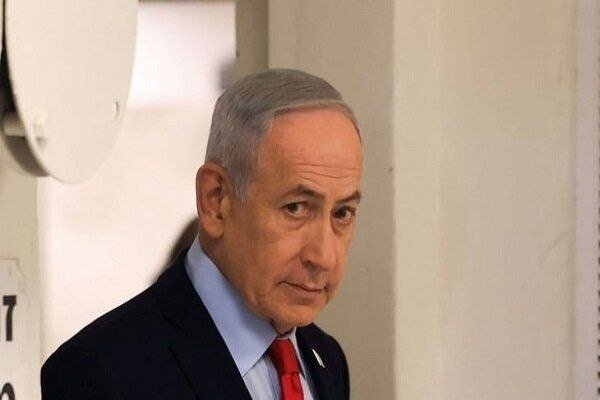
At 17:16 UTC on 16 June 2026, Israel's Channel 13 quoted senior officials saying the unsayable out loud. Israel, the officials said, has "accepted the reality that the United States determines what happens regarding Iran," while still pressing to remain influential over Lebanon. The admission is a tell, not a leak. It confirms what the past several months of shuttle diplomacy have quietly made obvious: the file on Iran, the file on Hezbollah, and increasingly the file on Syria now pass through Washington first and Tel Aviv second.
The shape of that transfer came into sharper focus an hour earlier. At 16:15 UTC, Israel's public broadcaster Kan reported that Donald Trump formally presented a proposal to Israeli and Lebanese representatives roughly six weeks ago under which Syria would take responsibility for disarming Hezbollah. The plan is extraordinary in its architecture. It binds three of Israel's most active adversaries — a weakened Syrian state, a battered Lebanese polity, and an Iranian-aligned militia — into a single American-brokered arrangement, with Washington as the de facto enforcer and Israel as a stakeholder rather than an actor. Israel, in other words, is no longer the principal doing the disarming; it is a party to someone else's deal.
Read against that backdrop, Hezbollah's response at 15:58 UTC the same day was predictable in content and instructive in framing. A Hezbollah statement, carried by regional outlets, declared that there will be "no Iran-US nuclear deal unless Israel withdraws from Lebanon" and accused Israel of continuing to occupy dozens of Lebanese villages and of not halting airstrikes or artillery shelling since the announcement of the US-Iran truce. The Lebanese public is unmoved by the diplomatic choreography. BBC reporting on 16 June documents the "fragile quiet" in Lebanon and the widespread doubt that the arrangement will end the fighting between Israel and Hezbollah. The truce holds, barely, in the absence of trust.
What this episode illustrates is a quiet redistribution of agency in the Eastern Mediterranean. For two decades the conventional frame held that Israel set the tempo of any confrontation with Hezbollah, and the United States underwrote the outcome. The new frame inverts that. Washington now sets the tempo — convening the parties, drafting the architecture, choosing the sequencing between a nuclear channel with Tehran and a disarmament track in Beirut — and Israel underwrites. The shift is not absolute. Israeli strikes have continued; the IDF retains the operational capacity to act unilaterally, and the official Israeli line is that it will not accept a permanent Hezbollah presence along the border. But the political ceiling above those operations is now drawn in Washington, not Jerusalem.
The honest reading is that the Israeli security establishment has not been outmanoeuvred so much as out-resourced. A grinding multi-front war, an unresolved hostage file, and an Iranian nuclear programme that is not, on present evidence, being stopped by force have all pushed Israel toward the only partner with the leverage to address all three. Hezbollah's conditional rejection of a nuclear deal is, in this sense, less an obstacle than a tell about which leverage is real. The militant group's leverage in Beirut is fading; its only remaining card is to attach its fate to the nuclear file and to wait for the American political calendar.
There is a counter-reading worth taking seriously. Israeli officials quoted by Channel 13 may be performing humility for a domestic audience that has grown tired of perpetual war. Accepting American primacy, in that telling, is a way of distributing blame for concessions Israel would have to make anyway — over buffer zones, over the timing of withdrawals, over the future of strikes on Iranian assets in Syria. A second reading: the Syria-disarmament proposal is a vehicle for legitimising a Syrian central role in Lebanon that Israel would once have blocked, in exchange for a US commitment on Iran that Israel could not extract on its own. Both readings point the same direction. The era in which Israel could act as principal, guarantor, and enforcer simultaneously is closing.
What remains genuinely uncertain is whether the Washington framework holds. The sources do not specify the precise text of the Trump proposal, the level of Syrian buy-in, or whether Iran's nuclear negotiators are operating on the same page as Hezbollah's political office in Beirut. BBC reporting flags that the Lebanese public is unconvinced, and Hezbollah's own statement makes withdrawal from Lebanese territory a precondition it knows will not be met. The architecture, in other words, is being built on contested ground by parties with reason to distrust one another. Israeli acceptance of that constraint, in public, is the news.
This publication framed the story around the transfer of agency, not around the personalities. The wires led with the Hezbollah statement and the Lebanese reaction; we led with the Israeli admission, because the admission — not the statement — is the structurally new fact.
Wire provenance
This editorial synthesis draws on the following public wire/social posts:
- https://t.me/gazaalanpa
- https://t.me/wfwitness
- https://t.me/thecradlemedia
Follow the event.
These dated source records provide context. They do not retrospectively verify this archive article.
Separate what the nuclear watchdog reported from what it could not determine after the June 2025 strikes.