Tehran warns of retaliation as Israel–U.S. rift over Iran MoU surfaces and UAE–Israel talks come to light
Three disclosures in a single 48-minute window on 16 June 2026 — an Iranian army warning, a reported Israeli request denied access to the Iran MoU, and a previously undisclosed UAE visit to Israel — point to a widening split inside the U.S.-led regional security architecture.
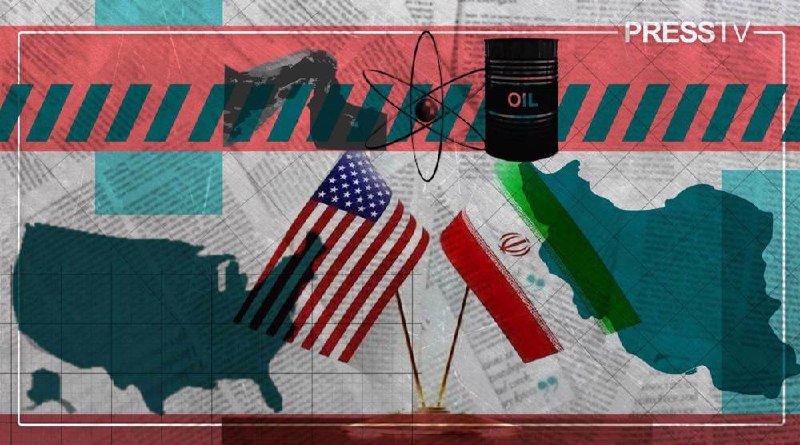
At 18:37 UTC on 16 June 2026, the Iranian army publicly warned that Israel should "expect a harsh response" from Iran's armed forces if strikes in southern Lebanon did not stop. The warning arrived in the same news cycle as a second disclosure: that Israel had formally requested access to the memorandum of understanding underpinning the U.S. arrangement with Iran and was refused. Forty-eight minutes earlier, Israeli public broadcaster Kan had been identified as the source of a third revelation — that senior United Arab Emirates security officials had secretly travelled to Israel in March, at the start of the joint Israeli–U.S. operation against Iran, for high-level talks whose existence had not previously been disclosed. Read in isolation, each item is a routine regional-security data point. Read together, they sketch something sharper: a quiet realignment of the security architecture that Washington has spent two decades constructing, and an Israeli government that now finds itself, on at least one specific file, on the outside of the room.
The practical effect is that the period following the March operation is producing the kind of disclosures that, in earlier phases of the U.S.–Israel–Iran triangle, would have been managed tightly out of public view. The fact that the Iranian army's threat, the Israeli request for the MoU, and the UAE visit are all on the wire on the same afternoon is itself a story about how the information environment around the conflict has loosened.
What the Iranian army actually said
The 18:37 UTC item, carried by Israeli channel N12's Amit Segal wire, frames Tehran's warning in narrow operational terms: it is conditioned on Israeli attacks in southern Lebanon, not on the broader regional confrontation. The phrasing — that Iran expects Israel to "face a harsh response" if those attacks continue — is the kind of calibrated threat that Iranian military spokespeople have used in the past to set a public red line without committing to a specific timetable. It places the burden of de-escalation, in Tehran's telling, on Israel rather than on Hezbollah or on Iranian proxies in Lebanon.
The reading worth taking seriously is that this is a managed signal, not an imminent escalation. Iran's armed forces have learned, through a decade of confrontations with Israel, that uncontrolled escalation tends to hurt the side with less integrated air defence. A statement that ties retaliation to a specific, observable Israeli behaviour gives Tehran room to choose the moment — and the dose — of any response, while preserving its claim to credibility among the audiences that matter in Tehran and Beirut.
The MoU request and the U.S. denial
The more revealing item is the 18:35 UTC report, from the Megatron_ron wire, that Israel formally requested access to the Iran memorandum of understanding and was denied. The wording — "a remarkable and highly unusual development between US and Israel on an issue of such critical national security importance" — captures how unusual the move is being treated inside the Israeli commentary ecosystem.
The U.S.–Iran MoU is the document that frames the diplomatic and technical relationship between Washington and Tehran outside the JCPOA architecture that the United States withdrew from in 2018. If Israel is now asking to read it and being refused, the question is not procedural. It is whether the U.S. is signalling that the channel to Tehran has substance Israel is not expected to be able to see, let alone influence. For an Israeli government that has spent the last year publicly committed to preventing a nuclear-capable Iran, being kept outside that paperwork is the kind of fact that does diplomatic damage even when the document itself is innocuous.
There is a counter-read: the refusal may be anodyne. U.S. negotiators routinely compartmentalise active channels to keep them viable, and Israel has been read out of sensitive files before — the 2015 JCPOA negotiation being the most-cited case. The Israeli commentariat's framing, in other words, may be over-reading a bureaucratic fence. But the political fact remains: Israel has been told no, on the record, in a week when it is also having to absorb the news that a Gulf state visited in secret during a war.
The UAE visit nobody mentioned until now
The third item, carried at 18:00 UTC by Clash Report citing Kan News and corroborated at 17:49 UTC by Open Source Intel, is the most consequential for the longer-term map. Senior UAE security officials travelled to Israel in March, at the start of the Israeli–U.S. operation against Iran. The visit had not been previously disclosed. The substance of the talks is not on the wire; what is on the wire is that they happened, and that they were held at a moment of maximum regional stress.
That timing matters. A Gulf state engaging Israel during an active shooting war is materially different from the same Gulf state engaging Israel during a calm. The diplomatic cost of being seen in the same room as the Israeli leadership while Iranian targets are being struck is, for an Emirati government that still maintains working relations with Tehran, a real price. The fact that the price was paid suggests that the UAE saw the March operation as defining a new security environment in which the older posture of careful balance was no longer adequate.
The most plausible alternative explanation is that the talks were narrow, technical, and driven by an immediate operational concern — Iranian retaliation, missile defence coordination, the safety of Gulf shipping through the Strait of Hormuz. That is consistent with the pattern of Gulf–Israeli engagement since the Abraham Accords of 2020, in which security cooperation has generally outpaced the political and public framing. Either reading — narrow tactical or broader strategic — points in the same direction: the Gulf is hedging more visibly than it did a year ago, and doing so in a way that is willing to absorb disclosure costs.
What this says about the architecture
The U.S. has, for two decades, sold the region a particular bargain: a security umbrella in which American primacy is the organising principle, Gulf states are protected clients, Israel is the indispensable junior partner, and Iran is the shared adversary kept at arm's length. The three items on the wire on 16 June 2026 each put pressure on a different joint of that frame.
Iran's calibrated warning is a reminder that the umbrella does not, in practice, reach Lebanon. The Israeli request for the MoU is a reminder that the junior partner is no longer being shown the documents. The UAE visit is a reminder that the protected clients are, quietly, building parallel circuits that do not run through Washington or Tel Aviv. None of these facts, on their own, breaks the architecture. Together, they describe the kind of incremental stress that produces a new arrangement only in retrospect.
Stakes and what remains unknown
The actors with the most to lose from a hardening of the current trajectory are the Israeli defence establishment, which depends on a U.S. channel to Iran that appears to be narrowing; the UAE, which has paid a disclosure cost and now needs the talks to produce something; and the Iranian armed forces command, which has set a public red line and will be measured against it. The actor with the most to gain is the U.S. State Department and the active negotiating team handling the MoU, which retains, for the moment, the ability to mediate between parties that are no longer talking to each other.
Several things remain genuinely unknown. The text of the MoU Israel has been denied is not public. The substance of the UAE–Israel talks in March is not on the wire. The Iranian army's "harsh response" is conditional and undated. The Israeli request and denial are reported by a single channel and have not, as of 18:37 UTC on 16 June 2026, been confirmed by a U.S. or Israeli official on the record. A reader should hold all three items as plausible and recent, and as the leading edge of a story that will produce more disclosures in the days that follow — not as a closed picture.
— Monexus desk note: wire reporting on 16 June 2026 framed the Iranian warning, the MoU request, and the UAE visit as three separate items; this article treats them as one developing story about a regional security architecture under visible stress.
Wire provenance
This editorial synthesis draws on the following public wire/social posts:
- https://t.me/amitsegal/
- https://t.me/megatron_ron/
- https://t.me/ClashReport/
- https://t.me/osintlive/
- https://en.wikipedia.org/wiki/Abraham_Accords
- https://en.wikipedia.org/wiki/Joint_Comprehensive_Plan_of_Action
Follow the event.
These dated source records provide context. They do not retrospectively verify this archive article.
Separate what the nuclear watchdog reported from what it could not determine after the June 2025 strikes.