A KRW stablecoin, a US government wallet, and a closed-door deal on Iran: the threads Monexus is watching on 16 June 2026
Hormuz traffic is moving, WSJ is reporting a full US sanctions unwind on Iran, and US regulators are pulling stablecoin issuers into the bank-secrecy regime. Three threads, one settlement question.
By the close of business on 18 June 2026, three separate threads had tightened into a single, awkward question: who, exactly, settles the next petrodollar.
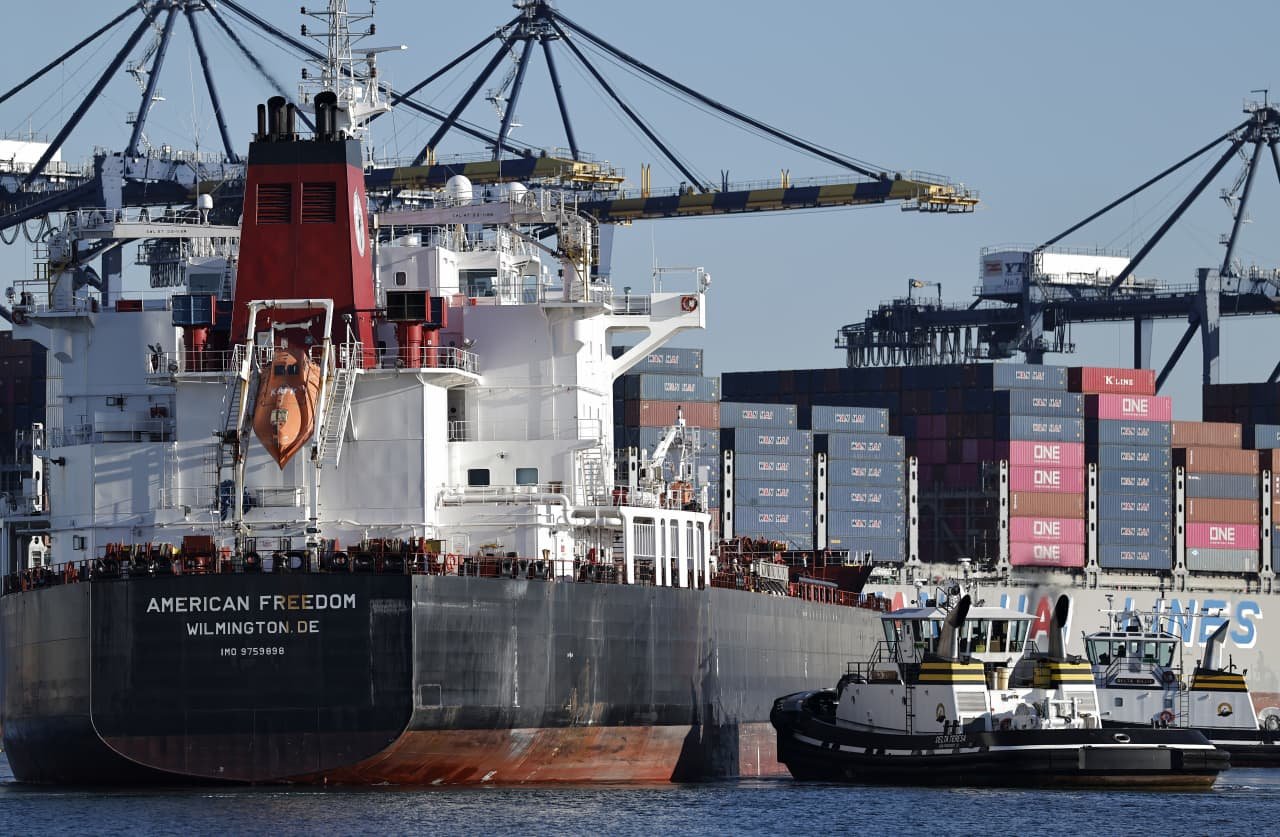
The Strait of Hormuz was moving again. At least six oil tankers transited the chokepoint on 18 June, the day after Washington and Tehran signed a memorandum of understanding halting the war that began earlier in 2026, according to Nikkei Asia reporting carried on Telegram. The British Foreign Office simultaneously dropped its "do not travel" advisory for the United Arab Emirates, ending a multi-week stranding of British travellers in the Gulf. And on the prediction markets tracked by Polymarket, the implied probability that Iran agrees to end uranium enrichment by 30 June had climbed to 63 percent, up sharply from earlier in the week.
Read in isolation, those are three different stories. Read together, they describe the same handshake: an American government trading sanctions relief and oil-flow normalisation for a verifiable end to enrichment, with the financial plumbing still under construction. That is the file Monexus is watching today, and the seams are visible.
The deal that was not a deal
The framework on the table, as described by Wall Street Journal reporting circulated on the Unusual Whales wire, is structurally aggressive: the United States would terminate all Iranian sanctions as part of a final accord, decline to impose any new ones in the interim, and issue waivers permitting Iranian oil exports to clear the new sanctions architecture shortly after the MOU. The Polymarket enrichment contract, sitting at 63 percent as of 18 June, prices the political durability of those terms.
President Trump, asked aboard Air Force One whether the deal would hold, offered a useful diagnostic. "If [the Iran deal] works out, I'm going to take the credit; if it doesn't work out, I'm blaming [Vance]," the president said, seemingly in jest. The line matters less as a constitutional observation than as a tell: even the principal is hedging the political signature. A deal whose author openly pre-assigns blame is a deal whose terms are the point, not whose commitments are.
What the public record does not yet contain is the text of the memorandum. Until that document is published, the reporting rests on the WSJ account, the Polymarket-implied probability, and the operational evidence in the water, six tankers, an empty "do not travel" page, a quietly moving DXY. That is enough to track the deal. It is not enough to verify it.
A stablecoin with a Korean flag on it
While the negotiators in Washington and Muscat trade enrichment caps, the regulatory machinery in Washington is rewriting the rules for a different kind of settlement instrument. On 18 June, Cointelegraph reported that US regulators are pushing customer-identification requirements for stablecoin issuers analogous to those imposed on regulated banks under the Bank Secrecy Act. The proposed framework would extend KYC obligations, the same identification programme that banks run on new depositors, to every issuer whose tokens touch US persons.
That matters for a deal whose oil is expected to flow into Asia. A Korean won-pegged stablecoin, the kind of instrument several Korean issuers have spent two years trying to commercialise, becomes a different product the moment US bank-secrecy rules apply. A KRW stablecoin that clears through a US-regulated issuer inherits the same reporting rails as a JPMorgan deposit account. A KRW stablecoin that does not gets cut off from the dollar side of the market it needs in order to function.
The Iran framework assumes Iranian oil exports will clear in fiat, but the routes that oil actually takes have been dollarising through stablecoins for at least two years. The Cointelegraph rulemaking, if it lands, compresses that market back into the regulated banking perimeter at exactly the moment a sanctions-waiver architecture is trying to push exports out of it. Two policy streams, one financial system, no obvious arbiter.
The index that will not sit still
The clearest read on which side wins that argument is the dollar. Coindesk's 18 June day-ahead note, filed under the headline that Bitcoin's "nemesis, the Dollar Index" is on the verge of a major breakout, is the piece to watch. A rising DXY tightens financial conditions globally and historically suppresses risk-asset pricing, including crypto. A stablecoin regime that funnels Asian fiat-token issuance through US banks gives Washington a new lever over the offshore liquidity that has, until now, operated one regulatory ring outside the dollar system.
It is not clear which way the breakout resolves. A sanctions-waiver architecture that re-legalises Iranian oil exports adds dollars to the demand for crude. A stablecoin regime that forces KRW-token issuers into US-bank KYC adds reporting friction to the Asian capital that has historically circled the dollar. Both, taken together, push the settlement layer closer to Washington at the same moment the underlying commodity flow is being decriminalised. That is a policy of dollarising the perimeter, not just the trade.
The Polymarket market disagrees with itself. The 63 percent enrichment-end probability, the implied confidence in the Iran framework, sits alongside a 19 percent reading on Tesla releasing Optimus by year-end and a 25 percent reading on the Fable model being restored by 22 June, a small reminder that the same exchange that prices Middle East diplomacy also prices corporate AI roadmaps. The point is not that the platform is unserious. The point is that, as of 18 June, the contract market and the policy text are not the same instrument.
What the next 72 hours resolve
Three things have to land before any of this becomes a story rather than a wire. First, the MOU text. Without it, every operational signal, the tankers, the Foreign Office advisory, the Polymarket print, is read through the WSJ account alone, and the WSJ account is a description of an agreement, not the agreement itself. Second, the Federal Register. The Cointelegraph rulemaking on stablecoin KYC is currently a proposal; the date it becomes a comment period is the date the KRW-token question moves from theoretical to scheduled. Third, the next DXY print. A breakout above the resistance Coindesk flagged on 18 June would be the first quantitative confirmation that the dollarisation of the new architecture is, in fact, what the market believes it is.
Watch the tankers. Watch the Federal Register. Watch the index. The deal is in the water; the plumbing is still being drawn.
Sources
- Nikkei Asia via Telegram, "At least 6 oil tankers sail through Hormuz following US-Iran deal" (18 June 2026, 21:31 UTC)
- BBC News, "Foreign Office drops 'do not travel' advice for UAE" (18 June 2026, 14:25 UTC)
- Polymarket, "Iran agrees to end enrichment of uranium by June 30" (18 June 2026, 22:51 UTC)
- Unusual Whales via X, citing WSJ: "US to terminate all Iranian sanctions under final deal" (18 June 2026, 15:17 UTC)
- Unusual Whales via X, citing WSJ: "The US won't impose any new sanctions on Iran, pending a final deal" (18 June 2026, 14:37 UTC)
- Unusual Whales via X, citing WSJ: "The US are to issue waivers for Iran oil exports soon after the MOU deal" (18 June 2026, 14:17 UTC)
- Cointelegraph, "US regulators push user ID requirements for stablecoin issuers akin to regulated banks" (18 June 2026, 21:42 UTC)
- Coindesk, "Bitcoin's nemesis, the Dollar Index, is on the verge of a major breakout" (18 June 2026, 11:10 UTC)
Desk note: Monexus is publishing this as a wire synthesis, not as a verified account of the MOU. The Iran terms above are drawn from WSJ reporting carried on the Unusual Whales feed; the stablecoin rulemaking from Cointelegraph; the operational data from Nikkei and the BBC. The Polymarket print is treated as a market signal, not as a forecast.