A Russian exile is shot dead in Poland. The questions start with who wanted him silenced.
Robert Kuzovkov, a painter who fled Russia after criticising the invasion of Ukraine, was fatally shot in Warsaw. Two Belarusian nationals are in custody, and investigators are examining whether Moscow's long reach extends to NATO territory.
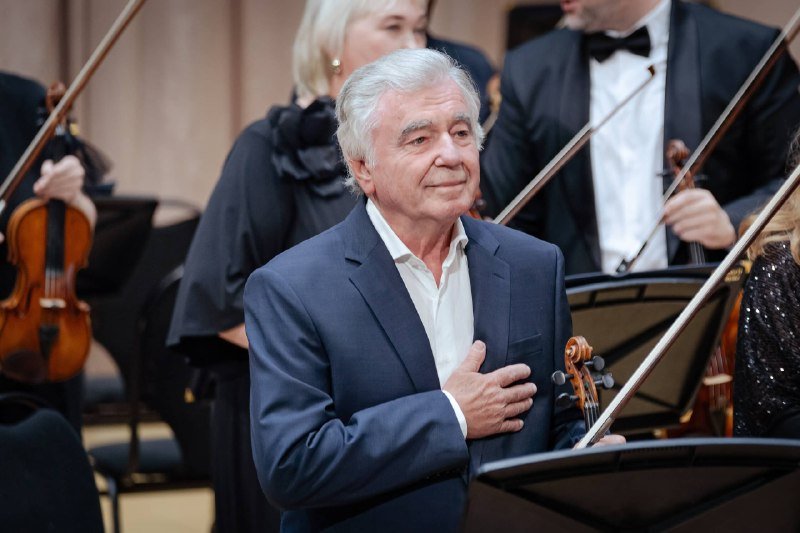
A Russian painter who built a second life in Warsaw after denouncing the Kremlin's full-scale invasion of Ukraine was shot dead in the Polish capital on 16 June 2026, ending years of exile in a single, public act of violence. Two Belarusian men are in custody, according to Polish authorities cited by The New York Times, and the case is being treated as a targeted killing with a transnational trail.
The victim, Robert Kuzovkov, had left Russia after the February 2022 invasion and had been living openly in Poland, where tens of thousands of Russian and Belarusian dissidents have settled since the war began. The arrest of two Belarusian nationals, announced the same day, has put Warsaw's investigators on a fault line that runs between the Polish state and a neighbourhood of hybrid threats the European Union has been slow to map in public.
The killing, if confirmed as a contract-style hit, would mark an escalation in what Polish and Lithuanian officials have for years described as a steady pattern of low-grade Russian and Belarusian intelligence activity on NATO's eastern flank. It is the kind of incident that turns a security debate inside out: not a cyber operation or a sabotage, not an influence campaign, but a body on a pavement in the middle of a European capital.
What Polish authorities have said — and what they have not
Polish investigators told The New York Times that two Belarusian men had been detained in connection with the killing and that the case was being treated as a targeted shooting. The New York Times did not, in its initial dispatch, identify a motive or name a state sponsor. That restraint is appropriate; the facts in such a case take weeks to harden, and premature attribution can do as much damage as silence.
What Polish services do have, according to the same reporting, is a victim profile that fits a known pattern: a Russian national who had been publicly critical of President Vladimir Putin, who had relocated to Poland, and who continued to produce work that was uncomfortable for the Kremlin. The Belarusian nationality of the detained suspects is itself a fact with weight — Belarus under Alyaksandr Lukashenka has functioned, in practice, as a logistics corridor and a pressure valve for Russian security operations, particularly after the 2020 protests and the country's subsequent deepening dependence on Moscow.
The sources do not specify the weapon used, the relationship between the two suspects, or whether either has links to Belarusian state structures. The sources do not name a suspected handler. All of that is for the prosecutors and the intelligence services to work out in the coming weeks. The press, including this one, should be careful with the word "assassination" until the case file says so.
An exile community on edge
The Russian and Belarusian diaspora in Warsaw is large, organised, and conspicuous enough that Polish services have long treated it as a category requiring protection. Polish non-governmental organisations supporting Russian emigrés say the community has expanded sharply since 2022, with artists, journalists, and opposition politicians choosing Warsaw in part because of the existing Belarusian infrastructure, in part because Poland grants relatively swift humanitarian protections, and in part because the political climate in Warsaw is openly sympathetic to those fleeing the Kremlin and Minsk.
That visibility is now a vulnerability. In a city where Russian opposition figures shop, publish, and hold public exhibitions, the cost of reaching a single target is lower than in Moscow, and the deterrent effect on other exiles is higher. The Kuzovkov case, regardless of its final classification, will be read by the diaspora as a message — and the diaspora is the audience that Russian security services, if they are involved, would most want to reach.
Polish civil society has in the past two years grown louder about exactly this risk. Watchdogs tracking foreign intelligence activity on Polish soil have repeatedly warned that the country's role as the principal European hub for Russian and Belarusian opposition figures makes it a target, not a sanctuary. The Kuzovkov shooting is, in that sense, the confirmation of a forecast nobody wanted to be right about.
What the killing tests
Poland is a NATO frontline state, a member of the European Union, and a country that has, since 2022, become Europe's loudest advocate for treating Russia as an existential rather than a regional threat. A political killing on Polish soil — if that is what prosecutors eventually establish — would test the alliance on a question it has so far handled through communiqués: what does an attack on a foreign national on NATO territory, attributed to a hostile foreign power, actually trigger?
Article 5 of the North Atlantic Treaty is the obvious reference point, but the threshold it sets is a collective response to an armed attack, not a one-off shooting. The more relevant framework is the slow accumulation of cases that Poland, the Baltic states, and the Czech Republic have asked allies to treat as a single campaign: arson at logistics hubs in the Baltics, parcel-bomb plots in Germany, sabotage of undersea cables, the Skripal poisoning in Salisbury, the Berlin killing of a Georgian citizen of Chechen origin in 2019, and now a fatal shooting in Warsaw. The pattern, if prosecutors connect these dots, points less to a series of unrelated acts than to a doctrine of deniable pressure applied at the seams of the European security order.
For the European Union, the case also has a criminal-justice dimension. The European arrest warrant framework, the work of Eurojust, and the new counter-russie sanctions architecture all assume a particular kind of state-to-state cooperation. A killing allegedly involving a Belarusian operative on Polish soil, against a Russian victim, draws every one of those instruments into play — and tests whether they are built for the politics of the case or only for the paperwork.
What remains uncertain
A responsible reading of the 16 June reports has to concede what is not yet known. The two detained men are Belarusian nationals; the sources do not say whether they hold Russian residency, formal employment, or links to security services. The motive — personal, criminal, ideological, or commissioned — has not been stated by the prosecutor's office. The relationship between the victim and any Belarusian or Russian state structures has not been disclosed, and may not be disclosed for weeks, given the sensitivity of source-handling in cross-border cases of this kind.
What can be said, on the basis of the reporting available, is narrower than the speculation that will inevitably follow. A Russian exile critical of the Kremlin was shot dead in Warsaw. Two Belarusian men are in custody. The Polish state is treating the case as a targeted killing. Beyond that, every public claim should be treated as provisional — and the alliance response, if one comes, should be calibrated to facts that prosecutors are willing to put on the record.
This publication treats the Kuzovkov case as a criminal investigation whose political consequences will be set by what the file shows, not by what the commentariat assumes. The wire reporting on 16 June gives the facts; the pattern is a question for investigators, and the policy response is one for governments.
Follow the event.
These dated source records provide context. They do not retrospectively verify this archive article.
A dated voting record is evidence of one decision. Use the original UN record before turning it into an alignment label.
Visual explainer · historical vote of 2022-03-02 →