A Kremlin critic, a Polish border city, and a shooting the wire services can't yet explain
Robert Kuzovkov — better known as the caricaturist Semyon Skrepetsky — was shot dead in Biała Podlaska on 15 June. The murder lands inside a city that doubles as a transit corridor for Ukrainian refugees, and inside a still-thin public record.
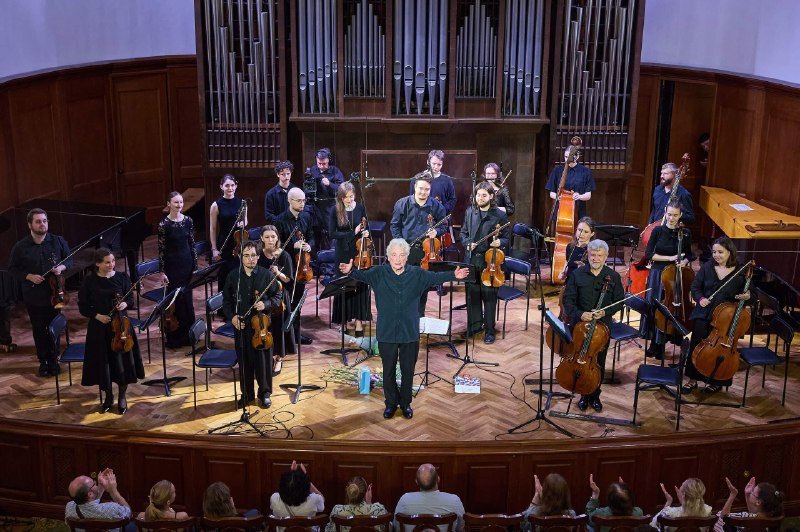
A Russian caricaturist who mocked Vladimir Putin in grotesque pen-and-ink had barely a day to learn that the Polish borderlands he had chosen as his exile were not far enough away. Robert Kuzovkov, who drew and published under the pseudonym Semyon Skrepetsky, was shot dead in Biała Podlaska on the afternoon of 15 June 2026, a town of roughly 57,000 people that sits about 150 metres of tarmac from the Belarusian frontier and a short drive from the Ukrainian crossing at Terespol. Polish police have opened a homicide investigation. Within hours, the killing had been claimed by no one, claimed for no one, and yet claimed for almost everyone: by Russian opposition commentators who called it political murder, by Ukrainian sources who alleged a long-running Russian effort to silence the cartoonist, and by a wider commentariat that read the case as a stress test of the new geometry of the war — exiles on the EU's eastern edge, hit squads that may or may not be state-tolerated, and a Polish state under Tusk that is itself a target of Moscow's information war.
What is known is narrow but firm. The BBC reported on 16 June 2026 that Kuzovkov, operating under his pseudonym, had built a following through caricatures of political figures including Putin — work that put him squarely inside the tradition of Russian satirical artists who have paid a price for their satire. The Polish-language economics outlet Ekonomat, writing on its X account at 08:02 UTC on 16 June 2026, framed the killing through a different lens: it characterised the cartoonist as having long been a target of Ukrainian interest, and accused most Polish media of reducing the case to the question of "vulgar caricatures." The two framings, in other words, are already hardened. The wire line reads exile-and-assassination. The alternative line reads a man whose mocking had made enemies on more than one side of the war in Ukraine, and whose death has been opportunistically claimed by those who find the claim useful.
A small city, a long border
Biała Podlaska is not a place that ordinarily makes the international news. It is a Lublin voivodeship market town, an agricultural node, a garrison town — and, since February 2022, a transit point for hundreds of thousands of Ukrainian refugees who have crossed the nearby Terespol–Brest border crossing. Polish local newsrooms have spent four years writing about humanitarian logistics, the strain on the housing stock, and the small but persistent question of Russian and Belarusian intelligence activity along the border strip. The shooting of a Russian exile on a Biała Podlaska street is therefore, in the most literal sense, a story that lands in pre-existing terrain: a town that has lived at the seam between the EU and the eastern steppe for long enough to know that what looks like a local crime can be something else.
Polish police have not, as of the time of writing, named a suspect, a motive, or a foreign-state connection. The BBC's reporting carries the killing, the man's identity, and his satirical corpus, and stops there. The Ekonomat post goes further in narrative — alleging a long-standing hunt for Kuzovkov by Ukrainian actors — but carries it on a single X thread and does not link to a published investigation. The asymmetry is itself the story: a confirmed death, two competing political readings, and a Polish prosecutorial record that has not yet spoken.
The Russian-satire tradition, and its costs
Skrepetsky's caricature work belongs to a genre that has been openly lethal in Russia for more than two decades. The most cited recent precedent is the 2017 St Petersburg bombing that killed the last editor of the satirical newspaper Charlie Hebdo's Russian edition, and the unresolved killings of Russian journalists and bloggers that have continued to accumulate since 2000. A caricature artist, by craft, is unusually exposed: the work is public, signed, and traceable, and the artist's face — even when they publish under a pseudonym — is usually known to a small circle. The BBC's report makes the lineage plain without invoking it by name. The relevant fact is not that the killing is historically unprecedented; the relevant fact is that the genre's body count is long enough that a shooting on EU soil of a Putin-caricaturist is read, almost by reflex, as a political killing.
The reflex is worth interrogating. Polish police are not at this stage treating the case as a contract killing. The Russian state has not commented. The Ukrainian authorities, who would be the obvious target of any "blame Kyiv" reading, have not commented. The Putin-critical Russian diaspora in Europe — of which Kuzovkov was a small but visible part — has predictably called for a transparent investigation. The Polish government, led by Donald Tusk's coalition, has not yet made a public statement of the kind that would lock the framing.
The Ukrainian counter-narrative, and what is missing from it
The Ekonomat post is a useful artefact precisely because it exists at the edge of the established media system: a Polish-language economics and politics X account, posting in the early hours of 16 June UTC, asserting a Ukrainian dimension to the hunt for Kuzovkov and accusing mainstream Polish outlets of underplaying it. The post is short, declarative, and unsourced beyond itself. The claims it makes — that Kuzovkov was a target of Ukrainian services long before the shooting; that the Polish media is sanitising his caricature work as merely "vulgar" — are not corroborated in the BBC report or in any other source cited here. The post may be right. The post may be operating from a fact pattern that a fuller investigation will surface. The honest reading is that, on the public record, the post is an argument, not a finding.
The reason that argument warrants a paragraph rather than a footnote is structural. A serious account of a Russian exile's killing on Polish soil has to take seriously the possibility that the killing was commissioned by a third party other than the obvious one. Russia's invasion of Ukraine has produced a thick and ugly intelligence environment across Eastern Europe. The Polish state, along with its Baltic and Czech partners, has spent four years warning publicly that the Kremlin uses a mix of criminal intermediaries, run-of-the-mill organised-crime groups, and deniable private networks to do work that the FSB and GRU cannot be seen to do. None of that work, by design, leaves a clean paper trail. The corollary, rarely stated aloud, is that other actors in the wider war have access to the same toolkit, and that any early claim of "obvious" attribution should be treated as a hypothesis, not a verdict.
What the structural pattern looks like
The deeper frame is one of the war's quieter geographies. Russia is a routine exporter of cross-border political violence in Europe; the Salisbury poisoning of 2018 and the Berlin assassination of a Georgian citizen in 2019 sit inside a documented pattern that German prosecutors and the British Crown Prosecution Service have laid out in court filings. Those cases took years to prosecute and only worked because the target states had technical forensics, intelligence-sharing arrangements, and the political patience to follow the evidence into Russian state structures. Poland is, by geography, the most likely next venue. It is also the EU member that has done the most, in the last four years, to harden its border infrastructure against exactly this kind of operation.
That is the structural context in which the Skrepetsky case now sits. A Russian exile; a town on the Belarusian border; a four-year-old war; an active Polish–Ukrainian intelligence relationship; an unresolved Russian intelligence presence in the same voivodeship; a satirical corpus that the BBC describes as having targeted Putin; and a single X account pushing, twelve hours after the killing, the counter-narrative that the obvious reading is wrong. None of this proves anything. All of it suggests that this case will be read for months through a fog of competing claims — and that the only durable reading will be the one the Polish prosecutorial record eventually supports.
The honest bottom line is that the public record is too thin to assign the killing. Polish police have a man dead and a file open. The wire services have carried the death, the pseudonym, and the genre. The alternative media space has, within hours, produced a competing attribution. What this publication can confirm from the available sources is the killing, the man's artistic identity, the cartoonist's reputation for Putin-critical caricature, the location, and the absence so far of any official suspect. What this publication cannot confirm is who ordered the killing, who pulled the trigger, or whether the two framings now circulating will converge as the case file matures.
Desk note: Monexus ran the killing through the wire line and through the alternative-media line in parallel, on the principle that an exile's murder on the EU's eastern edge deserves more than a single-frame lead. The Polish prosecutorial file is the one that will eventually settle the question; until then, the structural pattern of cross-border political violence in Europe is the responsible frame, not the assumption.
Wire provenance
This editorial synthesis draws on the following public wire/social posts:
- https://x.com/ekonomat_pl/status/HK63pLBWsAAg8Xs
Follow the event.
These dated source records provide context. They do not retrospectively verify this archive article.
A dated voting record is evidence of one decision. Use the original UN record before turning it into an alignment label.
Visual explainer · historical vote of 2022-03-02 →