Mbappé closes on Cafu's three-final record as FIFA confronts pre-tournament security failure
Kylian Mbappé can match Cafu by playing in a third consecutive World Cup final, while a separate disclosure reveals a flaw in FIFA's internal systems that could have let an outsider tamper with tournament TV feeds.
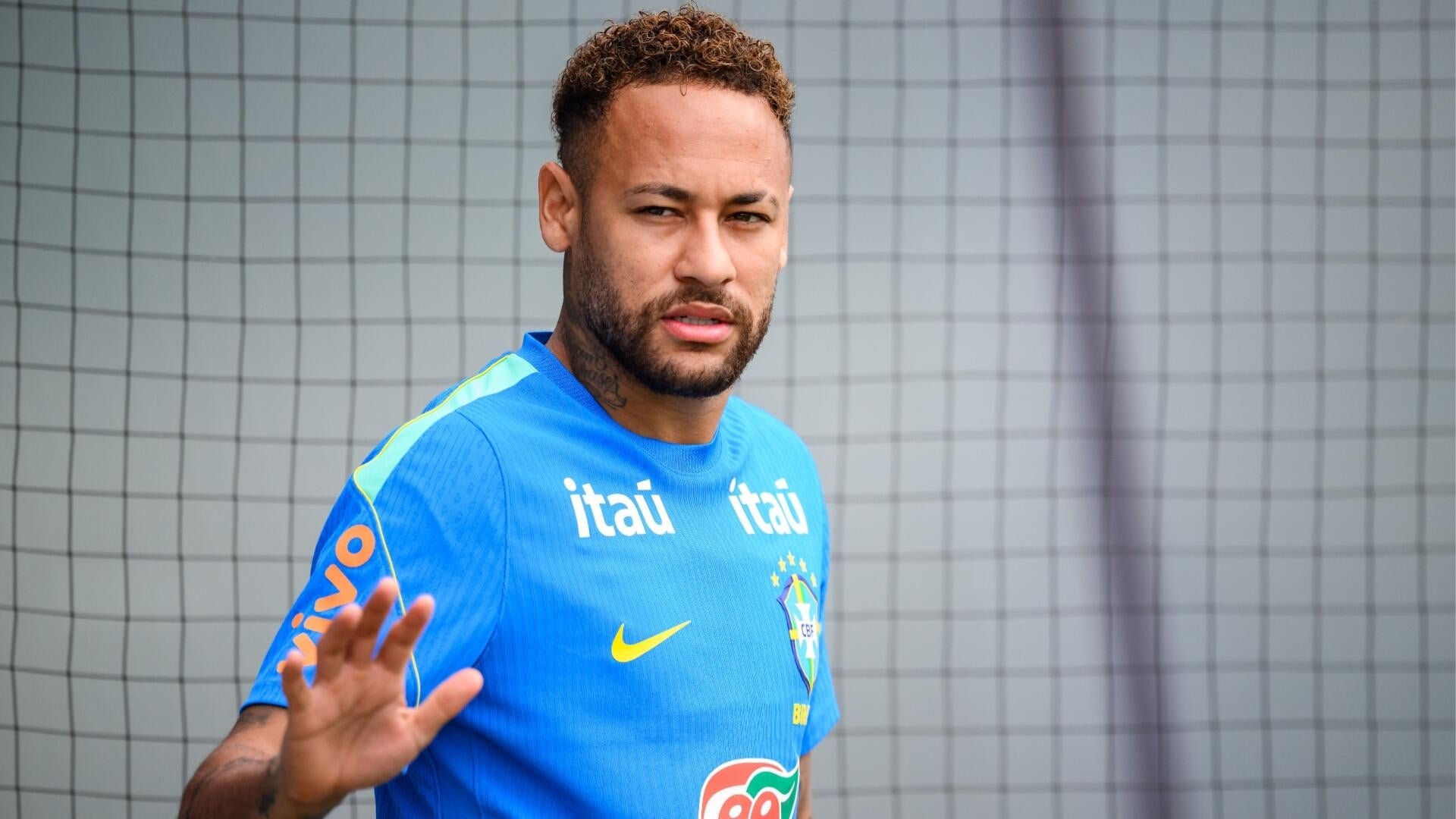
Kylian Mbappé stands one match from a slice of World Cup history that has belonged, for two decades, to a single name. According to a post on FIFA's official Telegram channel at 18:28 UTC on 16 June 2026, the France forward could join Brazil's Cafu as the only players to appear in three consecutive FIFA World Cup finals. The Athletic carried the same line at the same timestamp. The marker is unusual: in nearly a century of finals football, the company Mbappé is poised to keep is the captain who lifted the trophy in 1994 and 2002.
The milestone arrives as football's governing body wrestles with a separate embarrassment, one that has nothing to do with the pitch. TechCrunch reported at 18:13 UTC on 16 June 2026 that a security researcher had identified a flaw in FIFA's online platforms that, in her account, would have allowed her to take control of the television stream of every World Cup fixture. The disclosure lands roughly two weeks before the tournament's opening match in the United States, Canada and Mexico, and revives long-standing questions about whether a federation that monetises broadcast rights in the billions can be trusted to secure the pipes that deliver them.
A record built on scarcity
Cafu's feat is striking precisely because finals appearances are rationed by the tournament's structure. A player must first help his country survive a group stage, then three knockout rounds, then the semi-final — a run of seven matches that demands both individual endurance and a generationally competitive squad. Cafu played in the 1994 final in Pasadena, the 1998 final in Saint-Denis and the 2002 final in Yokohama, winning two of the three. Mbappé, who was a teenager when France lifted the trophy in Moscow in 2018 and who scored in the 2022 final against Argentina in Lusail, would be matching the Brazilian if he reaches the showpiece on 19 July 2026.
The framing matters more than the symmetry. A third final in a row confirms continuity at the top of the international game, where France have now reached four of the last five World Cup finals, a stretch of consistency that mirrors the Spain of 2008 to 2012 in the European Championship. It also positions Mbappé, at 27, as the on-pitch heir to a lineage that includes Pelé, Ronaldo and Lionel Messi — players whose greatness was measured in part by what they did in the game's most-watched single match.
There is a counter-read. Reaching a final is not winning one, and Mbappé's 2022 appearance ended in defeat and a hat-trick that nevertheless failed to deliver the trophy. If France fall short at MetLife Stadium, the record will be filed under "almost" rather than "achieved". The same caveat applied to Cafu in 1998, when Brazil lost the final in France; the historical verdict softened that loss by emphasising the run rather than the result.
A broadcast system nobody audited
The cybersecurity disclosure, first reported by TechCrunch, paints a picture of an organisation that has built sprawling digital infrastructure for a tournament spanning three host countries and 48 teams, and that, in the researcher's telling, did not lock the back door. The researcher described gaining access to several internal FIFA systems, including one she said would have allowed her to manipulate the TV feed of every World Cup match. The specific flaw, the route of exploitation, and the timeline of responsible disclosure were not detailed in the report available at 18:13 UTC; TechCrunch's account identifies the researcher and characterises the access she obtained, but the full technical ledger — which credentials were exposed, which services were reachable, whether the flaw has since been patched — is not in the reporting available at the time of writing.
That gap is the story's second problem. A tournament that sells broadcast rights to dozens of rights-holders across every continent, and that derives a meaningful share of its commercial revenue from those rights, is only as credible as the integrity of the signal. The threat model is not hypothetical: state-aligned broadcast interference, from jamming to feed substitution, has surfaced in other international competitions, and FIFA's own experience in Qatar in 2022 included a brief on-air incident involving a Qatari broadcaster's own on-screen messaging that prompted an apology. A vulnerability that would let an outsider dictate what billions of viewers see is a category above the usual pre-tournament IT housekeeping.
The institutional answer, and what it omits
FIFA's public posture on cybersecurity has, in past tournaments, been to treat the matter as a venue-by-venue operational concern rather than a public-relations one. The federation has not, in the materials available on 16 June 2026, issued a public statement on the specific disclosure. The 2026 tournament has been positioned as the most digitally delivered World Cup in history, with a fan-app-first ticketing regime, connected stadium infrastructure and an unusually high concentration of matches in venues that depend on a small number of broadcast partners.
What the disclosure does not yet establish is whether any party other than the researcher accessed the affected system, whether any broadcast was ever actually altered, or whether the flaw was remediated before the tournament's opening fixture. Independent confirmation of those questions will require either a formal incident disclosure from FIFA, a post-mortem from a broadcast partner, or a follow-up technical write-up from the researcher. Until then, the dominant framing — that a major federation's broadcast backbone was exposed — rests on a single account, however technically specific.
Stakes for July and beyond
The two threads share a clock. Mbappé's record attempt plays out in front of an audience whose trust in the picture they see is no longer assumed. A manipulated feed, or even a credible allegation of one, would be felt hardest in the highest-value markets — the rights-holders in Europe and the Gulf that pay the premiums that bankroll the prize pool. The reputational cost to FIFA of an on-air incident would dwarf the cost of a serious pre-tournament penetration test, and the federation's commercial model is structured so that the two are, in effect, the same line item.
There is a longer game, too. The 2026 World Cup is being marketed as a template for a more dispersed, more digital, more lucrative tournament model. If the template survives the first fortnight without a visible security failure, the precedent will harden. If it does not, the next round of host bids — and the broadcast-rights auctions that follow — will price in a discount that FIFA would prefer not to absorb.
For Mbappé, the mathematics are simpler. Win three finals in a row, and the conversation shifts from who matched Cafu to who surpassed him. Lose the third, and the record becomes a footnote attached to a defeat. France's last meaningful match before the tournament is the one that matters; the rest is commentary.
This article draws on two distinct threads from 16 June 2026: a milestone framing published simultaneously by FIFA's official channel and The Athletic, and a security disclosure reported by TechCrunch. Where the second thread leaves factual gaps — on the technical detail, the remediation status and the identity of any third-party actor — those gaps are noted above rather than filled in. Monexus reports on World Cup 2026 from a commercial-and-governance angle as well as the sporting one.
Wire provenance
This editorial synthesis draws on the following public wire/social posts:
- https://t.me/FIFAcom
- https://t.me/TheAthletic
- https://en.wikipedia.org/wiki/Cafu