Moscow as fulcrum: Ukrainian strikes on Russian refining, an Iranian central banker in the Kremlin, and the loose threads of a US-Iran deal
Three reports landing within an hour on 16 June 2026 — a Ukrainian strike on a Moscow oil refinery, Iran's central banker travelling to Moscow for monetary talks, and Reuters flagging that the substance of a US-Iran deal remains undefined — sketch the same picture from three different angles: the Russian capital is once again a hub for actors hedging against the Western-led order.
Three dispatches on the morning of 16 June 2026 — a Ukrainian strike on a Moscow oil refinery, the head of Iran's central bank travelling to Moscow for monetary cooperation, and Reuters reporting that a US-Iran deal has been announced without anyone yet explaining how it would work — point to the same square of the map. The Russian capital, far from being a regional backwater under sanctions pressure, is once again a hub for actors positioning themselves against a Western-led order that looks less orderly by the week.
The thread is not yet a tapestry. Each of the three items is reported by a different source, in a different register, with different evidentiary weight. Read together, however, they describe an emerging pattern: Ukraine is degrading the Russian fuel base that funds the invasion; Iran is seeking financial and monetary lifelines it cannot find in the West; and the United States is bargaining with Tehran in public while leaving the mechanics private. The most consequential capital in the early-summer news flow sits east of the old Iron Curtain.
A refinery in Moscow, and what it means for the fuel base
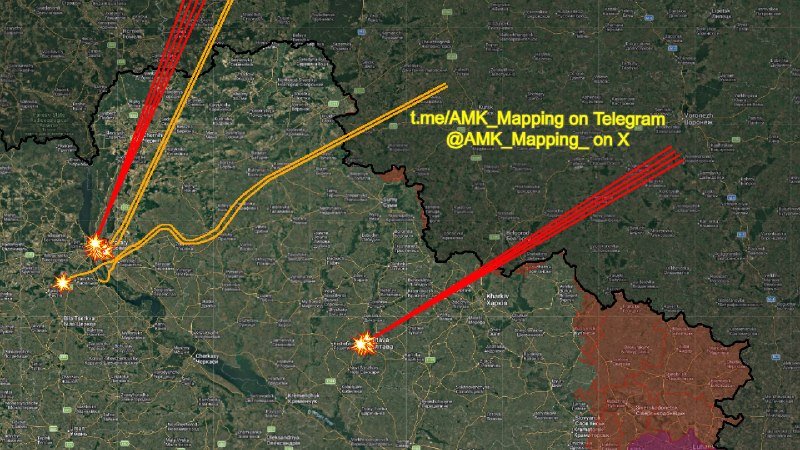
At 07:44 UTC on 16 June 2026 the Ukrainian military-affiliated channel Butusov Plus posted a brief, pointed message: there had been a strike on an oil refinery in Moscow, and Ukrainian anti-fuel sanctions against Russian refining capacity were in effect. The phrasing — repeated, in the source's clipped style, for emphasis — frames the strike not as a one-off retaliation but as part of a sustained campaign targeting the downstream end of Russia's war economy.
The strategic logic is familiar. Russian federal revenue continues to lean heavily on hydrocarbon export duties and taxes; refined product margins have been one of the few areas where the sector can still generate hard currency under the G7 price cap and EU import bans. Striking refineries inside the Moscow ring — a deeper and more politically symbolic target than the long-attacked refineries of Krasnodar, Tuapse, or Volgograd — pressures both the fuel balance and the political optics of the war. The same channel that has catalogued Ukrainian long-range strikes on Russian energy infrastructure for over two years treated the Moscow hit as continuity, not escalation: the sanctions, it implied, are already in force.
The counter-narrative, in line with the Russian information space, is that Ukrainian drone strikes on Russian civilian energy infrastructure are acts of terrorism designed to damage the population's morale. Russian state media has run that line since the first refinery hits in early 2024, and the framing has not shifted even as the strikes have moved closer to the capital. Both readings share a premise — that fuel flows are now a battlefield — and differ only on which side is the aggressor. From the established international-law premise that Ukraine is the invaded party, strikes on Russian infrastructure that supplies the invasion are a legitimate defensive response; that framing governs the rest of this analysis.
An Iranian central banker in the Kremlin
One hour and thirty-two minutes earlier, at 06:12 UTC, Middle East Eye reported that the governor of the Central Bank of Iran was travelling to Moscow to expand monetary cooperation. The report is short on details — the kind of news that reads as rumour on first read and as briefing on second — but its direction is unmistakable. Tehran's financial authorities are looking east for partners, and the most available partner for a sanctioned central bank in 2026 is the Central Bank of Russia, itself disconnected from much of the Western financial system.
Monetary cooperation between two sanctioned central banks is not, on its face, an exotic undertaking. Bilateral local-currency settlement arrangements, reciprocal correspondent-banking arrangements via third-country intermediaries, and central-bank-to-central-bank swap lines are the standard currency. What is unusual is the breadth of the gap the two institutions are filling. Neither central bank can rely on the dollar-based architecture that has underwritten global trade finance since the 1970s; both are working to build rial-ruble or rial-ruble-yuan payment channels that bypass the messaging and settlement layers dominated by Western institutions. The Moscow visit, if the reporting holds, sits inside that long-running effort.
The counter-narrative, again in the Russian and Iranian information space, is that this is normal sovereign-to-sovereign financial housekeeping, untainted by the war or by sanctions enforcement. That framing is technically defensible but practically thin: the timing of intensified cooperation is not coincidental with the intensification of the very sanctions that produced the gap. Reporting from the Russian and Iranian sides tends to emphasise the technical merits (lower transaction costs, reduced FX exposure) and to omit the political-economic pressure that made the cooperation urgent.
The deal that promises peace without explaining it
At 06:40 UTC, Reuters posted its summary of a US-Iran agreement: it promises an end to the war, but the mechanism by which the war is supposed to end remains unclear. Reuters's reporting is by design hedged — wire copy catalogues what officials have said and what they have not, and leaves the analyst's job to the reader. The headline, however, is honest about the substance: a deal in which the political outcome is announced before the operational details.
This is not unusual for US-Iran diplomacy, which has spent four decades oscillating between breakthrough announcements and procedural collapse. What is unusual about the current cycle is the symmetry between the Iranian and Russian moves. Tehran is hedging against a deal that may not survive contact with its own bureaucracy, with the Israeli-Iranian escalation track, or with the next US administration; Moscow, already cut off from the Western financial system, is offering Tehran a financial and industrial partnership that does not depend on the deal holding. Iran is buying optionality: cooperation with Russia in case the US-Iran track falters.
The dominant Western wire framing of the deal — that it is a major diplomatic achievement whose mechanics will be filled in — and the Global South / Iranian-aligned framing — that it is a face-saving formula whose terms will be renegotiated indefinitely — are not strictly incompatible. They differ on the question of which side has the stronger incentive to make the agreement stick. The reading that holds the available evidence is that the United States, eager to de-escalate a Middle East it would rather not resource, has more political capital invested in the announcement than Iran does. Tehran has spent the last two years building alternatives.
The shape of the order being built
What the three morning items describe, in aggregate, is a slow, partial decoupling of the global economy along the fault lines of the post-1991 settlement. The dollar-based system is not collapsing; it is being routed around, on the periphery, by actors who judge that the cost of staying inside it has risen above the cost of building parallel infrastructure. Ukraine's strikes on Russian refining degrade the cash flow of a state that finances its war from hydrocarbons. Iran's central bank builds payment channels with a partner that has already paid the price of being cut off. The US-Iran deal, whatever its contents, sits on top of a world in which the most heavily sanctioned states have stopped waiting for the sanctions to be lifted before building the next system.
This is the same shift that has produced the BRICS settlement experiments, the expansion of the Asian Infrastructure Investment Bank, and the gradual yuan-isation of bilateral trade between a number of Global South central banks. None of those instruments is a replacement for dollar hegemony; all of them are partial substitutes that erode the incumbent order's pricing power over time. The Moscow of mid-2026 is the most visible meeting point of the actors who, for different reasons, find that shift acceptable.
Stakes and the parts of the story that are still missing
If the pattern holds, the next six months will see further Ukrainian strikes on Russian fuel infrastructure; further expansion of Russo-Iranian financial plumbing; and at least one more US-Iran announcement that is read as breakthrough by half the press and as formula by the other half. Each of these is, on its own, containable; the question is whether the accumulation erodes the constraints that have, so far, kept the war in Ukraine from becoming a wider conflagration. The dominant Western line — that pressure on Russia can be sustained and that deals with Iran can be enforced — and the structural reading this publication is inclined to take — that the architecture that enabled that pressure is fragmenting — are not yet contradictory, but they are diverging.
What the three source items do not establish is the operational scope of the Moscow refinery strike, the specific deliverables of the Russo-Iranian monetary talks, or the legal-political substance of the US-Iran deal. Reuters itself notes the second-order details are unclear; Middle East Eye's dispatch is short on instruments and timelines; Butusov Plus reports the strike but does not, in the available item, give an independent damage assessment. The honest read is that three credible signals have arrived in the same hour, and that the connections between them are visible but not yet fully drawn. What can be said is that Moscow, the locus of the original post-Cold War settlement's largest self-inflicted wound, is once again the city in which the next one is being negotiated.
Desk note: Monexus has read the three wire items as a cluster, not as discrete stories. The Reuters framing of the US-Iran deal — sober, procedural, sceptical of the announcement-versus-substance gap — is preserved; the structural reading is offered as analysis, not as reportage.
Wire provenance
This editorial synthesis draws on the following public wire/social posts:
- https://t.me/s/ButusovPlus
- http://reut.rs/4vc88Qe
Follow the event.
These dated source records provide context. They do not retrospectively verify this archive article.
Separate what the nuclear watchdog reported from what it could not determine after the June 2025 strikes.
A dated voting record is evidence of one decision. Use the original UN record before turning it into an alignment label.
Visual explainer · historical vote of 2022-03-02 →