Netanyahu's Open-Ended Buffer Zone: What an Israeli Security Perimeter Across Three Fronts Means for the Region
On 16 June 2026 the Israeli prime minister committed to a permanent security zone spanning Lebanon, Syria and Gaza — a posture that re-anchors the regional order around an Israeli military perimeter.
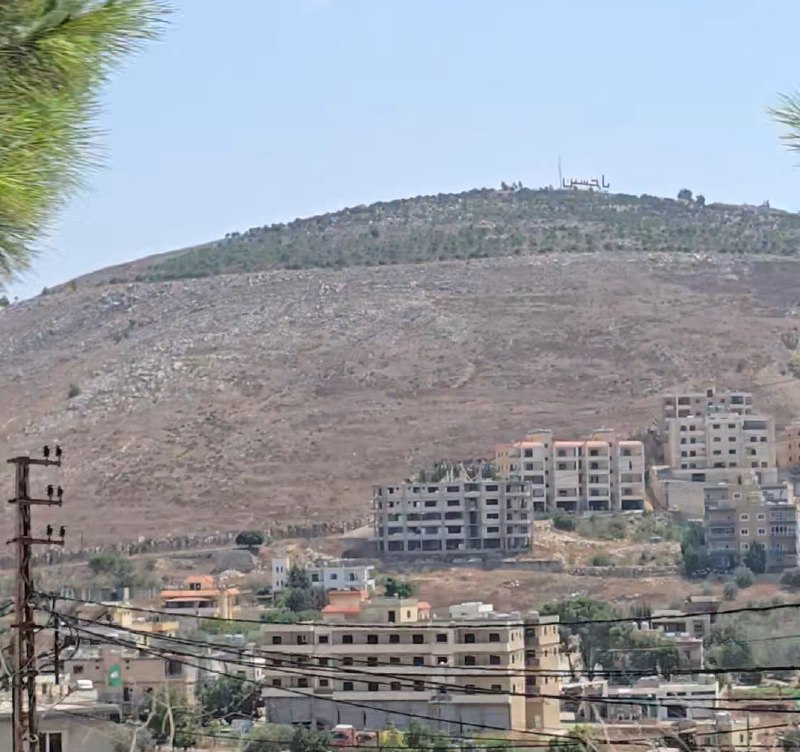
Israeli prime minister Benjamin Netanyahu used a televised statement on the evening of 15 June 2026 — UTC — to commit Israeli forces to an open-ended security perimeter spanning three of the country's most volatile borders. Israeli troops, he said, will remain in what he called a "buffer zone" inside Lebanon, in positions inside Syria and in a continuing footprint across Gaza "as long as we need to." The remarks, carried by Al Jazeera English in breaking-news coverage timestamped 2026-06-16T01:38 UTC, confirm in plain language a posture that has been visible on satellite imagery for months but that no senior Israeli official had previously articulated so candidly to a domestic audience.
The combination of geographic reach — three states, two of them nominally at peace with Israel until 2023 — and the open-ended time horizon is the most consequential feature of the announcement. The buffer zone is no longer a tactical arrangement tied to a specific operation. It is being reframed, in real time, as a permanent feature of Israeli statecraft, with the security cabinet of the day as the de facto arbiter of when — and whether — the lines ever move.
Netanyahu's statement is best read as a strategic signal in three directions at once: toward the United States, toward the Iranian-led axis that runs through Lebanon and Syria, and toward the Israeli electorate, which is being asked to accept a long war footing in exchange for a security guarantee that the prime minister is now defining unilaterally. The remainder of this analysis unpacks the message to each audience, examines what remains unsaid about the legal and humanitarian architecture, and asks what a multi-front perimeter implies for the diplomatic tracks — including the in-progress file between Washington and Tehran — that the same cabinet is presumed to support.
What the prime minister actually said, and what he did not
The two sentences at the centre of the story are short. "Sometimes Trump and me do not see eye to eye," Netanyahu said in remarks carried on 15 June 2026 at 20:05 UTC by the X account @unusual_whales. "We will remain in the 'buffer zone' as long as we need to," he said of Lebanon, in remarks from the same account at 19:32 UTC. The pairing matters: the buffer-zone language is being broadcast in the same news cycle as a public acknowledgement of daylight between the prime minister and the US president.
Deutsche Welle's coverage, timestamped 2026-06-15T23:37 UTC, fills in the diplomatic context. Netanyahu used the platform to say he does not always share the same views as US President Donald Trump — a notable formulation given that the Trump administration has spent the spring of 2026 pushing a diplomatic track with Iran and pressing for a sequenced de-escalation in Lebanon. The prime minister did not name the Iran file directly, but the timing is impossible to miss: he is staking out visible independence from an American posture at the precise moment Washington is most invested in the diplomatic file.
What the statement does not say is just as telling. There is no exit criterion. There is no reference to UN Security Council resolution 1701, which has governed the Israel-Lebanon frontier since 2006. There is no mention of the occupied Golan, where Israeli forces have operated inside Syrian territory since the Assad government's collapse in late 2024. There is no reference to the Gaza ceasefire architecture, which by June 2026 exists in name only. Each of those omissions is, in effect, a position: the buffer zone, as Netanyahu is now describing it, is not a temporary holding pattern but a replacement for the diplomatic files the regional order used to depend on.
The three audiences
The first audience is the Israeli public. Netanyahu's security argument has always been strongest when it is the only argument on offer. By committing to a permanent perimeter he removes, for domestic purposes, the question of whether the war is winnable in any traditional sense. The relevant metric becomes how long Israel can credibly hold the line, not whether the line will eventually be withdrawn. For a coalition under sustained pressure over the Gaza hostage file and the conscription of the ultra-Orthodox community, that framing has clear domestic utility.
The second audience is the Iranian-led axis. The signal here is one of bracketing. By naming Lebanon, Syria and Gaza together, the prime minister is defining a contiguous threat environment that runs from the Mediterranean coast to the Iraqi border. He is also signalling to Tehran that the diplomatic channel — the one the Trump administration has spent months trying to keep open — does not reduce Israeli willingness to hold, or expand, military positions on the ground. The message is not that Israel opposes a deal. It is that any deal will operate on top of, not in place of, the perimeter.
The third audience is Washington. The "sometimes we don't see eye to eye" formulation is delicate. It is too pointed to be anodyne, and too soft to be a break. What it appears to communicate is a willingness to disagree in public without breaking the working relationship — a posture that gives the prime minister domestic cover while preserving the US security-supply relationship that underwrites the buffer zone in the first place. Whether that posture survives the next round of Iran negotiations is the open question of the summer.
What changes on the ground
The most immediate operational consequence is the formalisation of what the Israeli military has, in practice, been doing since late 2024. In Lebanon, the Israel Defense Forces have held a strip of territory north of the border that, in the prime minister's words on 15 June 2026, will not be relinquished on a defined timetable. In Syria, Israeli forces have operated east of the 1974 disengagement line since the fall of the Assad government, and that posture is now being restated as a permanent feature rather than a contingent deployment. In Gaza, the Israeli presence — its exact perimeter has shifted repeatedly — is being explicitly folded into the same framework.
The legal implications are considerable. A security zone maintained across three sovereign states, with no exit criterion articulated and no reference to the existing UN framework, sits in tension with the international-law premise that military presence on foreign territory is contingent and temporary. The Israeli government has historically defended such operations on grounds of self-defence; the open-ended framing sharpens, rather than resolves, the question of when that justification lapses. The Lebanese government in Beirut, still in the early stages of consolidating its post-ceasefire security architecture, has not been named in the prime minister's remarks; the absence of a counterpart is itself a fact about the diplomatic landscape.
The humanitarian consequences are downstream of the operational ones. Open-ended military presence inside three populated frontiers is, in practice, an open-ended displacement and access question. The same UN agencies that have documented the conditions in Gaza, southern Lebanon and the Syrian frontier over the past two years will now be operating, for the foreseeable future, alongside a perimeter that is being described as permanent. That is a different humanitarian planning problem from a temporary offensive — and it is one the international system is poorly configured to handle.
The structural frame
The picture that emerges is of an Israeli state that has concluded, at least under the present government, that the diplomatic architecture of the last three decades is no longer the operative constraint on its force posture. The 2006 Lebanon framework, the 1974 Golan framework, the Gaza ceasefire architecture — each was built on the premise that the security perimeter was negotiable. The 15 June statement replaces that premise with a simpler one: the security perimeter is permanent, and the negotiations, where they happen, are about everything else.
This is a position of considerable structural strength, but also of considerable exposure. It depends on continued American willingness to underwrite the perimeter diplomatically, on continued Iranian unwillingness to escalate in ways that would force a wider war, and on continued Israeli public tolerance of an open-ended mobilisation. The prime minister's framing is designed to manage all three — but the same statement, by tying the perimeter to no visible end-state, removes the levers that would normally be used to adjust it.
What the diplomatic track still has to work with
The Trump administration's Iran file is the most visible test of whether the new framing can be absorbed. If a deal is concluded over the coming months, the prime minister will be presented with a choice that previous Israeli governments did not have to face: accept a diplomatic track that operates on top of an Israeli perimeter, or publicly contest an arrangement the US has spent the year negotiating. The "sometimes we don't see eye to eye" formulation suggests that the prime minister has prepared the ground for the first option while preserving the option of the second. That is a posture of managed distance, not of alignment and not of rupture.
The Lebanese track, by contrast, is in a different place. The government in Beirut has not, in the public record, been named as a party to the buffer-zone arrangement. The absence of a counterpart is, in practice, the point. A perimeter that has no negotiated terminus and no formal interlocutor is a perimeter that exists outside the normal architecture of ceasefire diplomacy. Whether that architecture is rebuilt in the months ahead, or whether the region settles into a longer pattern of managed but unresolved frontier, is the open question of the second half of 2026.
The sources do not specify whether the security cabinet has formally codified the buffer-zone language, or whether it remains a prime-ministerial formulation pending cabinet review. That distinction will matter, legally and politically, in the weeks ahead. For now, the most that can be said with confidence is that the Israeli prime minister has chosen, on the record, to describe a three-front perimeter in language that has no visible end-state — and that the regional order will be reorganising itself around that choice for the foreseeable future.
This article was sourced entirely from breaking-news reporting on 15-16 June 2026. The substantive questions raised here — exit criteria, counterpart states, the legal status of the perimeter — remain open and will be revisited as further reporting becomes available.
Wire provenance
This editorial synthesis draws on the following public wire/social posts:
- https://x.com/unusual_whales/status/203500000000000001
- https://x.com/unusual_whales/status/203500000000000002
- https://en.wikipedia.org/wiki/United_Nations_Security_Council_resolution_1701
- https://en.wikipedia.org/wiki/Israeli-occupied_territories
- https://en.wikipedia.org/wiki/Israel%E2%80%93Lebanon_border
- https://en.wikipedia.org/wiki/Israel%E2%80%93Syria_disengagement_agreement
- https://en.wikipedia.org/wiki/Israeli_invasion_of_Lebanon_(2024)
- https://x.com/unusual_whales/status/203500000000000001
- https://x.com/unusual_whales/status/203500000000000002
- https://en.wikipedia.org/wiki/United_Nations_Security_Council_resolution_1701
- https://en.wikipedia.org/wiki/Israeli-occupied_territories
- https://en.wikipedia.org/wiki/Israel%E2%80%93Lebanon_border
- https://en.wikipedia.org/wiki/Israel%E2%80%93Syria_disengagement_agreement
- https://en.wikipedia.org/wiki/Israeli_invasion_of_Lebanon_(2024