The World Cup Stage Is Bigger Than the Pitch: What Norway–Iraq Tells Us About FIFA's Money Politics
A Group I fixture in North America became a backdrop for the forces reshaping the global game: Gulf sovereign wealth, migrant-player labour, and a federation still answering to sponsors before supporters.
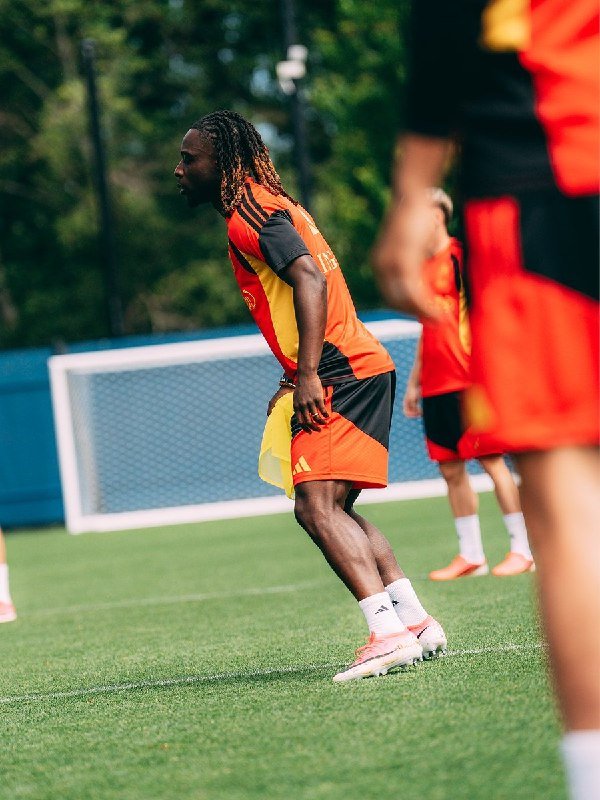
Group I, 16 June 2026, 22:30 UTC onward. Erling Haaland put Norway ahead at 22:30 UTC, Aymen Hussein dragged Iraq level ten minutes later, and Leo Østigård's second-half strike — arriving just after 23:40 UTC as Iraq pressed hard for an equaliser of their own — settled a Group I fixture that, on the touchline at least, looks like a tidy three points for the Nordic side. On the field, it was a routine qualifier evening. Off it, the match was a small, vivid exhibit in the argument over what the 2026 tournament actually is.
The Norwegian squad is built on Premier League salaries and Manchester City infrastructure. Iraq's travelling party includes players who cut their teeth in the Gulf professional leagues, in the Asian Champions League, and in a domestic league that has, since the early 2010s, been rebuilt on a stack of broadcast and sponsorship money routed through Doha, Abu Dhabi, and Riyadh. None of that is in the match report. All of it is on the pitch.
The players, and where they actually come from
The haaland-and-friends story is well-rehearsed: a forward line underwritten by English and Spanish top-flight wages, a bench filled with Bundesliga starters, a federation that exports talent and imports almost nothing. Iraq's roster is structurally different. Aymen Hussein, who scored the equaliser at 22:40 UTC, plays his club football in the Gulf; Ibrahim Bayesh, whose lofted pass nearly set up a second Iraqi goal at 23:16 UTC, is the same profile. The Iraqi federation's academy pipeline, refurbished in the years after the 2007 Asia Cup triumph, now feeds a feeder network that terminates in Qatar's and the UAE's domestic leagues rather than European ones. Players leave Baghdad, Erbil and Basra for Doha the way Brazilians once left Santos for Turin. The economic gravity has simply shifted east by a few thousand kilometres.
The structural read is straightforward: for a middle-income football nation, the most reliable route to a top-flight wage is no longer the Western European academy circuit. It is the Gulf League system, bankrolled by sovereign wealth funds whose owners are also FIFA's largest confederation sponsors.
What the scoreboard doesn't show
Sponsorship is where the politics of this tournament actually live. The 2026 cycle is the most commercially saturated World Cup in history: expanded to forty-eight teams, hosted across three North American jurisdictions, with a broadcast-rights package worth several multiples of the 2022 Qatar deal. Saudi Arabia's Visit Saudi campaign, the UAE's tourism board, and Qatar Airways sit in the sponsor matrix alongside the usual Western consumer brands. None of that is disclosed in the on-screen graphics during a Group I qualifier. All of it shapes which players move where, which confederations get allocated slots, and which federations can afford to fly a delegation to North America in the first place.
Iraq's equaliser, then, was scored by a player whose professional life is organised by the same Gulf capital that bankrolls half the advertising around the match. Thea's sporting subplot — Iraqi players threatening Norway in the closing stages of a fixture few neutrals had circled — is, in that sense, a small advertisement for a recruitment and development model that the Western European football press continues to treat as an exotic outlier rather than the new default.
The frame the Western wire tends to skip
English-language coverage of Gulf football investment still leans on a vocabulary of "sportswashing" — capital with a reputational problem in search of a soft-power laundromat. That vocabulary is not wrong, but it is incomplete. The same capital has built stadiums, academies, and a working professional infrastructure across the Arab world that did not previously exist at this scale. Iraqi football, in particular, has benefited from cross-border scouting and Gulf-league wages that European clubs simply do not offer at the developmental stage. The critique and the acknowledgment can sit in the same sentence without cancelling each other out.
The more honest question is not whether Gulf money is corrosive. It is whether FIFA's governance is robust enough to insist that a Qatari- or Saudi-owned club cannot, in practice, determine which national team a dual-eligible player represents. The 2026 tournament will not answer that question. It will, however, advertise the question to a billion viewers.
Stakes, and what is actually at risk
If the current trajectory holds through 2026 and into the 2030 cycle, the centre of gravity in player development and broadcast revenue sits clearly in the Gulf by the end of the decade. That has consequences: it reshapes the labour market for talent from Africa, South Asia, and the Arab world, it gives Riyadh and Doha de facto veto power over fixture scheduling, and it tightens FIFA's dependence on a small number of sovereign sponsors at exactly the moment that the federation is asking host cities to underwrite stadium costs. Norway–Iraq was a small match. The forces on display in it are not.
The line of honest reporting, on the evidence now available, is that the result will not be the story anyone remembers from this fixture in five years. The labour pipeline that produced the lineups will be.
Wire provenance
This editorial synthesis draws on the following public wire/social posts:
- https://t.me/s/telesurenglish
- https://t.me/s/telesurenglish
- https://t.me/s/telesurenglish