Oil and Bitcoin Slide Together as US-Iran Deal Speculation Reshapes Risk
Oil and Bitcoin moved in lockstep on the U.S.–Iran memorandum, but the more durable trade is not the equity bounce or the tanker count. It is the synchronised collapse of two separate risk premiums, and the question of whether either one lasts.
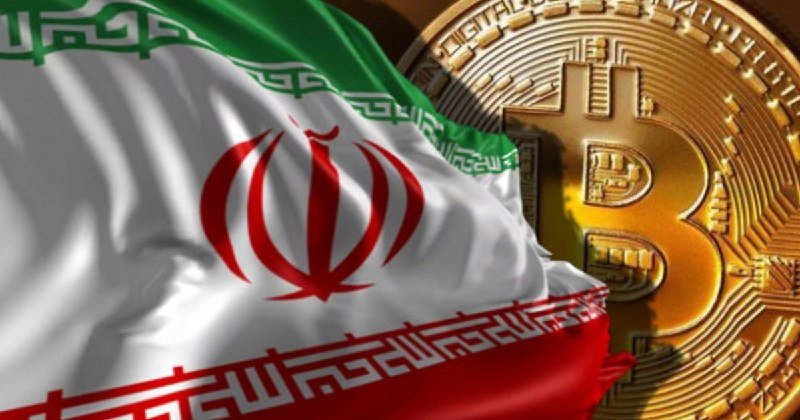
Six oil tankers threaded the Strait of Hormuz on 18 June, the day after Washington and Tehran signed a memorandum of understanding that the U.S. side is billing as the end of a war and the Iranian side is still parsing. Brent crude, already soft, slipped further. Bitcoin, which had no obvious business caring about Persian Gulf shipping lanes, slipped with it. By the New York afternoon the two markets had moved in lockstep on the same headline, and the question worth asking is what exactly that headline was repricing.
The wire read on 16 June was tidy: stocks up, oil down, peace premium evaporating. That framing is not wrong, but it leaves the more interesting trade unexplained. Equity traders can move on a tweet. Oil traders can move on a tanker count. Bitcoin traders, in theory, are discounting something else entirely: dollar liquidity, the regulatory weather around crypto, the marginal cost of energy for the mining fleet. The fact that all three moved in the same direction on the same afternoon, on news that touched none of them directly, is the story.
A memorandum, not a treaty
The document signed this week is a memorandum of understanding, not a final agreement. That distinction matters, because the terms being reported around it would, if implemented, amount to one of the largest sanctions unwinds in the history of the U.S. sanctions regime. According to reporting summarised by the Wall Street Journal via Unusual Whales, the U.S. has agreed in principle to terminate all Iranian sanctions under a final deal, to issue waivers permitting Iranian oil exports shortly after the MOU is signed, and to refrain from imposing any new sanctions on Tehran while negotiations continue. President Trump, in characteristically parenthetical remarks, dismissed as "fake news" the suggestion that the deal includes a $300 billion payment to Iran, telling supporters to "check out the Stock Market" as proof that what the U.S. is actually getting is lower oil prices and victory. He also joked that he would take credit if the deal works and blame Vice President Vance if it does not, a hedge that markets would do well to price in.
None of that is small. Termination of the Iranian sanctions architecture would return somewhere between 1.3 and 1.8 million barrels per day of Iranian crude to legal markets, depending on whose production estimates you trust, and would do so at a moment when Saudi Arabia has been defending a price band and U.S. shale producers are operating near their productive ceiling. The geopolitical risk premium that has supported Brent through the war is, in effect, being told to find a new home.
What the tankers actually signal
The Hormuz traffic data is the cleanest signal in the package. Six tankers through the strait the day after signing is not yet a normalisation; the historical baseline through Hormuz runs in the dozens per day, and during the most acute phases of the conflict the figure collapsed to single digits. But the direction of travel is what markets are reading, not the absolute level. Each hull that clears the strait without incident is one fewer optionality event priced into the front of the curve, and front-month Brent has been living on optionality for months.
The prediction-market signal is stronger than the equity signal, and it has gone largely unreported. As of mid-week, contracts tied to substantive Iranian policy moves, including the formal lifting of secondary sanctions and the resumption of diplomatic recognition, were trading at materially higher implied probabilities than they had been a fortnight earlier. That is a more durable repricing than a one-day equity bounce. It reflects positions being put on by participants who expect to hold them through the implementation phase, not through the next news cycle.
Why Bitcoin moved at all
Bitcoin's correlation with risk assets has been the subject of more bad analysis than almost any other topic in modern finance. The cleanest explanation for the move this week is the boring one: the same macro conditions that would compress oil prices, a stronger dollar, weaker Treasury yields, a Fed that can afford to stay hawkish because the energy shock is fading, also compress Bitcoin. CoinJournal's midday note flagged precisely this combination: hawkish Fed guidance, rising yields, and inconsistent ETF demand leaving BTC vulnerable below its key moving averages. There was no Iran-specific Bitcoin trade. There was a liquidity trade that happened to coincide with an Iran headline.
The second leg is more interesting. The Hive Digital deal, in which the Bitcoin miner signed a $220 million three-year GPU contract with Bell Canada and Cohere to supply sovereign AI infrastructure, sent HIVE shares up roughly 10% on the day. That is a structural repricing of what a Bitcoin miner actually is: a holder of power-purchase agreements, a custodian of stranded-energy contracts, a landlord to high-density compute. If the U.S.–Iran settlement holds and global energy prices drift lower, the cost side of that business improves. Bitcoin the token has nothing to do with it. Bitcoin the corporate parent has a great deal to do with it.
Two premiums, one headline
The cleanest way to read the week is as a synchronised repricing of two distinct risk premiums on the same piece of news. The first is the Hormuz premium, the optionality value embedded in oil futures for the possibility that the strait closes, that tankers are seized, that the war re-escalates. That premium is being clipped, hard, and the clipping is visible in tanker counts and front-month Brent. The second is the dollar-liquidity premium, the implicit compensation that risk assets, including Bitcoin, demand when the Fed is hawkish, yields are rising, and the marginal dollar is scarce. The Iran settlement does not touch that premium directly, but it removes the energy-shock argument the Fed has been using to justify staying restrictive, which loosens the path.
The wire consensus focused on the first. The more durable trade is the second, because the second has a longer half-life. A tanker count normalises in weeks. A Fed reaction function, once shifted, persists through the next inflation print and the one after that.
The deal that is not yet a deal
The remaining risk is that none of this is finished. An MOU is a statement of intent, not a binding document, and the terms being floated, full sanctions termination, oil export waivers, a freeze on new sanctions, are aggressive enough that domestic constituencies on both sides have reasons to walk them back. Iranian hardliners have not yet signed off on the nuclear constraints the U.S. is reportedly demanding. American hawks are already on record opposing any framework that releases central bank reserves. The $300 billion figure Trump dismissed may yet reappear in some other form. Each of those scenarios is a scenario in which the Hormuz premium rebuilds and the dollar-liquidity premium tightens, on the same day, in the same direction.
What to watch is whether the six tankers become sixty, and whether the prediction-market contracts tied to sanctions termination hold their new prices through the next round of negotiations. If both do, the trade has legs. If either reverses, the synchronisation breaks, and the two risk premiums go back to discounting their own separate worlds.
Sources
- https://x.com/unusual_whales/status/2066715135377354753
- Nikkei Asia (Telegram), "At least 6 oil tankers sail through Hormuz following US-Iran deal," 18 June 2026.
- Unusual Whales (X), citing WSJ, "The US are to issue waivers for Iran oil exports soon after the MOU deal," 18 June 2026.
- Decrypt, "HIVE Stock Spikes as Bitcoin Miner Lands $220M AI Infra Deal," 18 June 2026.
- Unusual Whales (X), Trump remarks on $300 billion payment, 18 June 2026.
- Unusual Whales (X), citing WSJ, "US to terminate all Iranian sanctions under final deal," 18 June 2026.
- Unusual Whales (X), citing WSJ, "The US won't impose any new sanctions on Iran, pending a final deal," 18 June 2026.
- CoinTelegraph, "What happens when ChatGPT becomes the front door to crypto," 18 June 2026.
- Unusual Whales (X), Trump remarks on credit and blame, 18 June 2026.
- CoinJournal (Telegram), Bitcoin market outlook, 18 June 2026.
- CoinDesk, "Hive shares jumps 10% on $220m Canada sovereign AI infrastructure deal," 18 June 2026.
Desk note: Monexus framed this as a synchronised repricing of two distinct risk premiums, Hormuz and dollar-liquidity, on the same geopolitical headline, rather than as a fundamental re-rating of oil or Bitcoin. The wire read on 16 June was that stocks gained on US-Iran peace momentum; this publication adds that the same peace momentum is now showing up in prediction-market prices for substantive Iranian policy moves, which is a stronger claim than the equity move alone supports.
Follow the event.
These dated source records provide context. They do not retrospectively verify this archive article.
Separate what the nuclear watchdog reported from what it could not determine after the June 2025 strikes.