Thomas Partey to miss Ghana's World Cup opener after Canada's visa appeal fails
Thomas Partey will miss Ghana's World Cup opener after his Canadian visa appeal failed, the latest in a string of administrative denials at a tournament where border policy has become a de facto selection criterion.
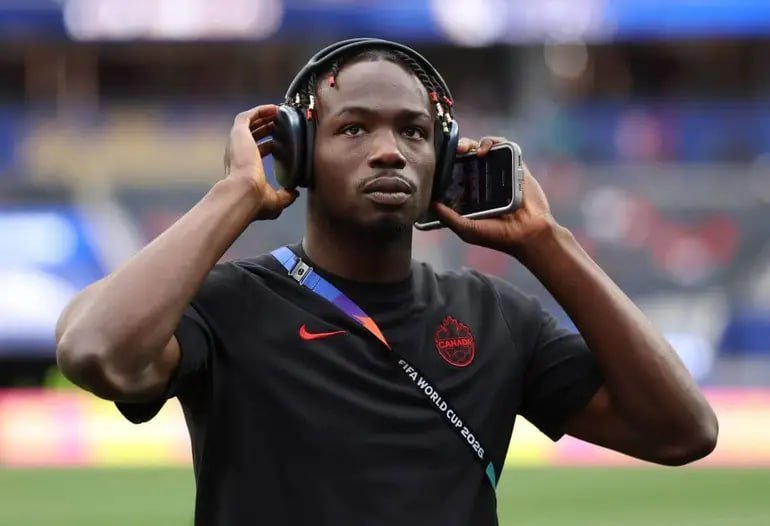
Thomas Partey will sit out Ghana's opening World Cup match at the tournament in North America after his visa appeal to enter Canada was rejected, the player's representatives confirmed on 16 June. The procedural record is narrow and slightly threadbare, but the consequences are not: the Arsenal midfielder, Ghana's most recognisable name on the squad sheet, will watch from outside the country as Otto Addo's side begin their Group H campaign. The timing puts the dispute inside a tournament that, until now, has run on the assumption that national-team rosters and tournament logistics are settled problems.
The story lands inside a World Cup week already heavy with similar episodes. ESPN reported on 18 June that Ivory Coast striker Elye Wahi, the subject of a match-fixing investigation, had not been authorised to travel to Canada for his side's match against Germany. Two players, two federations, one host country's border policy. The pattern is not yet a crisis, but it is a category: eligibility decisions made not by selectors on the pitch but by immigration officials in Ottawa, on timelines that don't sync with a football calendar.
What the procedural record actually says
Partey's camp has framed the case as a straightforward administrative dispute. His Canadian visa application was refused, an appeal followed, and that appeal has now failed. The 32-year-old has been with the Black Stars squad preparing for the tournament but will not travel across the border for the group fixtures staged in Canada. No criminal charge has been disclosed in connection with the refusal. The detail that does the most work is what is missing: a stated reason, on the public record, for the rejection.
That silence matters. Visa decisions are routinely opaque, and Canada's Immigration and Refugee Board does not publish refusal rationales for individual cases. For a player whose profile runs from La Liga to the Premier League and into the Champions League, a refused entry clearance is unusual enough that the absence of an explanation becomes itself a fact to be reported. The procedural status is appeal exhausted; the substantive question, why, remains unanswered in public.
A tournament already straining the eligibility frame
The Partey case is not the only administrative wall thrown up around this World Cup. The Wahi episode in the Ivory Coast camp shows that federations can lose players to border decisions in either direction. Canada's immigration framework, like every host country's, has long applied standard visitor-visa scrutiny to incoming delegations, but a tournament spread across three nations compresses the scrutiny into a fortnight and makes every refusal visible. The optics are awkward: a co-host declines entry to a participating nation's squad member, and the story leaves the country before the football does.
Canada's own on-pitch week has been unambiguous. Jonathan David scored a hat-trick in Vancouver on 18 June as the co-hosts thrashed nine-man Qatar 6-0, a result that pushed Jesse Marsch's side to the brink of the knockout stage. The Group B picture matters here because it shows what Partey's Ghana side will eventually face if both progress: a Canadian team scoring freely at home, buoyed by the return of Alphonso Davies from injury and the kind of crowd that turns BC Place into a hostile environment for visiting sides. Addo will now have to plan for the Canada game without his most experienced central midfielder, full stop.
The governance layer nobody scheduled
The wider question sits underneath the Partey story and will outlast it. International football has, for decades, treated player eligibility as a domain governed by federations and by FIFA's own regulatory machinery: caps, transfers, doping, discipline. Border policy was a logistical footnote, settled by accreditations and standardised travel documents. The 2026 tournament, by virtue of its three-host geography and the post-2010 tightening of visa regimes across most western jurisdictions, makes that footnote visible again.
There is no FIFA mechanism to compel a host country to admit a named player. The organisation can lobby, mediate, embarrass, but it cannot override a sovereign immigration decision. That asymmetry is older than this World Cup, but it has rarely been tested in front of a global broadcast audience in real time. When Wahi's Ivorian federation said on 18 June that the striker would not be authorised to travel to Canada for the match against Germany, the federation was not contesting FIFA's authority; it was acknowledging that Canada's border officials had drawn a line the federation could not redraw.
What Ghana does next
Ghana's opener falls before the Canada fixture, which gives Addo a window to reset his midfield shape and to manage the news cycle around his most-capped player. The squad trained in the days after the appeal failed; reports from the camp suggested Partey remained with the group in a non-travelling capacity. That is a workable short-term arrangement and an awkward long-term one. The team will not have to play Canada without him twice, but the message sent to the rest of the squad, that a senior figure can be rendered unavailable by a bureaucratic process outside the federation's reach, is the kind of message coaches try not to send.
The procedural record closes here. The structural question, who decides whether a registered player can cross a border to take the field his federation has selected him for, stays open. That question will keep producing answers of this shape until the rules around it are written down somewhere they currently are not.
Sources
- BBC Sport, "Rice expected to be fit to face Ghana despite back pain," 18 June 2026
- Sky Sports, "David scores hat-trick as Canada thrash NINE-man Qatar," 18 June 2026
- Sky Sports, "Tuchel: Saka unlikely to start against Ghana," 18 June 2026
- ESPN, "Ivory Coast's Wahi denied Canada WCup visa," 18 June 2026
- CBS Sports, "Canada vs. Qatar live stream: 2026 World Cup," 18 June 2026
- Sky Sports, "West Indies edge out Scotland for seven-run win," 18 June 2026
Desk note: Monexus covered the Partey visa denial as a procedural sports story with a governance edge, holding the factual record tight to the BBC bulletins while flagging the wider eligibility frame in plain prose rather than theory.