The 5% wager: why a Polymarket line on an Israeli Lebanon withdrawal matters more than it looks
A 5% Polymarket line on an Israeli Lebanon withdrawal by year-end is not a forecast. It is a trader's verdict that no instrument currently exists to order the exit, even as the air campaign over Harouf and Sharqiya intensifies and Washington pushes its Iran track.
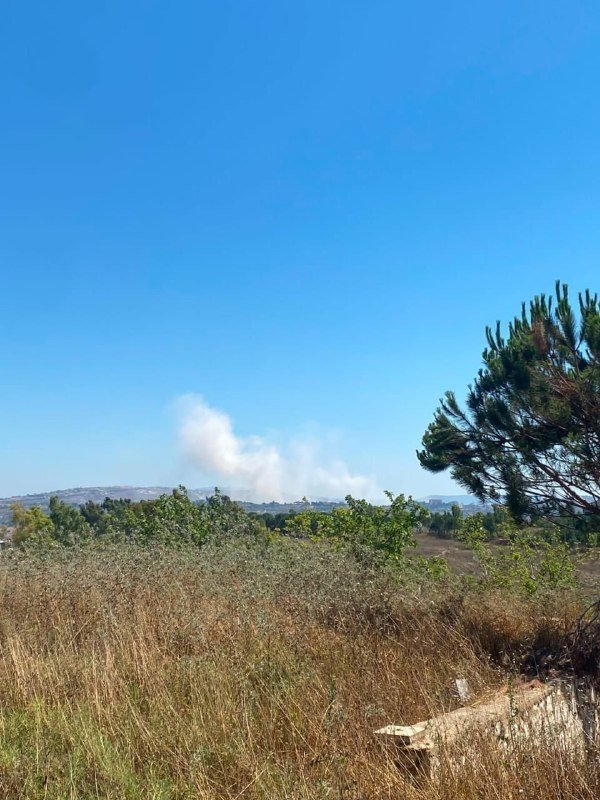
On 16 June 2026, a Polymarket contract on whether Israel will withdraw from southern Lebanon by year-end sat at roughly 5%. That single number, set by traders putting real money on a real outcome, captures something the official communiqués do not: the market considers an Israeli pullout inside the next six months a long shot, even as Israeli warplanes were raiding the towns of Harouf and Sharqiya in southern Lebanon, and Hezbollah fighters were launching barrages at Israeli forces attempting to advance toward the Ali al-Tahir heights. When the implied probability of withdrawal is this low, against an active ground operation, the contract is no longer pricing a military decision. It is pricing a diplomatic one. That distinction is what makes the line worth watching.
The Polymarket line sits at the intersection of two facts on the ground that are otherwise hard to hold in the same frame. On one side, the fighting is dense and ongoing. On 18 June, Israeli jets were striking targets in Kafarman, Kafarjouz, and the al-Baydar neighbourhood of Harouf, with multiple casualties reported, while Lebanese sources said the "resistance continues to confront the Israeli occupation's attempts to reach Ali Al-Tahir Heights." Four Israeli helicopters reportedly entered the area to evacuate wounded. Field sources described "heavy clashes" between Hezbollah forces and the Israeli army along different axes, with Israeli media flagging a "complex and difficult security incident in southern Lebanon, details under censorship." On the other side, the diplomatic machinery is moving. Vice-President JD Vance, in a sharp rebuke to critics of the Trump administration's emerging deal with Iran, told an Israeli audience that "Trump is your only ally left in the world," explicitly invoking the billions in US defence aid Israel receives. The administration is openly pushing an Iranian settlement, and the read from Washington-watcher Sprinterpress is blunt: "There are less than six months left until the congressional elections."
The ceasefire that hasn't been signed
The 5% number is, in effect, a trader's view on a question the parties have not yet agreed to negotiate publicly. Hezbollah's political wing in Beirut, through Speaker of Parliament Mohammad Bagher Qalibaf, addressed Iran's Supreme Leader directly on 18 June, declaring that "we put His Highness's orders as our goal" and framing a recently finalised memorandum as a "road map" going forward. Read against the active air and artillery campaign, that language is a signal of alignment with Tehran's political calendar rather than a tactical concession on the ground. The message travels upward through the chain; the rockets travel across the border. Both are happening at once, and the Polymarket line is pricing the moment when the upward message overrides the lateral fire.
What the contract is actually pricing
A 5% line on a Polymarket withdrawal contract is not a forecast that Israel will not leave Lebanon. It is a statement, in dollar-weighted probability, that the path to a withdrawal does not currently run through any visible instrument. There is no signed ceasefire. There is no UNSCR. There is no framework agreement between Beirut and Tel Aviv mediated by Washington or Paris. Iran's planned maritime fees for the Strait of Hormuz, announced separately on the same news cycle, are a reminder that Tehran has its own leverage points it can monetise while the Lebanese file remains unresolved. Traders will move the line when one of three things appears: a binding text, a unilateral Israeli cabinet decision, or an Iranian-mediated halt-fire that Hezbollah's leadership acknowledges publicly. None of those is on the wire as of 18 June. Until one is, the 5% holds.
The Vance variable
JD Vance's Israel remark is the most concrete piece of US signalling in the room, and it cuts both ways. The reassurance to Israel, that the Trump administration remains the indispensable security partner, is paired with an unmistakable warning to Israeli critics of the Iran track: the White House will not block a deal to placate domestic opposition in Jerusalem. The administration has the calendar it has, congressional midterms in roughly five months, and the Iran file is being treated as a deliverable rather than a posture. For Polymarket traders, the implication is that the leverage over an Israeli withdrawal flows from Washington more than from the IDF's Southern Command. Israeli jets can keep flying over Harouf and Sharqiya; what changes the line is whether the political directive from Washington eventually tells them to stop.
What to watch before the next print
Three triggers would move the contract off 5%. First, a formal announcement of a US-Iran framework that includes a southern Lebanon file, even as a sidebar. Second, a visible de-escalation in the air tempo over the Ali al-Tahir axis, the kind of operational pause that precedes a text. Third, a statement from Hezbollah's leadership accepting a political horizon that contradicts Qalibaf's "orders as our goal" formulation toward Tehran. None of those has arrived. The market is not saying withdrawal is impossible. It is saying, with dollar-weighted clarity, that nobody in the chain with the authority to order one has yet given the order.
Sources
- https://t.me/alalamfa/21631, Al-Alam Arabic, "Qalibaf's message to the Supreme Leader," 18 June 2026
- https://t.me/JahanTasnim, Tasnim (Farsi feed), Israeli strikes on southern Lebanon, 18 June 2026
- https://t.me/wfwitness, War Footage Witness, Israeli airstrike on al-Baydar / Harouf, 18 June 2026
- https://x.com/agdugin/status/2064256636248535041, Alexander Dugin on Polymarket, 16 June 2026
- https://worldnews.report, "JD Vance tells Iran deal critics in Israel: Trump is your only ally left in the world," 18 June 2026
- https://x.com/reuters, Reuters market close, 18 June 2026
- https://t.me/mintpressnews, Hezbollah rocket barrage, southern Lebanon, 18 June 2026
- https://t.me/TasnimNews_en, Tasnim English, Israeli media on southern Lebanon incident, 18 June 2026
Desk note
Monexus read the 5% Polymarket line as a diplomatic signal layered over active combat reporting, declining to treat the contract as a forecast and instead using it to set the editorial frame for the southern Lebanon file.
Follow the event.
These dated source records provide context. They do not retrospectively verify this archive article.
Separate what the nuclear watchdog reported from what it could not determine after the June 2025 strikes.