"Pristine" Hormuz: How a Presidential Adjective Is Doing the Work of a Mine-Sweeping Operation
The president has declared the Strait of Hormuz "totally safe, secure, and pristine." Tehran, via state media, calls the same waters a managed minefield. Somewhere between those two framings, the world's oil tanker traffic is making its choice.
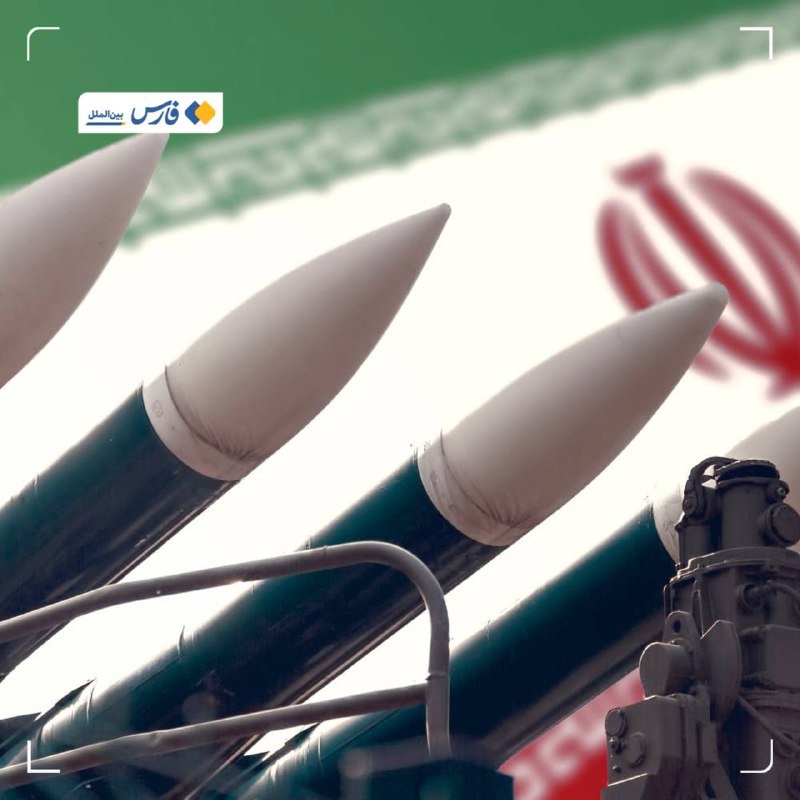
The Strait of Hormuz is, by most reckonings, the single most consequential stretch of water on earth — a narrow ribbon between Iran and the Arabian Peninsula through which a fifth of seaborne oil ordinarily moves. On 15 June 2026, two versions of that waterway sat on the global news ticker at the same time, and they did not match.
In one version, the president of the United States announced that oil ships were "now moving out of the Strait of Hormuz along a 'totally safe, secure, and pristine' route," as captured in a post on X at 2026-06-15T13:42 UTC. The same day, at 2026-06-15T16:08 UTC, he added that there may still be "a couple of mines" in the chokepoint — a candid, almost throwaway coda that quietly undid the adjective. In another version, Iranian state outlet Mehr reported multiple overnight explosions in the Strait and attributed them to "traffic management," a phrase picked up by the OSINT aggregator channel OSINTtechnical at 2026-06-15T21:53 UTC and given a darker gloss by WarMonitor in the same hour, which noted that, for a century of radar, GPS and digital navigation, this was "a rather unconventional approach to 'traffic management.'"
The adjective as policy
There is a long American tradition of presidential adjectives doing heavy diplomatic lifting — "axis of evil," "mission accomplished," "the calm before the storm." Each promised more than the operational reality on the ground could deliver. The 15 June description of Hormuz as "pristine" belongs to that lineage. It is a phrase calibrated not for shipping insurers, naval officers, or oil traders, but for a domestic audience that has been told for weeks that pressure on Tehran is working. If the corridor is "pristine," the pressure campaign is vindicated; if mines remain, that becomes a manageable footnote rather than a strategic problem.
The structural pattern is familiar: the official line offers a clean victory, the technical reality leaks out in increments, and the gap between the two is filled with reassuring language rather than evidence. Coverage routinely defers to the language of official spokespeople; the dissent — in this case, open-source analysts parsing a sequence of nighttime blasts — gets less column-inch, lower placement, and the qualifiers.
The Iranian counter-frame
Tehran, predictably, is not helping the American version hold. Mehr's "traffic management" framing is the diplomatic equivalent of a smirk: it concedes that something is happening in the Strait while denying the obvious military characterisation. Iranian state media have, across two decades of Hormuz brinkmanship, perfected this register — never quite admitting to mining, never quite denying it, always leaving enough ambiguity to assert control without owning escalation.
The counter-frame is not, on inspection, unreasonable. Iran has, since the 1980s, retained mines as a low-cost asymmetric option in the Strait, and the technical literature on the difficulty of clearing modern influence mines in deep, traffic-heavy water is well established. To Iranian planners, the Strait is a sovereign chokepoint whose closure at need is a defensive right, not an act of war. To American planners and to every oil-tanker insurer in the world, the same water is a global commons whose disruption is a hostile act. Both readings have institutional weight; neither is going to surrender the field.
What "a couple of mines" actually means
This is where the 15 June material is, on the evidence available, weakest. "A couple," in the loose register of a presidential aside, could mean two, could mean a small handful, could mean whatever number is needed to make the next sentence work. The U.S. Navy and its Gulf allies have not, as of the timestamp on the WarMonitor note, published a corresponding count. Open-source analysts at OSINTtechnical and the broader OSINTLIVE cluster are working from blast signatures and shipping telemetry, not from a published survey.
Mines are a peculiar class of weapon precisely because of this information asymmetry. A handful of modern influence mines — the kind Iran is widely believed to possess and to have tested — can hold a chokepoint open as a threat without ever needing to detonate a ship. The deterrence is the minefield; the politics is the announcement. The American reading requires that "a couple of mines" is a residual, near-resolved nuisance. The Iranian reading, by virtue of saying nothing at all in public about the mine count, preserves maximum leverage.
Stakes, plainly stated
If the Trump framing holds — "pristine," "moving," "open for business" — the political cost of pressure on Tehran stays low and the diplomatic track keeps its oxygen. If the Iranian framing holds, and the Strait remains operationally unreliable for the next several weeks, the consequences land on three sets of shoulders: Gulf insurers, who will price war risk higher; Asian buyers of Gulf crude, who will pay the spread; and the U.S. domestic consumer, who will meet that spread at the pump in roughly three to six weeks.
What remains genuinely uncertain, and what no source in the public thread yet resolves, is the mine count, the identity of the vessels conducting the reported "traffic management" detonations, and whether the blasts Mehr described on 15 June are part of a clearance operation, a planting operation, or a test. The sources disagree in register — presidential, state-media, open-source — but they do not yet disagree on a verifiable fact. That is the part of the story a "pristine" adjective is doing its best to keep invisible.
Desk note: Monexus is running this against the open-source cluster rather than the wire stack because the wire has not yet caught up to the OSINT timeline on the 15 June blasts. The Iranian state framing is quoted in full so that the structural argument can be tested on both sides.
Wire provenance
This editorial synthesis draws on the following public wire/social posts:
- https://t.me/s/osinttechnical
- https://t.me/s/warmonitor
- https://x.com/polymarket/status/
- https://x.com/polymarket/status/