Swiss Foreign Ministry confirms US-Iran deal to be signed Friday at Bürgenstock
A signing ceremony for a US-Iran agreement is scheduled for Friday at the Bürgenstock resort near Lucerne, the Swiss Foreign Ministry confirms, though neither Washington nor Tehran has disclosed substantive terms.
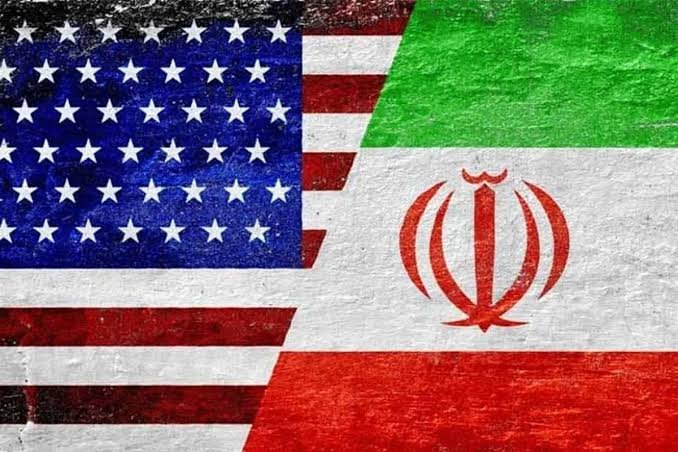
The Swiss Federal Department of Foreign Affairs confirmed on 2026-06-16 that the signing ceremony for a United States–Iran agreement will take place on Friday at the Bürgenstock resort above Lake Lucerne, Switzerland's official statement carried by AFP and relayed by multiple outlets in the early afternoon European time. The confirmation came roughly six hours after Iranian and American negotiators wrapped a fifth round of indirect talks in Muscat, where both delegations signalled they were prepared to move from framework language to binding text.
What is being signed, and what it commits either side to do, remains undisclosed. The Swiss notice refers only to a "memorandum of understanding" — language consistent with a preliminary political accord rather than a final, ratified treaty. That ambiguity is now the most consequential variable in the file.
A venue, not a text
The choice of Bürgenstock is itself a small political fact. The resort hosted the 2024 Summit on Peace in Ukraine and has become Switzerland's preferred stage for diplomatic set-pieces requiring altitude, security, and the symbolism of neutrality without the encumbrance of Geneva's institutional architecture. The Friday session will be hosted by the Swiss Foreign Ministry rather than by an international organisation, which signals that the document is understood as a bilateral arrangement rather than a multilateral one.
The substance under negotiation, based on reporting from the fifth Muscat round and prior indirect exchanges, is a sequenced arrangement in which Tehran would receive sanctions relief in tranches tied to verifiable constraints on its enrichment capacity and a monitored cap on centrifuge numbers. The deal language circulating in earlier reporting tracks the framework of the 2015 Joint Comprehensive Plan of Action, with the central question being what level of enrichment Iran is permitted to retain domestically and over what inspection timetable.
Neither the State Department nor the Iranian Foreign Ministry has published text. That is the central editorial point: confirmation of venue and date is not confirmation of agreement. Officials on both sides have an institutional interest in announcing that the page has been reached — the Trump administration needs a deliverable for the autumn political calendar, and Tehran needs sanctions relief before the rial's next depreciation cycle makes any deal economically harder to justify domestically.
How the news reached the wire
The Swiss confirmation moved through the system quickly. AFP filed first at 13:52 UTC, citing the Swiss Federal Department of Foreign Affairs. Fars News, the Iranian state-affiliated outlet, carried the announcement within minutes and translated it into Persian-language reporting, framing the document as a memorandum of understanding. Iran's Tasnim news agency published the same confirmation and added a domestic framing of the venue decision. The Cradle, a Beirut-based outlet with a long editorial line sympathetic to the Iranian position, propagated the AFP wire. By 14:20 UTC, X account sprinterpress had aggregated the Swiss statement, and by 14:53 UTC Telegram channels tied to conflict monitoring had rebroadcast the announcement with the venue and date attached.
The direction of travel here matters for how the story is read. Western wire reporting and Iranian state media are in alignment on the venue and the date — a rare point of convergence on a story where the two systems typically diverge. Where they are not aligned is on the document's content. The Iranian framing, as carried by Tasnim and Fars, treats the memorandum as the conclusion of a diplomatic process in which Iranian negotiating leverage produced a viable instrument. Western framing, as relayed by AFP, is presently neutral on substance and merely confirms the ceremony.
What remains contested
Three things are still unclear at the time of writing. First, the parties. It has not been publicly confirmed whether the document will be signed by the Iranian Foreign Minister and the US Secretary of State directly, or by lower-level delegations. Second, the inspection architecture. Whether any arrangement retains the IAEA's existing mandate in Iran or narrows it remains unstated. Third, the sequencing. Whether sanctions relief precedes or follows Iranian compliance steps, and over what calendar, will determine whether the document functions as a peace instrument or as a prelude to a second collapse round.
Israeli official commentary carried in earlier reporting has expressed scepticism that any arrangement which leaves Iran with domestic enrichment capacity constitutes a non-proliferation outcome. Gulf-state commentary, in parallel, has framed the negotiation as an Iranian negotiating victory irrespective of the document's content. Both readings assume a maximalist Iranian position; neither has yet read the text, which no one outside the negotiation rooms has seen.
Stakes
If the memorandum is signed on Friday in something close to the framework reported by outlets covering the Muscat round, the consequence is a measurable thaw in the Iran-US sanctions architecture — frozen formally since 2018 — and an extension of the diplomatic pathway that has run intermittently since 2021. If it collapses before Friday, or is signed at the level of a confidence-building statement rather than a binding instrument, the negotiating calendar compresses sharply. The autumn sessions of the UN General Assembly, where Iranian and US leaders last met on the margins, would become the next realistic window.
The structural read is that the deal's existence — even as a framework — marks a recalibration rather than a reset. Washington has spent two years reducing its military footprint in the Gulf while rebuilding its sanctions toolset. Tehran has spent the same period rebuilding its enrichment capacity at technically defensible levels while managing domestic pressure on the rial. A modest, verifiable arrangement is the equilibrium both sides have effectively arrived at, and Friday's ceremony is the moment that equilibrium becomes legible to the broader market.
This publication treats the Swiss confirmation as procedural, not substantive. The Friday document's text — its inspection architecture, its sequencing rules, and its enforcement clauses — is the actual news, and the wire will not have it until it is published.
Wire provenance
This editorial synthesis draws on the following public wire/social posts:
- https://t.me/FarsNewsInt
- https://t.me/tasnimnews_en
- https://t.me/thecradlemedia
- https://t.me/WarMonitors
Follow the event.
These dated source records provide context. They do not retrospectively verify this archive article.
Separate what the nuclear watchdog reported from what it could not determine after the June 2025 strikes.