Tel Aviv's Iran Dilemma: A War of Limited Returns
Israeli press is unusually blunt about a US-Iran memorandum it considers a strategic failure. The framing deserves a closer look.
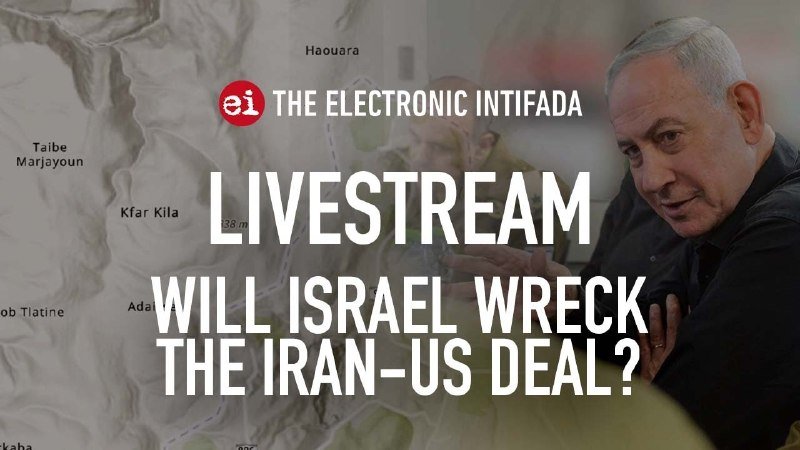
On the evening of 15 June 2026 and into the early hours of 16 June, Israel's two most-quoted broadsheets ran an identical line: the war was not worth the cost, and the American-led arrangement now taking shape around Iran makes the arithmetic worse. Yedioth Ahronoth told readers that "if we knew in advance that this would be the final result, there is great doubt whether we would wage war," and added that the administration's neglect of negotiations had returned Israel to a "reality of limited freedom of action and weak deterrence." i24NEWS quoted an Israeli source calling the inclusion of Lebanon in any agreement "an embarrassment" and accusing Washington of having "surrendered to Iran." Press TV framed Prime Minister Benjamin Netanyahu's domestic critics as calling the US-Iran memorandum the "greatest strategic failure." That is a striking amount of public grief in a country where governments usually keep their Iran debates behind closed doors.
The newspaper leaks are not just a fit of pique. They are a description of a strategic environment in which Israel, for the first time in a decade, cannot dictate the terms of an Iran file. The argument worth examining is not whether Netanyahu is winning or losing, but whether the underlying Israeli security doctrine of pre-emptive military action against Tehran's nuclear and missile infrastructure still produces the outcomes it once did, given who is now mediating the endgame.
The diplomatic frame
The proximate trigger is a memorandum of understanding between the United States and Iran, the contours of which are still emerging. The Israeli press reading is that the document constrains Israel's freedom to act, rather than expanding it. A country that built its Iran policy around pre-emption loses something concrete when its principal ally pre-empts the pre-emption with a deal. i24NEWS's framing of "surrender" is hyperbolic in diplomatic terms, but the structural point survives translation: Washington and Tel Aviv no longer share a threat assessment of how to handle Iran's nuclear and missile files, or no longer share a timeline. One of those is enough to produce the kind of public recriminations now showing up in the Hebrew-language press.
The Lebanon wrinkle sharpens the criticism. Israeli doctrine has long held that any Iran arrangement that does not degrade Hezbollah's missile and rocket capabilities, and the supply lines that feed them from Syrian and Iraqi territory, is not a real arrangement. A US-Iran memorandum that pulls Iranian political energy toward its own file while leaving the proxy array intact is, on that reading, a half-deal. Yedioth Ahronoth's reference to "limited freedom of action" reads, in that light, as shorthand for: Washington has narrowed the scope of permissible Israeli action against the northern front, while doing little to remove the threat that front poses.
The opposition's case
Press TV's selection of Israeli opposition voices to characterise the memorandum as the "greatest strategic failure" is, on its face, a translation choice. Iranian state media has every interest in amplifying the most damning internal Israeli framing. But the underlying critique has been audible inside the Knesset for months, including from figures inside Netanyahu's own coalition, who have argued that a war launched on the premise of denying Iran a nuclear capability cannot be sold to the public as a success if the end state preserves that capability. The honest read is that this is not opposition spin. It is a coalition-management problem dressed up as foreign-policy debate. Netanyahu needs his right flank to accept a deal that, by their own doctrine, is supposed to be unacceptable.
There is also a second opposition argument, less reported and more structural. Critics in the defence and security establishment have long warned that a sequence of long wars, on multiple fronts, erodes the readiness and political cohesion that gives Israel its qualitative edge. A memorandum that trades Israeli latitude for the chance to consolidate domestically is, in that reading, less a defeat than a triage. Israeli press coverage in mid-June suggests the political class is not yet ready to have that argument in the open. The leaks do the arguing for them.
What the public grief actually signals
Israeli leaks to Yedioth Ahronoth and i24NEWS are rarely accidental. They are calibrated. A cabinet that wants to discipline a prime minister, or warn an ally, uses the press in that order: anonymous souring, named on-the-record complaints, formal resignations. Mid-June's output is the first stage. The audience is partly domestic, a way of telling the Israeli public that the leadership is fighting for them in closed rooms, and partly Washington, a way of signalling that the political space for a generous deal is narrowing inside Israel the more Washington appears to dictate the terms.
For readers outside the region, the useful translation is: when a security state that is ordinarily tight-lipped starts talking through its broadsheets, something has shifted in the relationship with its principal backer. The current complaint is not that America abandoned Israel. It is that America is exercising leverage, and doing so in a direction that, for the first time in this government's tenure, runs against the Israeli preference on Iran.
The structural pattern
The wider pattern is older than this memorandum. A unipolar security architecture, with one superpower underwriting an ally's preferred order, gives that ally latitude to act. A more distributed arrangement, in which the superpower balances commitments across several theatres and several interest groups, narrows that latitude. The Israeli press reaction is a snapshot of the transition, in which the United States can no longer afford, in domestic-political and budgetary terms, to underwrite a maximalist Iran policy on Tel Aviv's terms and is therefore beginning to extract concessions in return for continued alignment. The Lebanese component, the missile file, and the inspections regime are all sites where that extraction is most visible.
What remains uncertain
The full text of the US-Iran memorandum is not yet public, and the Hebrew-language press is characterising it through unnamed sources. The Iranian state media framing of "surrender" is not a neutral translation. The Israeli opposition's "greatest strategic failure" line is being relayed by outlets that want it heard. The honest editorial position is that a strategic realignment is underway, that the Israeli reading of the deal is unusually candid, and that the new equilibrium will be defined in the negotiations now happening in private, not in the newspaper columns where they are being previewed.
Monexus frames the Israel-Iran file by reading the Hebrew press in the original framing and the Iranian state press in parallel, with both weighted equally against the underlying diplomatic facts. Where the wire consensus would smooth the public differences, this publication surfaces them.
Wire provenance
This editorial synthesis draws on the following public wire/social posts:
- https://t.me/s/alalamarabic
- https://t.me/s/alalamarabic
- https://t.me/s/alalamarabic
- https://t.me/s/presstv
Follow the event.
These dated source records provide context. They do not retrospectively verify this archive article.
Separate what the nuclear watchdog reported from what it could not determine after the June 2025 strikes.