The $300 billion question: parsing Trump's Iran accord and the political risks of buying peace
Trump calls the $300 billion figure 'fake news.' The FT stands by it. The contradiction is the story, and the verification gap underneath it will decide whether the accord is remembered as peace or as purchase.
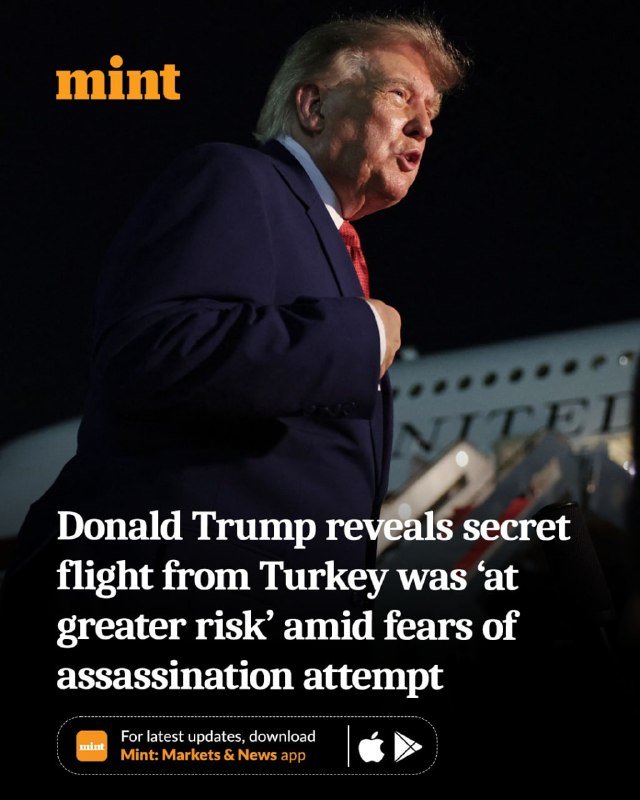
On June 18, the Financial Times dropped the figure that has since defined the Trump administration's Iran accord: $300 billion, the proposed price tag on a regional reconstruction and economic-development plan for the Islamic Republic, backed by Washington and unspecified Gulf partners. Within hours, President Donald Trump was on Truth Social calling the number "fake news." By the next morning, the FT was sticking to its reporting, and markets were left to price a deal whose central figure the deal's principal beneficiary had publicly repudiated.
That contradiction is the story. The accord, as currently described in public reporting, is less a non-proliferation breakthrough than a financial-architecture arrangement with non-proliferation claims stapled to it. The political risk runs in two directions at once: a White House that needs the headline, and a Tehran that needs the cash, locked in a choreography neither side can fully control.
What the FT actually said
The $300 billion figure originated in FT reporting cited by unusual_whales on June 18 at 18:37 UTC: "The US and regional partners to develop a $300 billion reconstruction and economic development plan for Iran, per FT." Separately, the same wire window carried a smaller, more concrete number: "Iran to get access to $6 billion of frozen funds to buy US goods, per FT" (unusual_whales, 2026-06-18T18:17). The two figures sit at different ends of the deal's plumbing. The $6 billion is escrow-style funding tied to humanitarian or non-sanctioned goods purchases, the kind of arrangement that has precedent in earlier Iran deals and that can be wired through Qatari or Omani channels with relatively limited US political exposure. The $300 billion is something else entirely: a multi-year reconstruction commitment that would have to be underwritten by Gulf capital, multilateral lending, or some mix of the two, with Washington providing political cover rather than a Treasury check.
Trump's rebuttal, posted to his own platform and amplified by unusual_whales at 17:27 UTC the same day, was categorical: "There is no 300 Billion Dollar payment to Iran by the U.S. That's Fake News!" The rebuttal is technically defensible. A US-financed $300 billion transfer to Iran is not, on the available record, what the FT described. A US-brokered $300 billion reconstruction programme in which US exposure is indirect is closer to the mark, and that distinction is doing a lot of work.
The deal as financial architecture
Read the accord as a financial-architecture deal and the moving parts snap into focus. Tehran gets partial sanctions relief, access to frozen balances, and the promise of investment-led growth that an economy battered by years of isolation needs to keep its urban middle class quiescent. Gulf partners, chiefly Saudi Arabia and the UAE, get a US security umbrella renewed, formalised, and priced in a currency they can understand: inward capital flows, reconstruction contracts, and the chance to reposition Iran as a market rather than a missile threat. Washington gets a non-proliferation claim it can carry into the November midterms, plus the secondary benefit of cheaper crude that Trump explicitly cited in his own rebuttal ("Lower Oil Prices").
The incentive structure is therefore not a confidence-building exercise between adversaries. It is a transaction between three sets of actors with partially overlapping interests. That makes it more fragile than a traditional arms-control treaty, because none of the three can deliver all of the moving parts on its own, and more durable than a one-off sanctions waiver, because each party's domestic political constituency is now writing checks against the deal's success.
The verification gap
What neither the FT reporting nor Trump's rebuttal resolves is the verification regime. Iran's nuclear programme has been the subject of the most intrusive inspection architecture ever constructed, the IAEA Additional Protocol, since the collapse of the 2015 Joint Comprehensive Plan of Action. Any accord that meaningfully reduces the inspection footprint in exchange for sanctions relief trades near-term cash for long-term breakout risk. The accord's political appeal in Washington rests on the premise that the inspection trade is minor; its political appeal in Tehran rests on the premise that the inspection trade is major. The distance between those two framings is the deal's largest unreported cost.
A Polymarket-style prediction market, surfaced in the same wire window, was already pricing the accord's survival probability well below 100 percent, an implicit acknowledgement that the financial architecture may outlast the non-proliferation architecture or vice versa. The market's specific contract IDs were not legible in the available record, but the directional signal is the relevant one: traders are hedging against a breakdown before verification questions have been resolved.
The domestic political risk
Trump's parenthetical joke, carried by unusual_whales at 13:17 UTC on June 18, lands harder than it reads: "If [the Iran deal] works out, I'm going to take the credit; if it doesn't work out, I'm blaming [Vance]." The line is funny because it is structural. A reconstruction-and-economics accord with Iran is exactly the kind of deal that produces an early victory lap and a later bill. The first tranche of frozen-funds releases will register as a success. The first IAEA report showing reduced access at Natanz or Fordow will register as a betrayal. The administration's task, over the next ninety days, is to sequence those moments so the credit accrues before the costs do.
The Republican coalition's tolerance for the deal will be tested on two edges: the right flank, which treats any engagement with Tehran as appeasement, and the Israel-lobby centre of gravity, which will judge the accord by its treatment of Iran's ballistic-missile programme and its proxy network rather than by its enrichment metrics. The accord, as described, addresses none of the latter. That omission is not a bug in the FT's reporting; it is a feature of any near-term deal that has to clear Tehran's red lines.
What to watch before the next quarter
Three dates will tell us whether this accord is a financial-architecture deal that happens to constrain a nuclear programme, or a non-proliferation deal that happens to move money. The first is the IAEA Board of Governors meeting later this quarter, where the inspection question will be put to a vote that Tehran can read as either a confidence-building gesture or a humiliation. The second is the first release of frozen funds, which will tell observers whether the $6 billion tranche is a one-off or the down payment on a larger architecture. The third is the first major construction contract awarded under the reconstruction framework, which will tell us whether Gulf capital is real or rhetorical.
If all three land, the $300 billion figure stops being a number Trump has to deny and becomes a number he has to defend. If any one of them slips, the deal reverts to its current status: an arrangement whose principal claim is its own existence.
The wire has so far led on the inducement: the $6 billion escrow-style release, the regional reconstruction framework, the political theatre of Trump's rebuttal. The harder reporting, on what verification actually looks like under this architecture, has not yet been done. That is the work between now and the next quarter, and it is the work that will determine whether the Trump administration's Iran accord is remembered as a peace or as a purchase.
Sources
- unusual_whales (X), 2026-06-18T17:27 UTC, Trump statement on $300 billion figure.
- unusual_whales (X), 2026-06-18T18:37 UTC, FT report on $300 billion reconstruction plan.
- unusual_whales (X), 2026-06-18T18:17 UTC, FT report on $6 billion frozen-funds release.
- unusual_whales (X), 2026-06-18T13:17 UTC, Trump comment on credit allocation with Vance.
- Polymarket (X), 2026-06-18, prediction-market pricing of accord survival.
- Reuters, http://reut.rs/4xvbnDX, wire context for Iran accord reporting.
Desk note: Monexus has framed this accord as a financial-architecture deal with non-proliferation claims attached, rather than as a non-proliferation deal with financial sweeteners. The wire has led on the inducement; the verification regime remains the unreported cost.
Follow the event.
These dated source records provide context. They do not retrospectively verify this archive article.
Separate what the nuclear watchdog reported from what it could not determine after the June 2025 strikes.