Trump's Iran Accord Tests a Tighter Alignment Between Washington and the Gulf — and a Looser One With Israel
A reported framework to wind down the US-Iran confrontation is exposing a widening gap between the White House and pro-Israel voices, with a $300bn stabilisation fund and Saudi-style investment now the open question.
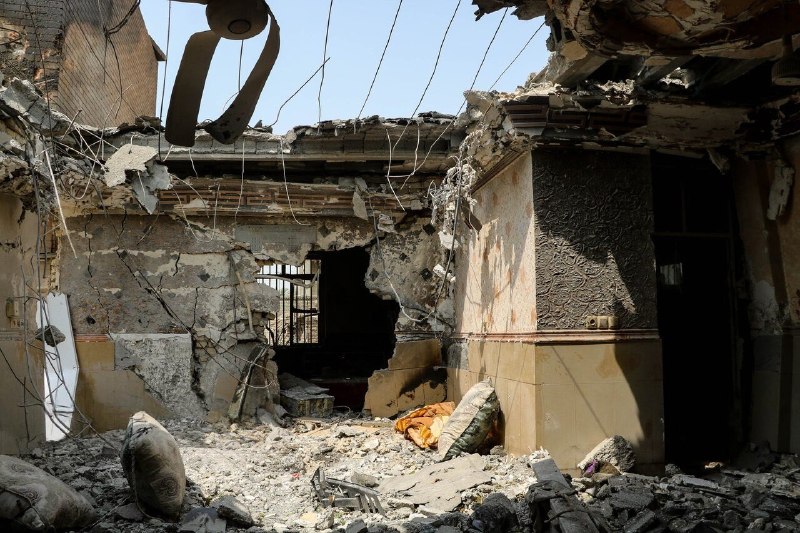
By 16 June 2026 the US-Iran confrontation that has shadowed the Middle East for a quarter-century looks, for the first time in this administration, like it might end not with a war but with a contract. Reporting on 16 June 2026 placed the White House in advanced talks with Tehran over a framework that pairs sanctions relief with investment guarantees, and described a $300 billion fund — floated by the Financial Times and flagged by trader network Unusual Whales — that the administration is weighing as a stabilisation package if the accord holds [04:30 UTC, 16 June 2026]. Reuters framed the moment plainly the same morning: the accord offers the United States an exit from war, and a fresh set of political risks at home [04:20 UTC, 16 June 2026].
The political risks run through Washington before they reach Tehran. JD Vance's 16 June 2026 appearance on The Megan Kelly Show, summarised on X by commentator @agdugin, captured the rupture inside the Republican coalition in unusually candid terms: the administration's peace-track with Iran has infuriated parts of the pro-Israel lobby, and the President has now lost, in the commentator's reading, "almost everybody" — including, finally, "those who were the reason why he lost anybody else before" [04:39 UTC, 16 June 2026]. It is the most visible sign yet that the deal is not a foreign-policy event for this White House. It is a domestic-political one.
The pattern is not new. What is new is the speed at which the rupture is becoming public.
A $300bn question
The Financial Times scoop that broke on 15 June 2026 — and circulated through the @unusual_whales account on X at 21:11 UTC — is the closest thing to a price tag yet attached to the US-Iran track. The Trump administration is considering a $300 billion fund for Iran if the accord is maintained, the FT reported. The size, if accurate, places the package in the same order of magnitude as the multi-year Saudi sovereign-wealth deployments that have followed MBS-era detentes, and well above the structured-investment envelopes that accompanied the 2015 JCPOA. Tehran would be receiving, in effect, a war-termination premium underwritten by the Gulf's deepening financial relationship with Washington.
The figure is also the lever by which the deal becomes a domestic liability. A fund of that scale, even one notionally private-sector-financed, is a target for every lobby that has spent two decades arguing that engagement with Tehran rewards the regime. The numbers in the FT story are the headline; the politics are the payload.
The Vance frame — and the coalition it speaks for
The Vance interview, as paraphrased by @agdugin, makes the friction legible in a way that official briefings do not. Two assertions stand out. First, that the gap between the Trump administration and the pro-Israel advocacy network is now serious enough to break cover in prime-time interviews. Second, that the political cost of that gap falls not on the network itself, but on the administration: "it is a bit too late to try to bring the real MAGA base back" [04:39 UTC, 16 June 2026].
The framing matters because it concedes — from inside the coalition — that the foreign-policy question is no longer the same as the electoral one. The MAGA base that returned Trump to office on a platform of restraint and a posture of ending foreign entanglements is, on this read, a different constituency from the donor and advocacy layer that has shaped Republican Middle East policy since 2015. The deal, in other words, is the moment the two halves of the coalition become publicly incompatible.
That the rupture is being articulated by a Vance-adjacent voice is itself a marker. Vance is the public face of the post-Trump intra-right; his interventions are not off-the-cuff. When the post-Trump wing describes the gap in the language of "Zionists furious about a peace deal," the audience being addressed is not the donor class but the populist base.
The counter-narrative from the pro-Israel centre
The dominant pro-Israel framing — visible in the donor press, in think-tank op-eds, and in Democratic-aligned reporting — reads the same event as a strategic error: a $300bn package to a regime that has, in this reading, financed proxies, accelerated enrichment, and exploited every previous concession. From that vantage, the accord is not the exit from war the Reuters wire describes; it is a prelude to a more dangerous one, in which Tehran converts liquidity into reconstitution.
That argument has a serious internal logic. The 2015 deal delivered sanctions relief in tranches; the tranches bought time, not transformation. Hardliners in Tehran used the period to entrench regional positioning, and the JCPOA's collapse in 2018 produced a more emboldened, not a more moderate, Iran. The new package, on this reading, is the same bet at three times the size.
The counter to that counter is structural. Iran's regional posture in 2026 is materially weaker than it was in 2015. The axis that ran Tehran-Damascus-Beirut-Baghdad is no longer intact. The financial architecture that funded it is constrained. The argument for engaging Tehran now is not that engagement converts the regime, but that the regime's leverage has fallen enough to make a deal enforceable in a way that 2015 was not.
A tighter Gulf-Washington axis
What is under-reported in the western wires is how the Iran track reshapes the Gulf. The $300bn fund reported by the FT, if real, has a structural corollary: it implies Saudi and Emirati capital deployed alongside, or underwritten by, US guarantees. A Iran deal of that scale is not a US-Iran transaction; it is a Gulf-Iran settlement under US stewardship. That is a configuration Riyadh and Abu Dhabi have spent two years preparing for, and one the Abraham Accords architecture has, in effect, been waiting for.
The corollary also helps explain the Israeli objection. A deal that prices Israeli security concerns as one input among several — rather than as the organising principle — is a different deal from the one the pro-Israel advocacy network has spent a decade demanding. The Vance interview, in this light, is a marker of a broader realignment: the United States moving, in increments, from a Middle East policy organised around Israeli security to one organised around Gulf investment, Iranian containment, and the management of a regional order in which Israeli and Gulf interests increasingly coincide but no longer fully overlap.
The pattern — incumbent order ceding ground to a successor arrangement — is not unique to the Middle East. The dollar architecture, the security architecture, and the diplomatic architecture of the region are all being repriced against the same backdrop of transition. What is specific to this moment is the speed.
Stakes, and what remains contested
The stakes are concrete. If the accord holds, Tehran receives a financial bridge, the Gulf receives a regional settlement, the US receives an exit from a war footing, and Israeli strategic primacy is downgraded inside the Republican coalition. If the accord collapses, the $300bn becomes a campaign issue, the administration loses its last major foreign-policy deliverable, and the war footing resumes from a position of weaker regional alignment than the one that produced October 2023.
What remains genuinely uncertain is the package itself. The FT story names a $300bn figure; the Reuters piece frames the deal as an exit-and-risks story; the Vance interview describes the politics. None of the reporting in the 16 June 2026 cycle names the counterparties to a final text, specifies the sanctions-relief schedule, or confirms the fund's financing structure. The headline is real. The contract is not yet on the page.
That gap — between the political shape of the deal and its technical substance — is what the next two weeks will determine. It is also the gap into which the pro-Israel network, the Gulf finance ministries, and Tehran's own negotiating team are all pushing their weight. The frame the Reuters wire chose for the morning — exit from war, fresh political risks — understates the deeper claim. The deeper claim is that the architecture of US Middle East policy is being rewritten, and the rewrite is now the story.
Desk note: The wire cycle on 16 June 2026 reported the deal in transactional terms — exit, risks, fund size. Monexus reads it as a coalition realignment: the administration's centre of gravity shifting from a donor-organised Israel-first posture toward a Gulf-organised regional settlement, with the rupture inside the Republican coalition now visible in prime-time interviews.
Wire provenance
This editorial synthesis draws on the following public wire/social posts:
- http://reut.rs/4vfFhe4
- https://x.com/unusual_whales/status/
- https://x.com/agdugin/status/
- https://x.com/agdugin/status/
Follow the event.
These dated source records provide context. They do not retrospectively verify this archive article.
Separate what the nuclear watchdog reported from what it could not determine after the June 2025 strikes.