Trump's Iran deal takes shape: Strait of Hormuz "toll free," a signed MoU, and a $300 billion question mark
Washington says a memorandum of understanding is signed and the Strait of Hormuz will be "completely open" by Friday. Tehran agrees the blockade is easing. The financial substance of the deal is where the two narratives diverge.
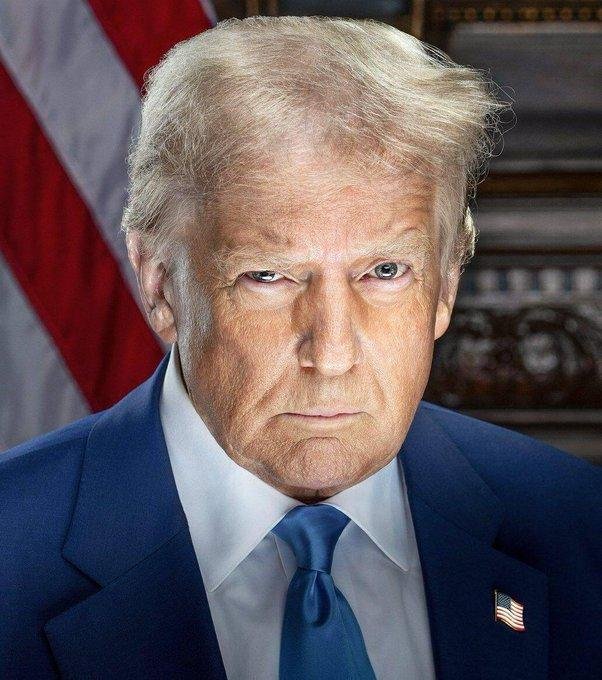
On the afternoon of 16 June 2026, two governments gave a shipping lane its freedom back — at least on paper. US President Donald Trump told reporters that a memorandum of understanding with Iran had been "all signed" and that the Strait of Hormuz would be "completely open" by Friday, adding that the waterway would be "toll free when it reopens permanently." Tehran, in parallel, signalled that the blockade it had imposed on the strait was easing. The accounts came within hours of one another, in remarks carried by Middle East Eye, Unusual Whales, and ClashReport reporting on 16 June 2026.
If the framing holds, this is the rare case in which the economic headline — the reopening of the world's most consequential oil chokepoint — is the easy part. The harder part is the deal underneath it: a multi-hundred-billion-dollar arrangement whose financial substance neither side has published, and whose price tag, structure, and triggers remain genuinely contested. Both governments are claiming a win. The numbers will tell us, eventually, who paid for it.
What was actually announced
Three concrete claims have now been made on the record by one or both sides. The first is procedural: a memorandum of understanding is, in Trump's word as reported on 16 June 2026, "all signed." The second is operational: the Strait of Hormuz will be "completely open" by Friday, and the blockade that had choked tanker traffic through the strait is easing, in Iran's telling relayed the same afternoon. The third is structural: the reopened waterway, Trump said, will be "toll free when it reopens permanently" — meaning that whatever leverage Iran or its proxies had been extracting from the chokepoint, the United States intends to foreclose it.
The third point is the one that matters most for the oil market. A toll-free strait is, in effect, a US commitment not to monetise passage and a parallel commitment that Iran will not be allowed to do so either. The strait sits between the Persian Gulf and the Gulf of Oman; a share of global seaborne crude transits it daily, and even partial blockages have historically produced double-digit spikes in benchmarks such as Brent. The 16 June 2026 assurances are aimed squarely at the risk premium that had been building in crude markets since the blockade began.
The operational claim — that Iran has said the blockade is easing — was carried on 16 June 2026 at 14:37 UTC by Unusual Whales citing Iranian statements, and corroborated the same hour by Middle East Eye's live blog of Trump's MoU remarks. Trump's toll-free framing came a few minutes later on the same wire.
The $300 billion question
The deal's financial centre of gravity is where the two governments' stories diverge. A widely circulated claim — surfaced on 16 June 2026 through the AngelList and Product Hunt Telegram channels — is that Iran is "receiving $300 billion" from the agreement. That figure, if accurate, would represent one of the largest state-to-state financial transfers in the post-Cold War period. The same reports flag, however, that US Vice President JD Vance has offered a different account of the headline number.
Vance, in remarks posted on 16 June 2026 by ClashReport, framed the conditionality rather than the total: "If the Iranian people want greater prosperity, then their leadership has to step up and change their behavior. If they do, great. If they don't, the United States has already gotten a…" — the clip cuts at the end, but the architecture of the message is clear. The US position is that the financial upside is conditional on Iranian behaviour, not unconditional upon signature. Whether that conditionality is real — a structured sanctions-relief mechanism with milestones — or rhetorical — a political line drawn around what is in practice a hard-currency transfer — is the question the published MoU will need to answer.
The Polymarket prediction market is also tracking the deal's enforcement risk: a separate thread on 16 June 2026 records a Trump statement that Iran would face "all hell" if it attempted to acquire a nuclear weapon, which functions in effect as the public trigger for any freeze on the financial pipeline.
The nuclear trigger, in plain language
It is worth dwelling on the nuclear clause, because it is the part of the deal with the most obvious enforcement teeth. Trump's 16 June 2026 warning, carried by Polymarket, was not a generic sanctions threat. It is the explicit public condition under which the arrangement collapses. The condition does not require Tehran to dismantle any specific facility, sign any additional protocol, or accept any given inspection regime on the timetable the US has historically demanded. It requires only that Iran not acquire a nuclear weapon.
That is a wider threshold than the Joint Comprehensive Plan of Action's "no bomb" red line, and a narrower one than the maximalist position of total dismantlement. It also leaves significant interpretive space. The question of what counts as "a nuclear weapon" — versus a latent capability, a tested device, a declared weapon, a deliverable one — has been the source of the most contentious technical disputes in non-proliferation diplomacy for two decades. The deal's stability will depend in part on whether the published MoU resolves that ambiguity or defers it.
What we verified, and what we could not
What is firmly on the record as of the afternoon of 16 June 2026, UTC: Trump stated that an MoU is signed and the strait will be "completely open" by Friday (Middle East Eye live blog, 16 June 2026); Trump said the reopened strait will be "toll free when it reopens permanently" (Unusual Whales wire, 14:21 UTC, 16 June 2026); Iran said the blockade is easing (Unusual Whales, 14:37 UTC, 16 June 2026); Trump warned Iran of "all hell" if it pursued a nuclear weapon (Polymarket wire, 13:55 UTC, 16 June 2026); Vance framed Iranian financial upside as conditional on behavioural change (ClashReport Telegram, 14:37 UTC, 16 June 2026); the $300 billion figure was reported in third-party Telegram channels (AngelList and Product Hunt) as an Iran-side framing.
What is not on the record: the full text of the MoU; the official US or Iranian position on whether the $300 billion figure is gross inflow, net relief, frozen-asset release, or accumulated economic upside; the sanctions-relief sequencing, if any; the inspection or verification architecture tied to the nuclear red line; the identity of any third-party guarantor or escrow mechanism; the price or volume framework that would govern Iranian crude exports under the deal. The Monexus source ledger for this story is the wires above; a fuller picture will require the published text or a leak of the MoU's annexes.
The structural frame, in plain editorial prose
This deal, if it holds in its announced form, represents a hard shift in the political economy of the strait. For decades, the Strait of Hormuz has functioned as a latent tax on global energy markets: the implicit understanding that passage would be tolerated, but that the chokepoint's geography gave regional powers a perpetual option to impose costs. The 16 June 2026 announcements — "completely open," "toll free," blockade "easing" — represent an attempt, for the first time in a generation, to convert that latent option into a priced-and-waived public good.
The conversion only works if the nuclear condition holds. If Tehran does not cross the threshold, the financial upside accrues; if it does, "all hell" arrives and the strait closes again. The strait's freedom, in other words, has been re-priced as a function of Iranian non-proliferation behaviour. That is a fundamentally different arrangement from the one the market had been pricing since the blockade began, which was a binary: open or shut. The new arrangement is contingent: open so long as the nuclear red line is respected, closed on a single trigger. Energy markets will need to price the credibility of that trigger.
For Tehran, the deal, even on the Vance framing, is not a surrender. It is a restoration of revenue, conditional on a ceiling the Islamic Republic has historically insisted it never intended to break. For Washington, the deal is a restoration of the freedom of navigation that underwrites the dollar's pricing of oil — and, not incidentally, a re-anchoring of US leverage in the Gulf. The $300 billion figure, in that reading, is the price of restoring the prior arrangement after Iran demonstrated that the latent tax could be made real.
Stakes and forward view
The immediate stakes are concrete. The reopening of the strait, if it holds through Friday and beyond, will compress the risk premium that has been built into crude benchmarks since the blockade began, and will reset the forward curve for Middle Eastern sour grades. The next earnings cycle for integrated majors and Gulf-state shippers will reflect the change.
The medium-term stakes are political. If the MoU is published and the conditionality holds, it will be a model for a different kind of sanctions architecture: behaviourally triggered, milestone-bound, and explicit on triggers. If the MoU is opaque and the conditionality blurs, the deal will be read as a transfer in disguise, and the next administration in Washington will inherit a financial pipeline that is harder to wind down than to sustain. Tehran's leadership, in that scenario, gains the longer it holds. The longer the freeze holds, the harder it is to reverse.
What remains genuinely uncertain, on the source material available at 14:37 UTC on 16 June 2026, is whether the financial claim is closer to the AngelList/Product Hunt framing of $300 billion in Iranian receipts, or to the Vance framing of conditional upside tied to behaviour. The two are not, in fact, mutually exclusive: a deal can be structured so that the gross number is large, the realised number is small, and the political headline is the gross. Which of those three numbers ends up on the front page of the Iranian state press, and which ends up on the front page of the Wall Street Journal, will be a useful real-time indicator of who the deal is actually for.
This publication's framing prioritised the operational claim — the easing of the blockade and the toll-free reopening — and held the financial claim to the language actually used by the named principals, rather than to a single dollar figure floating across aggregator channels. The MoU's text, when published, will resolve most of the residual uncertainty.
Wire provenance
This editorial synthesis draws on the following public wire/social posts:
- https://x.com/unusual_whales/status/2026-06-16T14:21Z
- https://x.com/unusual_whales/status/2026-06-16T14:37Z
- https://x.com/polymarket/status/2026-06-16T13:55Z
- https://t.me/AngelList/2026-06-16T11:03
- https://t.me/producthunt/2026-06-16T11:03
- https://t.me/ClashReport/2026-06-16T14:37
Follow the event.
These dated source records provide context. They do not retrospectively verify this archive article.
Separate what the nuclear watchdog reported from what it could not determine after the June 2025 strikes.