Trump's Iran Announcement Is a Deal in Search of a Deal
A $300 billion reconstruction fund, a 'never' pledge on nukes, and a 'preliminary deal' that nobody outside the White House has read — the announcement is doing the work of an agreement, not the agreement itself.
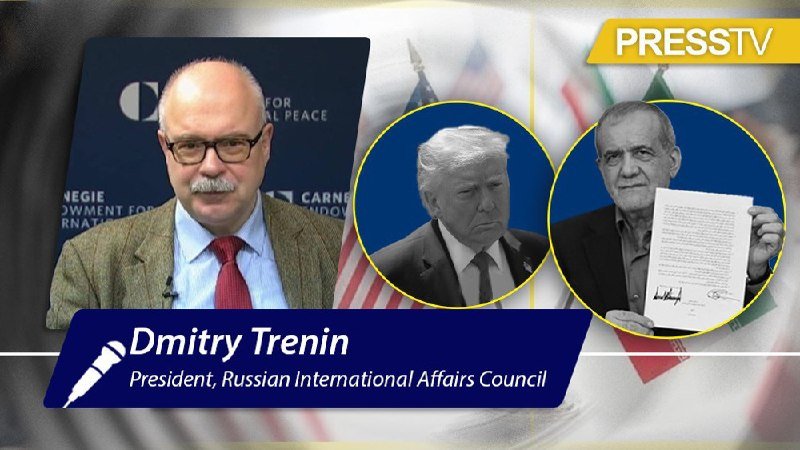
Within the space of six hours on 15 June 2026, the U.S. government described its emerging arrangement with Iran in at least three different ways, and the contradictions between those descriptions are themselves the story. At 17:32 UTC, a market-moving account circulated reporting that the package could include a $300 billion reconstruction fund for Iran. At 17:44 UTC, the President announced the U.S. would receive Iran's nuclear material — its "nuclear dust" — "over the next month or two." At 00:32 UTC on 16 June, the same office announced that Iran had agreed never to possess a nuclear weapon. By 05:10 UTC, Reuters was reporting that the President had claimed a preliminary deal had already been signed, with "key details" still unclear.
The pattern is familiar: the announcement is doing the work of the agreement, and the agreement has not yet been allowed to do the work of the announcement. Until the text is public, every clause is a moving target, and the moving target is the policy.
The three deals in one afternoon
A reconstruction fund of the reported scale — $300 billion, per a Financial Times report cited at 21:11 UTC on 15 June — would be one of the largest single transfers in modern U.S. foreign policy, exceeding the cumulative cost of several Marshall-era programmes when adjusted for inflation. It would also be structured, per the same report, as a conditional flow tied to the accord's maintenance, which means the money functions less as a payment than as a sustained leverage instrument: a way to keep Tehran behaving in ways Washington finds tolerable, long after the cameras move on.
The nuclear-material claim is the more immediately consequential announcement. "Nuclear dust" is not a technical category — it is a colloquialism for the residue, scrap, and unenriched material that accumulates across a civilian programme. The claim that this material will reach the United States within two months implies a physical handover of inventory from Iranian facilities to U.S. custody, a procedure with no obvious precedent in non-proliferation diplomacy. The IAEA's verification protocols for such a transfer have not, in the public record, been described.
And then the categorical pledge: Iran has "agreed" never to have a nuclear weapon. Public commitments to that effect have been made by Iranian officials before, including fatwas cited by Tehran since the early 2000s, and have coexisted with advancing enrichment capability. The word "never" in a presidential announcement is a rhetorical instrument, not a verification regime.
The void where the text should be
The 05:10 UTC Reuters dispatch is the most telling item of the day. The headline of the story is that a deal has been signed; the body of the story concedes that "key details remain unclear." That is a structural inversion of how arms-control agreements are usually reported. The historical sequence is text first, signature second, public claims third. Here, the public claim has been made repeatedly and at the highest volume, while the text is treated as an administrative inconvenience to be located later.
This is not a new problem. The first-term Joint Comprehensive Plan of Action took more than two years of public text before it was sold as an achievement. The Abraham Accords were announced before the underlying bilateral tracks were exhausted. The pattern, in other words, is the pattern — and the press corps that reports on it has, with honourable exceptions, accepted the inversion as a feature rather than a bug. Coverage routinely defers to the language of official spokespeople; the verification work is outsourced to the next news cycle.
Why the $300 billion is the load-bearing claim
If the reconstruction fund is real, it explains almost everything else in the announcement cascade. A fund of that scale gives every other party to the negotiation a reason to stay in the room. It gives Tehran a domestic political narrative that does not require calling the result a surrender. It gives Gulf states and Israel a reason to calculate their responses in months rather than weeks. And it gives a White House facing mid-term pressure a tangible deliverable to point to, denominated in a number large enough to be memorable.
The same fund, if it materialises, will also be the part of the deal that gets renegotiated the most. Reconstruction funds attached to non-proliferation agreements have a history of becoming escrow accounts, dispute-resolution venues, and finally hostages to the next crisis. The money, in other words, is the architecture; the nuclear material is the wrapping.
The counter-narrative is that the announcement is a tactical manoeuvre — a market-mover, a ratification lever, a way to lock in a baseline expectation that downstream negotiations will then narrow. On that read, the contradiction between the three accounts in six hours is not a bug; it is the point. Each version of the deal addresses a different audience (financial markets, the Israeli and Gulf public, the U.S. domestic base) with a version of the outcome that audience can accept. The unified text, on this reading, will only be required when the political coalition that needs it actually needs it.
The evidence for the dominant framing — that this is a real, if unusually performative, agreement — is the consistency of the financial and physical claims across multiple time-stamped reports, and the speed with which the U.S. side moved to characterise the deal as signed. The evidence for the counter-narrative is the absence of any published text, the vagueness of "nuclear dust" as a handover category, and the long history of framework agreements that never quite became treaties.
Stakes and the structural picture
The most consequential variable is what Israel, Saudi Arabia, and the UAE do over the next thirty days. A deal that the regional security architecture cannot absorb is a deal that will be tested, and the testing will not be diplomatic. The structural shift on display is the increasing use of presidential announcements as substitutes for negotiated instruments — a posture that compresses the timeline for adversaries, allies, and markets alike, and that raises the cost of any subsequent walk-back. Whoever blinks first, whether Tehran or Washington, will set the terms for the next decade of non-proliferation bargaining in the Middle East.
The sources do not specify how the $300 billion fund would be administered, by which institution, under which legal authority, or against what benchmarks. The sources do not specify what "nuclear dust" comprises in this case, which facilities it would be drawn from, or which agency would verify the handover. Until those questions have public answers, what is being announced is an arrangement to negotiate an arrangement, marketed at full volume.
Desk note: Monexus is reporting the announcement as it was made, with explicit separation between the three versions that circulated between 17:32 UTC on 15 June and 05:10 UTC on 16 June. The reconstruction-fund figure is attributed to the Financial Times report cited at 21:11 UTC; the "nuclear dust" timeline and the "never" pledge are attributed to the President's own statements as relayed by market-data and wire accounts.
Follow the event.
These dated source records provide context. They do not retrospectively verify this archive article.
Separate what the nuclear watchdog reported from what it could not determine after the June 2025 strikes.