The Trump–Iran deal the markets already priced in
Washington says Iran can resume oil exports and that 'all hell' awaits any nuclear breakout. The structural question is whether this is a deal or a deferral.
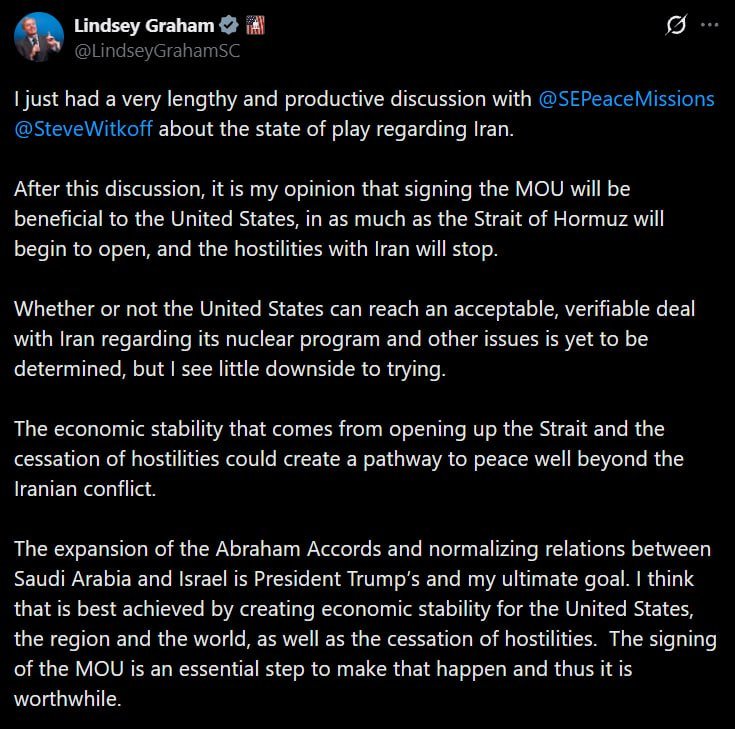
By the time the memorandum was announced, the price of the announcement had already moved through oil futures and Gulf sovereign credit. That tells you most of what you need to know about the Trump–Iran deal signed in the second week of June 2026: the market treated it as a fact before the cameras were on, and the political commentary that followed is mostly rearranging the furniture of a transaction that is already in motion.
On 16 June 2026, Washington agreed to let Iran resume oil sales immediately and to waive banking, transport and insurance sanctions on the Islamic Republic, according to a Wall Street Journal report relayed by Cointelegraph on Telegram. The same package, President Donald Trump told reporters, contains "99.9% of what he wants." Doha, through Al Jazeera, said Qatar is renewing its mediation work to make sure the deal holds and the region does not slide back into open war. And in the same news cycle, Trump warned Tehran that "all hell will break loose" — in one version; "all hell will rain down" in another — if Iran moves back toward a nuclear weapon.
What the deal actually does
The substantive content, on the public record so far, is the sanctions architecture. Iranian crude can flow again into Asian refineries without shipowners and underwriters staring down US secondary sanctions. That is the lever that has done the heavy lifting in squeezing Tehran for two years, and it is the lever being released. In return, the United States has a written commitment — a memorandum, not a treaty — that caps or reverses the nuclear programme, with a credible threat of return to maximum pressure if Iran breaks the terms. The asymmetry is the point. Tehran gets cash flow and shipping insurance back; Washington gets a pause on a weapons programme and an off-ramp from a military commitment it was not visibly prepared to execute.
Why the threat is the deal
There is a temptation to read Trump's "all hell" language as theatre. The cleaner read is that the threat is the enforcement mechanism. A sanctions waiver is only as durable as the political will to revoke it; political will is only as durable as the credibility of the alternative. The whole structure leans on Tehran's calculation that Washington will, in fact, re-pile the sanctions and probably do something worse if a covert enrichment programme re-emerges. The Qatari mediation, framed in Al Jazeera's reporting as work to "prevent a return to war," is the diplomatic backstop for that credibility — a third-party guarantor that the off-ramp can be enforced without a hot conflict.
The market read
Cointelegraph's reporting of the Wall Street Journal scoop landed on oil desks as a confirmation rather than a surprise. Iranian barrels had already begun to be priced back into forward curves weeks earlier, on the suspicion that a deal was coming. That is the part of this story the political press is underweighting: the deal does not so much unlock Iranian oil as ratify a flow that was already returning through shadow channels, discount buyers, and quiet waivers to Chinese and Indian refiners. By formalising the trade, Washington is converting grey-market margin into taxable throughput and capturing the diplomatic dividend. By participating, Tehran is converting smuggled revenue into budgeted revenue. Both sides are better off on paper, which is why both sides are claiming a win.
What can break it
Three things. First, an Iranian decision that the sanctions relief is not durable enough to justify the nuclear concessions, and a quiet walk-back on enrichment. Second, an Israeli assessment that the deal is worse than the pre-deal status quo — Israeli security concerns are not decorative in this calculation, and any deal that leaves Iran with the fuel cycle intact, even at capped capacity, will be read as deferred risk. Third, an American political cycle in which the deal becomes a campaign liability, which is a different problem from a deal that fails in substance. None of these have to happen for the trajectory to matter; they just have to be priced in as the next leg of the same trade.
The honest summary is that this is a deal, not a peace. It is a memorandum with a credible enforcement mechanism and a market that has already discounted the upside. The structural pattern is familiar: the United States extracts a written concession, releases a calibrated amount of economic pressure, and leaves the door open to re-impose everything at a moment of its choosing. The Qatari role — quiet, continuous, public-facing only when something has to be saved from collapse — is the part of the architecture that the wire reporting has so far described in the lightest terms. It will not stay lightly described for long.
This publication's read: the deal is real and tradable; the question is not whether it holds for a quarter, but whether the political will to revoke it survives the next Iranian probe of the line. The market thinks it does. The commentary class is still arguing about whether the deal is a good thing, which is a different question, and a less useful one.
Wire provenance
This editorial synthesis draws on the following public wire/social posts:
- https://t.me/cointelegraph
- https://t.me/cointelegraph
Follow the event.
These dated source records provide context. They do not retrospectively verify this archive article.
Separate what the nuclear watchdog reported from what it could not determine after the June 2025 strikes.