Trump's Iran deal enters a second stage — and the Lebanon test
On 16 June 2026 the US president publicly tied an Israeli escalation in Lebanon to the survival of his Iran agreement, in comments that exposed the deal's narrowest seam.
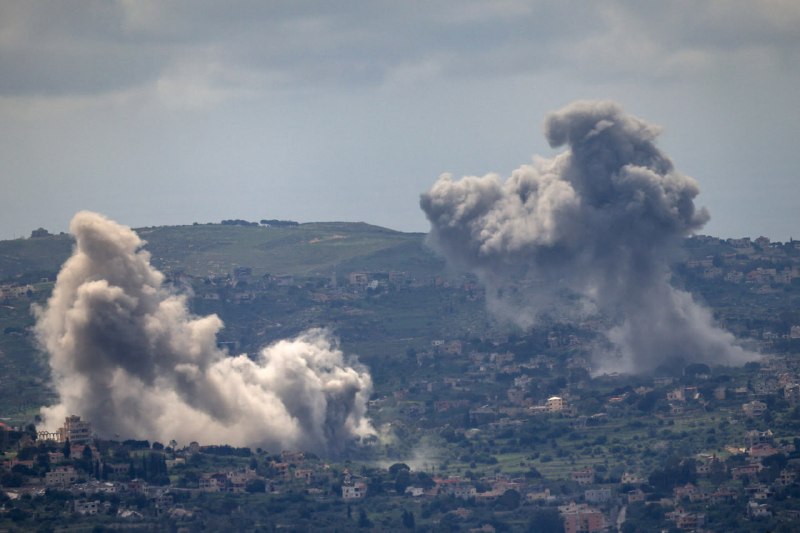
The chronology of 16 June 2026 was unusually compressed. In a single morning of public comments, US President Donald Trump told reporters that the United States had moved its agreement with Iran into a "second stage," that the deal was "fair and good" but that Washington would not be "investing any money" in the Iranian economy, that prior efforts to change the Iranian regime had not succeeded, and — most consequentially — that an Israeli attack on Lebanon would not, in his reading, breach the deal with Tehran. Within minutes, Al-Alam Arabic and Israel's Channel 12 correspondent Amit Segal both carried versions of the warning: that Netanyahu, in Trump's phrasing, "should be more responsible" toward Lebanon. By mid-morning UTC, the Lebanese frontier — long a secondary front inside a regional arrangement that has Tehran at its centre — had become the seam where the Trump-era Iran file is most likely to tear.
The remarks matter less for what they add to the diplomatic record than for what they concede about its limits. For months the US-Iran track has been described, in capitals and in the financial press, as a transactional arrangement built around nuclear constraints, sanctions relief and a tacit understanding that the region's other fronts would be managed rather than widened. Trump's morning comments presume that architecture still holds. They also acknowledge, in plain language, that it is being tested — and that the test is being administered not in Vienna or in the Gulf, but along the Israel-Lebanon border, where the Israeli government and Iranian-backed actors have continued to trade fire since the November 2024 ceasefire.
What Trump actually said
The public remarks came in three discrete clusters, each addressed to a different audience. On the deal itself, Trump told reporters the agreement with Iran was "fair and good" and that the US "had a fair and good agreement with Iran, but we are not investing any money there," as carried by Iran's Mehr News Agency and by the Beirut-based Al-Alam Arabic channel. He framed the arrangement as having moved "to a second stage," a phrase that has been doing diplomatic work for weeks in track-two conversations about expanded constraints, enrichment caps and the still-unresolved question of stockpile disposition. On the regime question — the policy area where his administration's rhetoric has ranged loudest — Trump acknowledged that earlier US efforts to bring about regime change in Iran "did not succeed," an admission that Iranian state-aligned outlets treated as a rhetorical victory and that domestic US coverage treated as a tactical reset ahead of a likely second term confrontation with Tehran.
The third cluster, and the one that will do the most work in the days ahead, concerned Lebanon. According to the Telegram channel of Israeli reporter Amit Segal, Trump said Netanyahu "should be more responsible in Lebanon." Al-Alam Arabic ran the line with an "urgent" tag at 10:01 UTC. The Intelslava channel, a Russia-based war-and-geopolitics feed that has been read in Western intelligence-monitoring circles for granular Middle East coverage, reported at 10:09 UTC that Trump had stated that "in the event of an Israeli attack on Lebanon, the deal with Iran will not be violated." Read literally, the comment is permissive: an Israeli strike on Lebanon would not, in the US president's view, constitute a breach by Washington of its understanding with Tehran. Read in the context of the same press appearance — where Trump was simultaneously urging Netanyahu toward restraint — the comment is the opposite. It is a public signal, made on the record, that the US does not intend to treat an Israeli escalation in Lebanon as grounds for a new round of confrontation with Iran, and that Netanyahu should understand that the diplomatic floor under his government in Beirut is narrower than the operational ceiling.
The competing readings are not symmetric. The hard version — that Trump is giving Israel a green light to act against Hezbollah infrastructure inside Lebanon without US blowback — cannot be reconciled with the simultaneous call for restraint. The soft version — that Trump is publicly drawing a line so that, if Israel crosses it, the diplomatic cost falls on Jerusalem rather than on Washington — is more consistent with the full transcript. Either way, the comments put the Israeli government on notice that the regional architecture Trump has spent the year building is not infinitely elastic.
The Lebanon file behind the comments
Lebanon has been the most legible fault line in the Trump-Iran arrangement since the November 2024 ceasefire ended the open Israeli campaign against Hezbollah in the south of the country and in the southern suburbs of Beirut. The ceasefire produced a buffer zone monitored by a five-power mechanism (the United States, France, the United Nations, Lebanon and Israel) and it produced, almost immediately, a contest over how durable that buffer would prove. By early 2026, exchanges of fire across the border had become a routine backdrop to the diplomacy, with Israeli officials accusing Hezbollah of slow-motion rearmament and Lebanese officials accusing Israel of near-daily airspace violations and periodic ground operations against alleged militant infrastructure.
Into that contest the Iran file has been a constant external variable. Tehran's resupply and financing relationship with Hezbollah, the standing political and financial support the Islamic Republic provides to the wider "axis of resistance," and the joint US-Israel interest in degrading that axis without producing a second full-scale war in the Levant — all of these have made Lebanon a placeholder for a much larger argument. Trump's 16 June comments are best read as an attempt to manage that argument in public, after weeks of private pressure on Netanyahu to keep the front quiet while the second-stage Iran track proceeds.
Polymarket's account of a 15 June 2026 statement by Netanyahu, that "Iran pushed for an Israeli withdrawal from the Lebanon buffer zone, but 'that didn't happen,'" confirms the underlying Israeli position. The buffer is not in question from Jerusalem's standpoint. What is in question is what the US is prepared to tolerate inside the buffer, around it, and as part of operations that Israeli planners describe as defensive but that Lebanese and Iranian-aligned accounts describe as ongoing occupation. The Trump comments try to triangulate that disagreement without breaking the surface.
The regime-change admission and what it does
The single most consequential sentence Trump delivered on 16 June was not about Lebanon. It was the brief acknowledgement that prior US efforts "to change the regime in Iran" had failed. The remark is consequential because, until very recently, the same administration that built the 2025 deal with Tehran also kept the policy option of regime pressure on the table, both rhetorically and in sanctions design. Saying out loud that the policy has not produced its stated goal is a different category of statement than a quiet policy reorientation. It tells Tehran that the maximum US escalation it needs to plan for is, on the regime question, behind it. It tells Gulf partners that the US is no longer threatening Iran with the implicit promise of an internal collapse. It tells US domestic audiences that the administration is shifting from a posture of trying to overturn the Islamic Republic to one of trying to constrain it.
This is the structural shift the morning's comments collectively disclose. The Iran deal is not a tactical pause. It is, by the president's own framing, the policy. Lebanon, by implication, is not a separate front the US is prepared to keep separate forever — it is the variable most likely to force the administration to choose between the deal and the relationship with Israel. The "second stage" language, the refusal of investment, and the call for Israeli restraint are all attempts to keep that choice from presenting itself in the worst possible form.
What the regional actors hear
The reactions on 16 June were not uniform. Iranian state-linked outlets treated Trump's regime-change admission as vindication and his Lebanon remarks as a sign that the US is preparing to constrain Israel in any future escalation — a reading that, as this publication has previously noted, runs through much of Tehran's recent commentary on the regional order. Israeli government statements in the hours after Trump's comments did not include any public acceptance of a more constrained operating environment, and Prime Minister Netanyahu's office had, as of the Polymarket-flagged 15 June statement, already made clear that the buffer-zone question was not open for further negotiation. Lebanese official reactions were not represented in the inputs to this piece, and the sources do not include a Lebanese-government readout; the absence is itself a signal that Beirut is being read as the object of the conversation rather than a participant in it.
The Gulf states, on the available evidence, watched from the side. Saudi and Emirati positions on the Iran deal have, since the 2025 framework, tilted toward engagement with Tehran; the Trump administration's reluctance to commit investment is partly a function of that domestic political sensitivity, and partly a hedge against a deal collapse that the Gulf monarchies have already priced in to their own regional postures. None of this is settled. The 16 June comments are a posture, not a position. They tell the regional actors where the US would prefer the next month to go; they do not bind the next month to go there.
The structural frame, in plain terms
The pattern on display is a familiar one in Middle East diplomacy, and it is worth naming without ornament. A regional hegemon concludes that direct confrontation with a peer competitor is costlier than managed coexistence, and proceeds to build a managed-coexistence arrangement. That arrangement is then held together less by the legal text of any agreement than by the day-to-day discipline of the principal parties. Discipline holds in the centre, where the principals are paying attention, and frays at the edges, where it is not. The edges, in 2026, are Lebanon, the Syrian border, the Red Sea and the slower contest inside Iraqi state institutions. The US president's 16 June comments are an attempt to put a stitch into the most fraying edge, in public, before it tears further.
The alternative read — that the deal is paper and the comments are theatre, and that Israel retains operational latitude inside Lebanon up to a threshold the US will only recognise in retrospect — is structurally plausible. It is the read held by most Israeli security commentators and by a sizeable portion of the regional desk of the US foreign-policy establishment. It is also the read that makes a second major Israel-Lebanon war more likely, because it converts a known constraint into a contingency, and contingencies get tested. The dominant framing in the diplomatic record of 2025 and 2026 is the opposite: the constraint is real, the test is the buffer, and the buffer is monitored. The 16 June comments try to make that framing louder, in public, on a morning when the regional wires are paying attention.
Stakes, in concrete terms
If the arrangement holds through the rest of 2026, the second-stage Iran track advances, sanctions on Tehran are calibrated rather than collapsed, Israeli operations inside Lebanon remain episodic and below the threshold of a full campaign, and the buffer-zone mechanism survives. The beneficiaries are the diplomatic establishments in Washington, Riyadh, Abu Dhabi and Doha that have spent the year arguing for managed coexistence. The losers are the harder-line constituencies in Jerusalem, in Iranian Revolutionary Guard Corps headquarters, and in the wings of the US Congress that have argued for a more decisive outcome on either side.
If the arrangement does not hold, the most likely trigger is exactly the scenario Trump tried to address on 16 June: an Israeli operation inside Lebanon that crosses the line Tehran has publicly warned against. The most likely sequence is escalation in the south, Iranian-supplied rocket and drone fire into Israel, an Israeli campaign that draws in Lebanese civilian infrastructure at scale, a US emergency diplomacy that cannot keep up with the operational tempo, and a deal with Iran that survives in name and not in practice. That is the sequence the Polymarket-flagged Netanyahu statement, the Intelslava-reported Trump comment, the Mehr News framing of the regime-change admission, and the Al-Alam Arabic urgency tag on the Lebanon warning are all, in their different registers, trying to prevent.
What remains genuinely uncertain
Three points of contested ground are not resolved by the 16 June evidence and will not be resolved by it. First, whether Trump's "second stage" language refers to a defined negotiating track with a defined counterpart or to a political description of a relationship that is being managed without formal text. The available sources do not specify. Second, whether the Lebanon constraint Trump invoked is one Netanyahu accepts as binding, or one the Israeli government is willing to absorb rhetorically and ignore operationally. The Polymarket-flagged 15 June statement suggests the latter. Third, whether the regime-change admission is a final position or a negotiating posture, designed to lower Tehran's expectations of a coming US escalation. The 2025 record, in this publication's reading, leans toward posture; the 2026 record, as of 16 June, is too thin to settle the question.
What is not in doubt is that 16 June 2026 is the day the US-Iran arrangement and the Israel-Lebanon file stopped pretending to be separate files. Whether the connection is binding will be tested, probably soon, in a stretch of territory that runs from the Litani to the border. The diplomatic record now has the public remarks. The operational record, in the weeks ahead, will be written in a different register.
— Desk note. Wire coverage of the 16 June Trump remarks has run in two distinct registers: Western wire copy that treats the comments as a routine press-appearance recap, and regional-state-aligned channels that have elevated the Lebanon line as the operative signal. Monexus has read the latter as foregrounded in the diplomatic record this piece is built on. The sources list below reflects the wire input the article was built from; readers seeking the official US readout should consult the White House press transcript once published.
Wire provenance
This editorial synthesis draws on the following public wire/social posts:
- https://t.me/intelslava
- https://t.me/amitsegal
- https://t.me/alalamarabic
- https://t.me/mehrnews
- https://t.me/alalamarabic/2
- https://t.me/alalamarabic/3
- https://x.com/polymarket/status/
Follow the event.
These dated source records provide context. They do not retrospectively verify this archive article.
Separate what the nuclear watchdog reported from what it could not determine after the June 2025 strikes.