Trump tells Israel: act faster on Lebanon, or expect friction
A public split between the White House and the Israeli prime minister, broadcast in three languages within an hour, exposes how thin the consensus has become on how to handle the northern front.
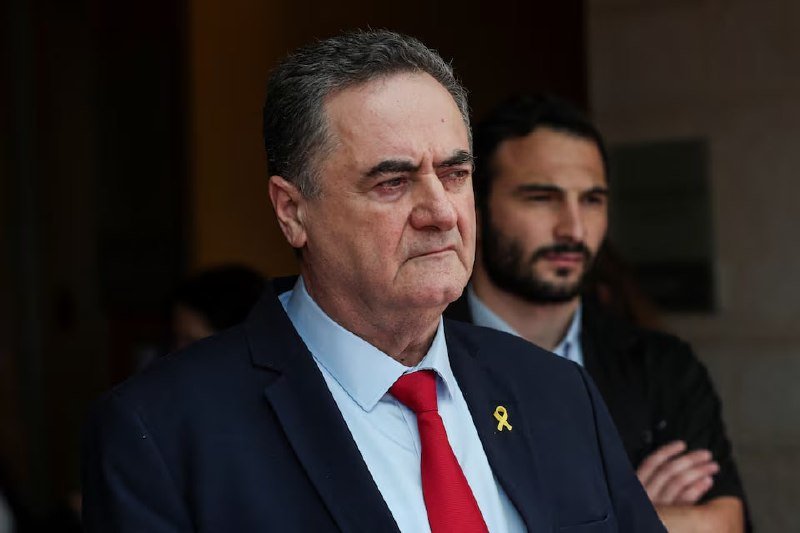
In a burst of public statements carried by Iranian, European and Iranian wire channels within the same hour on 16 June 2026, US President Donald Trump pressed Israeli Prime Minister Benjamin Netanyahu to move faster on Lebanon, framed any prospective Israeli strike on Beirut as compatible with the recently concluded Iran deal, and warned, in unusually blunt terms, that "without me, Israel will not exist." The remarks — relayed by Tasnim, Euronews and Mehr News between 10:05 and 10:15 UTC — amount to the most direct and unfiltered public airing of tensions inside the US–Israeli relationship since the Iran agreement was announced, and they expose how narrow the operating room has become on the Lebanese file.
The substantive content is narrower than the rhetoric. Trump did not threaten to withdraw American support for Israel, did not condition aid, and did not disavow a military option. He told reporters, in comments carried by Iran's Tasnim News, that he had told Israel he did not approve of an attack on Beirut and added the existential line about Israel. He separately told Euronews that "if Israel attacks Lebanon, the deal with Iran will not be violated," drawing a careful line between an Israeli strike on Hezbollah infrastructure in Lebanon and the diplomatic architecture Washington has built with Tehran. And in remarks reported by Iran's Mehr News, he said Netanyahu "should now be more responsible towards Lebanon" and added that he was "not satisfied with the way Israel is dealing with Lebanon and Hezbollah, and they should do this." Read together, the statements are a demand for tempo, not a red line: act, act quickly, and do not let the operation drag the Iran file down with it.
What the three statements actually say
The three wires carry overlapping but not identical material, and the differences matter. Tasnim's English feed quotes the most politically charged line — that there "will be no Israel without me" — and frames it as a rebuke delivered against the backdrop of a Trump comment that he told Israel he did not approve of an attack on Beirut. Euronews packages the same intervention around the conditional carve-out: an Israeli strike on Lebanon would not, in Trump's reading, breach the Iran deal. Mehr News, an Iranian state outlet, reports the more measured instruction to Netanyahu, urging "more responsibility" and dissatisfaction with the pace. The triangulation is itself the story. The administration is signalling, in three different registers and to three different audiences, that the Lebanese front is open and that Israel should use it — but on Washington's clock.
That reading is reinforced by the sequencing. The Iran deal is the structural backdrop against which all three statements are intelligible. Tehran is unlikely to be relaxed about an extended Israeli campaign on its most important non-state ally, even one that targets south Lebanon specifically, and the administration has a strong interest in keeping the diplomatic channel alive. The carve-out Trump offers Israel is therefore not a gift; it is a management problem. Israel is being told, in effect, that the White House will absorb the political cost of a strike, but only if the strike is short, discrete, and does not produce a wider escalation that pulls Iran back into the confrontation.
The Israeli reading
From Jerusalem's vantage point, the same words can be read as either permission or constraint, depending on operational tempo. The Israeli security establishment has for months warned that a window exists to degrade Hezbollah's reconstitution in south Lebanon, and that the longer the delay, the more time Tehran's proxy has to re-establish the precision-rocket and anti-tank capability degraded in the 2024 exchange. Israeli officials have, in private briefings covered by Israeli and Western wires, urged Washington to back a discrete campaign rather than wait for another full-scale flare-up. The Trump statement can be read into that framework: the White House is not opposed to action, only to action that produces a strategic shock.
That reading is the charitable one. The harder reading is that the US president is publicly marking, for the Iranian and Lebanese audiences, the limits of what Israel can do without incurring American displeasure. Telling Israel that an attack on Beirut would not violate the Iran deal is, in the same breath, a signal to Iran that the deal covers more than the letter of the text. The existential line — "without me, Israel will not exist" — sits awkwardly with the carve-out and is the part of the statement that will dominate in Israeli and American domestic coverage. It is also the part least likely to be intended as policy. American presidents have, since at least the Johnson administration, used the language of personal indispensability to manage allied anxiety; it functions as reassurance even when it sounds like threat.
Why the public airing matters
The choice to make these comments on the record, in front of cameras, is unusual. Disagreements between the White House and the Prime Minister's Office on Lebanon have been a fixture of 2026, but they have largely been transmitted through anonymous briefings, leaks to Israeli and American correspondents, and the carefully parsed readouts that follow bilateral calls. Public comments of this kind, in this language, are a different instrument. They tell the Israeli public that the prime minister is being told what to do by a foreign head of state; they tell the Iranian and Lebanese audiences that the United States is not simply a passive supplier of the Israeli deterrent; and they tell domestic political audiences in both countries that the relationship is a working one, not an unconditional one.
For Netanyahu, the political cost is real. An Israeli prime minister whose coalition partners include figures who regard the US president with active suspicion is now being openly instructed, in three languages, to accelerate an operation. For the White House, the cost is the opposite: the administration is choosing visibility over deniability, and is banking that the public framing of an Israeli operation on Lebanon as something Washington shaped and limited will, in the long run, protect the Iran deal more than a quiet understanding would. The bet is that visible management is more durable than private alignment.
What the evidence does and does not show
A note on the source material is warranted. The three Telegram channels — Tasnim's English feed, Euronews, and Mehr News — are the only direct sources for the statements. Two of the three are Iranian state or state-adjacent outlets, and the third is a European broadcaster working off the same on-camera comments. None of the wires cited above carried an independent White House transcript at the time of writing. The exact wording of Trump's remarks therefore reaches us through editorial selection: the lines that travel are the lines that the originating channels chose to transmit, and the framing in each case reflects the editorial priorities of the carrier. A US–Israeli readout, a Reuters or AP wire, or a direct statement from the Prime Minister's Office would tighten the picture considerably; none has been published in the materials available to this publication.
It is also worth saying what the statements do not contain. There is no threat of an aid cut, no announced suspension of arms deliveries, no demand for a ceasefire, and no ultimatum with a clock. The demand is for pace and for proportionality. Whether that posture holds through a real Israeli operation — one that produces Lebanese civilian casualties, an Iranian response, or a Hezbollah rocket barrage into Israeli cities — is the test that the public statements cannot pre-empt. The Lebanese file, more than the Iranian or the Gazan ones, is the front where American and Israeli interests are most exposed to divergence, and where the next seventy-two hours will do more to clarify the relationship than the next seventy-two statements.
This article draws only on Telegram-channel reporting available at the time of publication. A fuller picture will require US, Israeli and Lebanese wire confirmation.
Wire provenance
This editorial synthesis draws on the following public wire/social posts:
- https://t.me/tasnimnews_en
- https://t.me/euronews
- https://t.me/mehrnews
Follow the event.
These dated source records provide context. They do not retrospectively verify this archive article.
Separate what the nuclear watchdog reported from what it could not determine after the June 2025 strikes.