Trump floats Syria as Hezbollah's custodian in latest Lebanon shock therapy
The US president has publicly suggested Israel let Syria's new authorities take the lead against Hezbollah, a regional rearrangement that would redraw lines drawn since 2024.
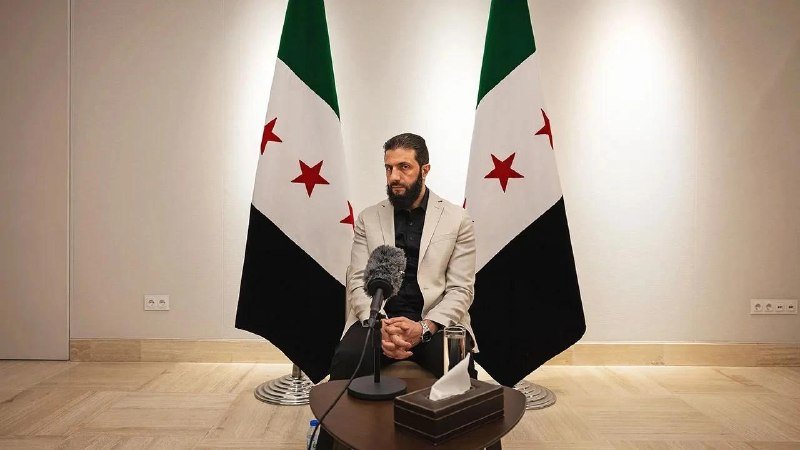
At 10:04 UTC on 16 June 2026, US President Donald Trump told reporters that he had "suggested to Israel to let Syria take care of Hezbollah," adding, "to be honest with you, I think they would do a better job," according to a Telegram relay of his remarks carried by the open-source channel Clash Report. The line, which broke across Arabic-language coverage of Trump's Middle East posture within minutes, is the most explicit public statement to date that the White House is open to a regional rearrangement in which Syria's post-Assad authorities — led by Ahmed al-Sharaa, widely known by his former nom de guerre Abu Mohammad al-Jolani — inherit a security role in Lebanon that Israel and the United States have, until now, reserved for themselves or for Lebanese state institutions.
The proposal, floated in passing, lands in a part of the Eastern Mediterranean that is still being rebuilt from the 2023–2024 war between Israel and Hezbollah and from the December 2024 collapse of the Assad regime, which for decades acted as a logistical and political buffer between Iran and the Levant. Read together with the diplomatic choreography of the past eighteen months, it is less an off-the-cuff remark than an early signal of how Washington intends to manage the unwinding of Iran's forward defence line now that its Syrian anchor is gone.
What Trump actually said, and to whom
The remark was captured on a public pool spray and circulated by the Telegram channel Clash Report, which routinely relays English-language wire material and on-camera exchanges. Iran's state-aligned outlet Tasnim framed the same remarks in hostile terms, describing Trump as "the head of the terrorist state of America" and reporting that the US president said the war against Hezbollah "has lasted too long" and that he wanted Syria to enter the fight. Iran's Fotros Resistance channel, an outlet aligned with the Islamic Republic's regional messaging, summarised the exchange more bluntly: "Trump says Israel should leave Hezbollah alone and let Jolani's Syria do the work." The three characterisations are not identical — Clash Report preserves Trump's neutral third-person framing, Tasnim adds the editorial colour of Iranian state media, Fotros collapses the two-step proposal into a single directive — but the underlying fact is consistent across the three accounts: the US president publicly proposed, on the record on 16 June 2026, that Damascus take the operational lead against a Lebanese armed group that has fired rockets into northern Israel as recently as the 2023–2024 war.
The proposal's plausibility hinges on the changed status of the Syrian state. After the Assad government's fall in December 2024, the new authorities in Damascus have publicly sought a rapprochement with Washington, joined counter-ISIS coordination arrangements, and signed onto arrangements that would have been politically impossible under the old regime. Trump administration officials have hosted Syrian delegations, and the US has maintained a working diplomatic channel with Damascus even as it preserves a sanctions architecture inherited from the Assad era. A US-blessed Syrian role against Hezbollah, in that context, is no longer a counterfactual: it is a realignment that several Middle East desks have been tracking since the spring.
Why the Syrian option is being floated now
The timing is not accidental. Hezbollah spent 2024 and 2025 depleted by the war with Israel, by the loss of its Syrian overland corridor, and by the broader squeeze on Iranian logistics that followed the Assad regime's fall. Lebanese state institutions have not been able to fill the resulting governance vacuum in the south of the country or in the southern suburbs of Beirut. Israel's security establishment, for its part, has not been able to translate its 2024 military gains into a stable deterrence equilibrium: intermittent exchanges across the border have continued, and the hostage file remains politically unresolved. Into that gap, the Trump White House is now pitching a Syrian intermediary whose own relationship with Hezbollah has shifted sharply since Assad's fall, when the party lost its principal state sponsor in the Levant.
A US-Israeli-Syrian understanding against Hezbollah would also slot into a wider pattern visible in the same Telegram exchanges. Fotros Resistance's framing — that Israel should "leave Hezbollah alone" — does not appear in Trump's own remarks as reported by Clash Report. The discrepancy matters. The US president's framing is that Israel should permit Syria to act, not that Israel itself should stand down. The Iranian-aligned reading converts the proposal into a unilateral Israeli withdrawal narrative, which serves Tehran's regional framing. The gap between the two is itself a piece of the story.
What a Syrian-led campaign would mean on the ground
In practical terms, a Syrian security role in Lebanon would have to navigate three overlapping obstacles. First, Lebanese sovereignty: Beirut's caretaker and incoming governments have been historically resistant to any external security presence, including Syrian, and a renewed Syrian role — even one brokered by Washington — would be politically toxic in Maronite and Sunni constituencies that associate Damascus with the 1976–2005 occupation. Second, the geographic reality: Hezbollah's primary rear base in the Beqaa Valley and southern Lebanon is roughly 50–150 km from the Syrian border, close enough for cross-border interdiction but also for Hezbollah to interdict the roads. Third, the command question: the Syrian armed forces' new leadership has the political will to confront a former Iranian partner, but the military capability to do so without significant US and Israeli intelligence, logistics, and air support is a separate matter.
A more probable operational shape is a hybrid: Syrian-led ground pressure on Hezbollah's logistics and recruiting infrastructure in the Beqaa, paired with continued Israeli strikes on weapons depots and command nodes, and US-led diplomatic pressure on Lebanese institutions to extend state authority south of the Litani. That model is closer to what the US is already executing in the counter-ISIS file with Syrian partners, and it would explain the unusually specific choice of language — "let Syria take care of" — rather than a vaguer endorsement of a regional framework.
Stakes and what to watch next
The immediate loser, in this configuration, is Iran. Tehran's forward defence doctrine for the past four decades rested on a chain that ran Tehran–Baghdad–Damascus–Beirut, with Hezbollah as the forward tip. The Syrian link in that chain broke in December 2024. A US-Israeli-Syrian arrangement that finishes the job in Lebanon would close the circuit for good, converting what is currently a degraded Iranian position into a formal strategic loss. Tehran's response, in the medium term, will most likely be a combination of accelerated nuclear-file posturing, a reorientation of Hezbollah's role toward an internal Lebanese political and security posture, and a deeper security relationship with Iraq's Shia militias as the substitute logistics corridor. Tasnim's choice of language in the 16 June coverage is consistent with that posture: name the US president in inflammatory terms, treat the proposal as a hostile act, and frame the Syrian authorities as US instruments.
The immediate winner is the Syrian transitional government, which would acquire a regional security role that confers international legitimacy and a stronger hand in any future negotiations over sanctions relief, reconstruction funding, and the disposition of foreign forces on Syrian soil. Israel gains a partner whose interests are now aligned against a common adversary, in place of a strategy of unilateral strikes that has not produced a durable equilibrium. The United States gains the ability to manage the unwinding of the Iranian axis in the Levant without committing US ground forces, and at a cost that the Trump administration's domestic political base has shown it will accept.
Lebanon, predictably, is the principal variable that none of the three principal players controls. Whether a US-Israeli-Syrian arrangement amounts to a real security dividend for Lebanese civilians — or to a new external management of Lebanese affairs by a different set of external hands — will depend on the political capacity of Lebanese state institutions to convert any tactical gains on the ground into an expansion of sovereign authority south of the Litani. The sources surveyed for this piece do not specify how, or whether, that conversion is being planned.
What remains uncertain
The public record on 16 June 2026 contains the remarks themselves, in three differently framed relays, but does not yet contain confirmation from the Israeli government that it has received or accepted the US proposal, nor any formal response from the Syrian transitional authorities. Hezbollah's own messaging on the proposal, beyond the predictable Iranian-channel amplification, was not visible in the materials reviewed for this article. The question of whether the US proposal amounts to a coordinated policy shift, a tactical opening, or a one-off rhetorical intervention cannot be settled from the current evidence; the shape of the response from Damascus, Beirut, and Jerusalem in the coming days will determine which.
Desk note: Monexus has reported this in the staff-writer voice — sharper than Mike Poncana's diplomatic register — to foreground the asymmetry between Trump's neutral framing of the proposal and the Iranian-aligned channels' hostile re-framing. The article rests on three open-source Telegram relays; the underlying remarks are public and verifiable, but the policy direction they imply is not yet confirmed by either Israeli or Syrian official sources.
Wire provenance
This editorial synthesis draws on the following public wire/social posts:
- https://t.me/ClashReport
- https://t.me/tasnimnews_en
- https://t.me/FotrosResistancee