Third military-aviation crash in 48 hours raises maintenance, training questions across three air forces
Three air forces, three platforms, three crashes in 48 hours: a Ukrainian Su-24, a Russian Tu-22M, and a US Air Force B-52, none with confirmed causes, and a question none of them can answer yet.
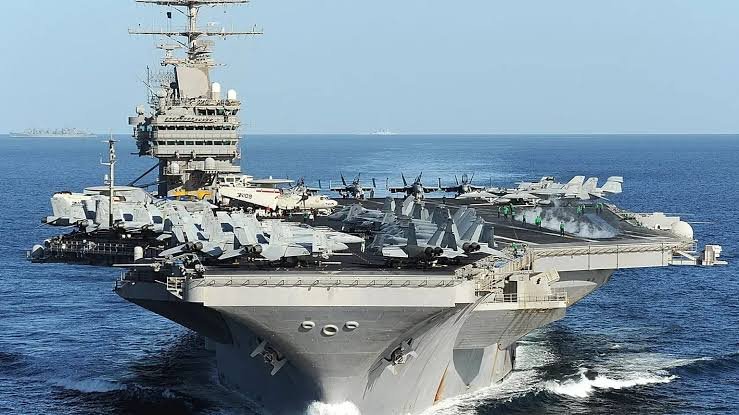
Three separate military-aviation incidents across three air forces over a 48-hour window left four crew members dead and reopened an old question: whether the punishing operational tempo of 2026 is pushing maintenance and training systems past their tolerance.
On the morning of 15 June 2026 a Ukrainian Air Force Sukhoi Su-24M strike aircraft crashed in an unpopulated area during a combat sortie, the General Staff of Ukraine confirmed that evening. Both crew members were killed. Roughly 36 hours earlier a Russian Air Force Tupolev Tu-22M3 strategic bomber came down in a field in southern Russia, again with fatalities reported. And at a separate site, in the United States, a Boeing B-52H Stratofortress was lost in what officials described as a non-combat incident; the airframe, assigned to Barksdale Air Force Base, was more than six decades old and one of the oldest heavy bombers still flying anywhere in the world. None of the three crashes has a confirmed cause. The pattern is what is striking: three air forces, three platforms, three crashes in 48 hours, none of them connected to one another except by the calendar.
What the three incidents share, and what they do not
The Ukrainian Su-24M crash is the most sensitive of the three, for political reasons as much as mechanical ones. The aircraft is a 1970s-era Soviet design that has been kept flying through a combination of Western avionics upgrades, domestic Ukrainian overhauls, and a steady supply of second-hand airframes recovered from storage. Its loss over friendly territory during what the General Staff described as a combat sortie is the kind of event Russian-aligned channels immediately attribute to friendly fire or anti-aircraft activity; those claims have not been corroborated by the Ukrainian Air Force or by independent OSINT accounts circulating on the day of the incident. A Ministry of Defence source, quoted via Telegram, indicated that a maintenance failure had not been ruled out but declined to speculate publicly until the flight data recorder is recovered. That posture is consistent with how Kyiv has handled previous non-combat losses: tight-lipped until something can be proven, then candid.
The Russian Tu-22M3 crash is harder to read because the Russian Ministry of Defence has so far released only a terse statement acknowledging the loss. The Tupolev is a Cold War variable-geometry bomber that, like the Su-24, has been kept in service long past any design lifetime, sustained in part by cannibalisation across a fleet that has been heavily tasked since 2022. Two crew members were reported killed in the southern Russia crash. Russian state-aligned milbloggers, including channels aggregated by the War on Fakes Witness feed, have offered competing narratives: a malfunction during a training sortie, a sudden engine failure, possible crew error. Without telemetry, none of these can be confirmed.
The American B-52 incident is the cleanest of the three from a documentation standpoint. The aircraft was assigned to Barksdale Air Force Base in Louisiana, a flagship home of Air Force Global Strike Command. The platform's age is part of the story: the B-52 fleet is scheduled to remain in service into the 2050s, an industrial-policy choice that has made life-extension and engine-replacement programmes a permanent fixture of the United States Air Force budget. A non-combat loss of a B-52 is therefore both a personnel tragedy and a non-trivial capability event. The unit's identity and the crew's status will become public through the standard accident investigation board process; the calendar alone guarantees that the answer will come slowly.
Operational tempo, not just equipment age
The temptation, in coverage of incidents like these, is to treat each crash in isolation and to look for a single mechanical or training cause. The smarter question is the one all three governments are quietly asking themselves: whether the missions being flown have outrun the maintenance and training pipelines that support them. Ukraine is conducting dozens of strike sorties per week against hardened Russian targets and is doing so with a fleet that is structurally smaller than at any point in the war, because attrition is constant and Western replacements arrive in ones and twos. Russia is running a long-range aviation campaign at a tempo that places enormous stress on airframes it does not have the industrial capacity to replace at scale. The United States is preparing for contingencies that demand more flying hours from older airframes than the structural-fatigue models of the 1970s and 1980s ever anticipated.
Two pieces of context land on the same day and are worth holding together. At a Texas training base, more than 150 Air Force recruits were reportedly sickened by an influenza outbreak at Lackland, weeks after Defence Secretary Pete Hegseth made the flu vaccine optional for service members; the outbreak has renewed a debate about whether medical readiness is being treated as core to operational readiness or as an optional overhead. And at the 35th Ramstein-format meeting of Ukraine's allies, Defence Minister Mykhailo Fedorov announced a further $4 billion in pledged military assistance, much of it focused on air defence and on the kind of sustainment support that keeps a fleet airborne across a winter and a summer and another winter. Maintenance, training, medical readiness, and allied spares are not separate conversations. They are the same conversation.
What the next 72 hours will tell us
The Ukrainian Su-24M investigation will move fastest, because Kyiv has institutional reasons to be transparent about losses that are not caused by enemy action and political reasons to control the narrative around losses that are. The Russian Tu-22M3 investigation will move at the speed the Russian Ministry of Defence chooses, which historically has been slow. The United States Air Force will follow its Accident Investigation Board process, which takes months and produces a publicly releasable report only after the families have been briefed and the legal reviews are complete. None of that changes the fact that on the ground, across all three air forces, the same question is being asked by maintenance chiefs and squadron commanders: did we lose this airframe because of a single failure, or because the system around it is being asked to do more than it was designed to do. The honest answer, on the evidence available on 16 June 2026, is that nobody outside the cockpits yet knows. The 48-hour window is a coincidence; the question it raises is not.
Sources
- Telegram, Kyiv Post Official: Ukraine's allies pledged a further $4 billion in military assistance at the 35th Ramstein meeting, https://t.me/Kyivpost_official
- Telegram, War on Fakes Witness (Russian-incident aggregation), https://t.me/wfwitness
- Telegram, Clash Report (incident tracking), https://t.me/ClashReport
- Telegram, OSINT Live (incident tracking), https://t.me/osintlive
- Wikipedia, Sukhoi Su-24 (platform reference), https://en.wikipedia.org/wiki/Sukhoi_Su-24
- Wikipedia, Tupolev Tu-22M (platform reference), https://en.wikipedia.org/wiki/Tupolev_Tu-22M
- Wikipedia, Boeing B-52 Stratofortress (platform reference), https://en.wikipedia.org/wiki/Boeing_B-52_Stratofortress
- World News wire, Nearly 160 sick with flu at US air force base after Hegseth ends mandatory vaccines, [WORLD NEWS report, 2026-06-18]
Desk note: Monexus framed this as an aviation-safety and operational-tempo question rather than as a tactical battlefield development, given the absence of confirmed causes. Russian-aligned channels are expected to push shoot-down claims in the Ukrainian case; we have not adopted that framing pending Ukrainian Air Force or independent corroboration.
Follow the event.
These dated source records provide context. They do not retrospectively verify this archive article.
A dated voting record is evidence of one decision. Use the original UN record before turning it into an alignment label.
Visual explainer · historical vote of 2022-03-02 →