The $300 Billion Question Nobody Wants to Ask
A draft deal reportedly hands Iran oil waivers and a $300 billion fund. The numbers are too large to ignore and too convenient to verify.
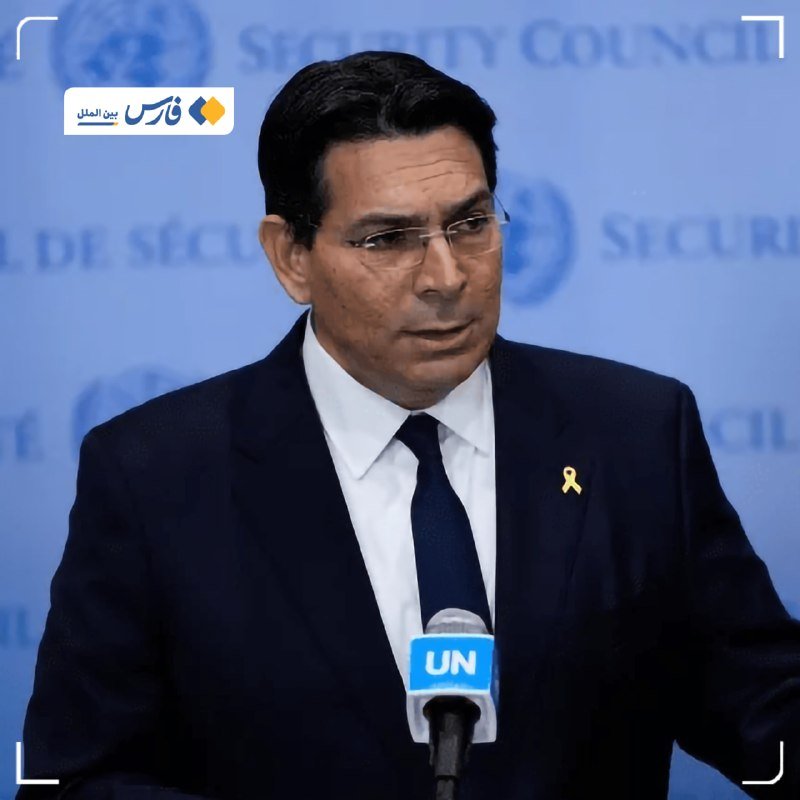
The text of a draft agreement is not yet public. The number being floated — $300 billion, plus oil waivers, plus an undefined path back into the global financial system — is. As of 18:39 UTC on 16 June 2026, that figure is the working assumption inside markets and on prediction platforms, even though no counterparties have signed, no text has been released, and the deal's scope remains a draft.
A prediction market posted the same day asks when the text will be released. Another asks when a deal will be physically signed. These are not idle wagers. They are a candid admission that the negotiating track now matters more than the routine diplomacy surrounding it. The two questions worth asking are what the $300 billion actually buys, and on whose authority it moves.
The shape of the draft
According to a wire summary circulating on 16 June, the framework under discussion would unlock Iranian oil exports through sanction waivers and seed a fund measured in the hundreds of billions of dollars. CryptoBriefing's read of the leak, published at 18:39 UTC, frames it as the most concrete set of terms to reach a wide audience in this cycle. The headline number alone, $300 billion, is larger than the annual foreign-exchange reserves of most middle-income states. It is not a relief payment. It is a structural reinsertion of Iran into the dollar-based energy and financial system that sanctions have spent fifteen years walling off.
The mechanism matters as much as the figure. Oil waivers restore export receipts. A managed fund ostensibly channels them into the domestic economy, with oversight that has not been described. Whether that oversight is multilateral, bilateral, or contractor-driven will determine whether the deal is read in Tehran as sovereignty or as managed dependency dressed in financial language. The leaked outline does not say.
What the market is telling us
Polymarket listed two contracts on 16 June — one for the text release at 08:33 UTC, one for a physical signature at 18:17 UTC. The fact that the contracts exist at all is informative. Prediction markets are blunt instruments; they price what traders think will happen, not what is desirable. Their existence on a single day suggests the platforms' users believe the probability of a signed deal is non-trivial and the probability of public text is non-zero on a near-term horizon. They are also a measure of how thin the official information environment is. When traders feel confident enough to price timing, the people doing the leaking have given them enough to chew on.
A careful reader should note what prediction platforms do not measure: the political durability of any deal in Washington, in Tehran, or in the Gulf states whose oil market share the waivers would directly affect. Contracts answer "when," not "whether it survives."
The view from the Gulf, and from Tehran
The framing in Western wires tends to present sanctions relief as the concession. The structural read is closer to the opposite. Sanctions are the default state; their removal is a return to the pre-2018 trading position. The new element is the fund, which in any normal diplomatic context would be called a reconstruction facility, an investment guarantee, or a sovereign-wealth vehicle. Calling it a $300 billion fund is a way of saying: the United States and its partners are prepared to underwrite the reintegration of an oil exporter of Iran's scale, on terms negotiated outside the normal architecture of the IMF or the World Bank.
The Iranian domestic political read is harder to reconstruct from the available wire. State-aligned outlets will frame any deal that returns foreign exchange as a victory; reformist outlets will read it as a managed surrender if oversight is heavy. Without text, the debate inside Iran is a projection, not a record.
The structural pattern
A draft deal of this size, in a sanctions environment this dense, is a reminder of something the policy discussion tends to forget. The dollar-based financial system is a system. It is not a list of rules. It is a set of permissions, and the principal power the United States exercises over adversaries is the revocation of permissions — correspondent banking, SWIFT access, secondary-sanction risk for any counterparty. The deal under discussion is, in effect, a partial restoration of those permissions, priced at $300 billion.
That is also the dollar's leverage working as designed. The leverage is not theoretical, it is contractual. A waiver is permission to clear oil transactions in dollars. A fund is permission to settle the resulting revenues through monitored channels. The architecture holds. The question is whether the price is right and whether the political will in Washington and Tehran survives a confirmation battle, an Israeli assessment cycle, and a Gulf OPEC recalibration.
What remains genuinely uncertain
The text has not been released. The $300 billion figure has not been confirmed by a named official on the record. The counterparties have not been identified. The waiver mechanism has not been specified. The oversight regime for the fund has not been described. Each of these is a load-bearing detail. Each of them could shift the read of the deal from managed reintegration to something else entirely.
Until the text surfaces, the $300 billion question is, in the literal sense, a question of authority. Who signs, who audits, who controls the keys, and on what timeline. Prediction markets are pricing the announcement. The harder, more durable question is whether the architecture they price can hold for the decade a fund of that size would imply.
This publication is treating the draft as a draft — specific numbers, no signatories, no signature, no public text. The framing will tighten once the actual agreement is on the page.
Wire provenance
This editorial synthesis draws on the following public wire/social posts:
- https://t.me/s/CryptoBriefing