A framework, not a deal: the slow grind of US-Iran diplomacy leaves Tehran's economy waiting
A signed framework in Washington is being sold as progress, but Iranian importers and workshop owners say the binding work — sanctions relief, frozen assets, oil revenues — is still on the runway.
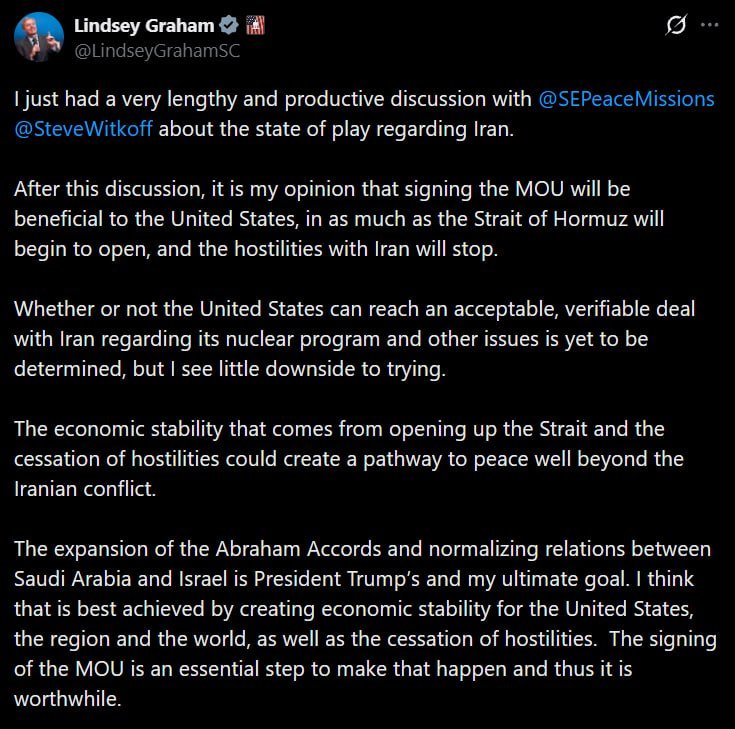
At 04:50 UTC on 16 June 2026, the White House confirmed that US-Iran nuclear talks had formally begun in the wake of a memorandum of understanding signed the previous day. The proposed text, officials stressed in language carried by Al Jazeera's breaking-news wire, is a framework agreement — a shape of a deal, not yet the deal itself. By 05:10 UTC, Reuters was already temperating expectations on the ground: any US-Iran deal may not bring quick relief to the workshops, parts warehouses and import-dependent businesses that have spent the better part of a decade absorbing the cost of the sanctions regime.
The pattern is now familiar. A signing ceremony in a Gulf hotel or a Geneva hotel corridor; a coordinated communications push by senior US officials — including, per Middle East Eye's reporting, a media blitz launched by the vice president on 16 June to sell the agreement to a sceptical domestic audience; a parallel statement from Tehran that the text is acceptable in principle but contingent on reciprocation. The news cycle moves on. Sanctions enforcement, however, does not pause for press conferences. Iranian importers, currency-market traders, and the small and mid-sized industrial firms that keep the country's domestic economy moving have learned to read the gap between announcement and implementation with a jaundiced eye.
What the framework actually is
The memorandum, as described by Al Jazeera's wire on 16 June at 04:50 UTC, is a framework — language both sides reached for precisely because it does not commit either to a final text. It establishes the architecture for negotiations: what topics are on the table, what sequencing the parties accept, and what kind of verification regime would accompany any binding arrangement. It does not, on the public record, lift any measure in force. It does not unlock frozen central-bank assets, does not authorise foreign banks to process Iranian oil receipts, and does not change the operating reality for an auto-parts importer in Tehran or a workshop owner in Isfahan who has to source brake pads and engine-control units through a byzantine chain of intermediaries in third countries.
The vice president's media push, reported by Middle East Eye at 04:35 UTC on 16 June, signals the political weight the US side is putting on the framework. Selling it domestically is a separate negotiation: there are constituencies in Washington that will read any thaw as a concession, and there are constituencies in Jerusalem and Riyadh that read the same thaw through a regional-security lens. The fact that the administration has chosen to deploy its second-highest officeholder on a coordinated communications tour suggests the framework is, at least in part, a public-affairs product as well as a diplomatic instrument.
Why the Iranian side is moving slowly
The Iranian negotiating position has been consistent across the past two administrations: full and verifiable sanctions relief, in exchange for nuclear constraints calibrated to be acceptable to a hardline domestic audience. The framework is, in Tehran's telling, only as good as the relief that follows. The Reuters dispatch of 05:10 UTC is explicit on this point: even if a binding deal is concluded in the coming months, the relief may not be quick. Re-entrenching Iran into the global financial system requires licences, compliance certifications, and a non-trivial amount of trust from European and Asian banks that have spent a decade building legal firewalls against Iranian exposure.
The economic texture on the ground reflects that lag. Auto workshops report chronic parts shortages; the rial has stabilised in managed bands but remains well below its pre-2018 purchasing power; small manufacturers continue to operate under letters of credit that price them out of meaningful competition. The structural problem is not unfamiliar: even when political agreements are reached, the financial plumbing takes quarters, not weeks, to refill.
The counter-narrative: why sceptics in Washington have a point
The sceptical read — prominent in parts of the US Congress and in allied Gulf capitals — is that framework agreements have a history of stalling precisely when the hard operational questions (what is verified, who verifies it, what is the snapback mechanism) move from diplomats to engineers. The 2015 Joint Comprehensive Plan of Action took roughly two years of intensive negotiation to produce a binding text; the present framework appears to compress that timeline substantially, which is either a sign of efficiency or a sign that the difficult issues have been left for later.
There is also a domestic Iranian counter-narrative, frequently surfaced by Iranian state-aligned outlets and quoted in regional coverage, that warns against any agreement that preserves core US sanctions architecture while extracting nuclear concessions. The argument is structural: a partial deal, in this reading, locks Tehran into constraints while leaving the sanctions leverage intact — a worse long-run position than the status quo. That case is not marginal; it is part of the political environment in which Iranian negotiators are operating, and it shapes the speed at which Tehran is willing to sign anything binding.
What hangs in the balance
If the framework matures into a binding text and the relief begins to flow in the second half of 2026, the principal beneficiaries will be Iranian small and medium enterprises, the country's energy-sector service providers, and the regional banks and shipping firms that have spent years working around the sanctions perimeter. The principal losers are likely to be the intermediaries — the brokers, the dual-jurisdiction shipping agents, the cash-intensive trading houses — whose margins are the artefact of a sanctions regime rather than of normal commerce. Regional actors with a stake in the status quo — including parts of the Israeli and Saudi establishments whose security calculations are premised on continued Iranian isolation — will read even a partial deal as a strategic loss and will lobby accordingly.
The structural read is straightforward. A framework that does not change the daily operating reality for an Iranian workshop owner is, in economic terms, indistinguishable from no deal at all. The next inflection point is not the next signing ceremony; it is the first concrete sanctions waiver, the first unfrozen central-bank account, the first European bank that re-opens a documentary-credit line for an Iranian counterparty. Until those arrive — and the Reuters report suggests they will not arrive quickly — the framework is a political artefact, not an economic one.
What remains uncertain
The available reporting does not yet specify the sequencing of verification talks, the precise scope of interim sanctions measures, or the role of regional parties in any next-round negotiation. The framework text itself has not been published in full. The Iranian side has, predictably, read the same text through a different lens than the US side. Until the binding document is on the table and a verifiable timeline is published, every claim about quick relief should be read as political messaging rather than as economic forecast.
This publication treats the framework announcement as a diplomatic event, not yet an economic one; the gap between the two is precisely where Tehran's small businesses currently live.
Wire provenance
This editorial synthesis draws on the following public wire/social posts:
- http://reut.rs/4eu0kT2
- http://reut.rs/4eu0kT2
Follow the event.
These dated source records provide context. They do not retrospectively verify this archive article.
Separate what the nuclear watchdog reported from what it could not determine after the June 2025 strikes.