US and Iran move to unlock Iranian oil sales under Islamabad memorandum
The Wall Street Journal reports the US will let Iran resume oil and fuel sales the moment a memorandum of understanding is signed this week, with carve-outs for banking, shipping and insurance.
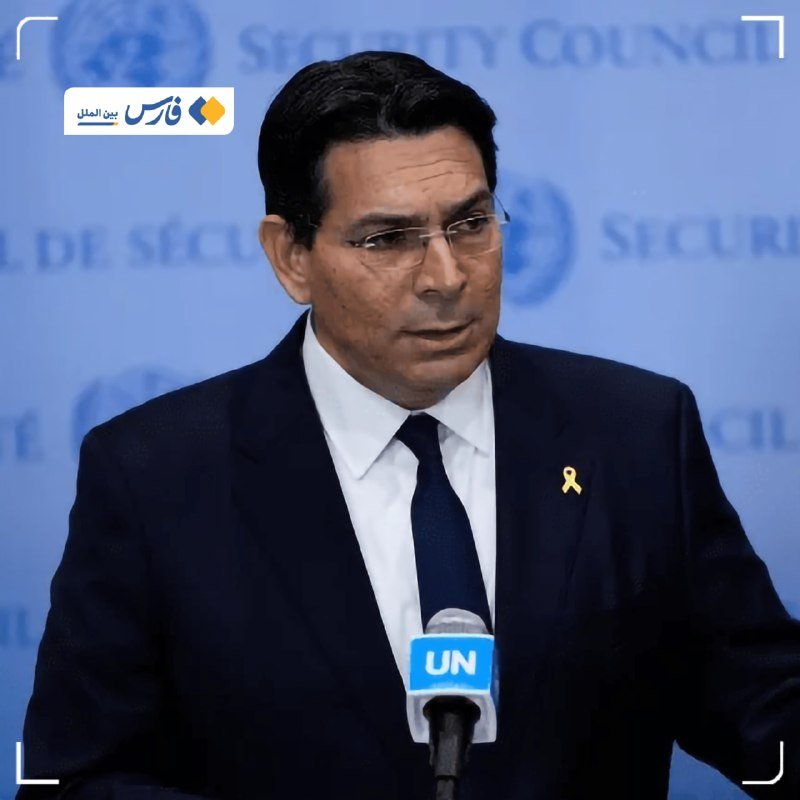
A memorandum of understanding being finalised this week in Islamabad will, on signature, allow Iran to resume oil and fuel sales to foreign buyers with explicit exemptions covering banking, transportation and insurance — the services that have, for years, made ordinary commerce with Tehran almost impossible for non-Chinese buyers. The Wall Street Journal reported the arrangement on 16 June 2026, citing people familiar with the text, and Iranian state outlets Tasnim and Al-Alam carried the wire within minutes, confirming the broad shape of the carve-outs to their own audiences.
The deal is not a peace treaty. It is a calibrated commercial opening, drafted in a third capital under diplomatic cover, that resets how — and through which plumbing — Iranian crude reaches the market. For a sanctions architecture built since 2018 around denying Iran access to those very services, the carve-outs represent a structural shift dressed up as paperwork.
What the text reportedly does
According to the Wall Street Journal report carried by Tasnim, the memorandum permits Iran to begin selling oil and fuel "immediately" once signed, with the exemptions extending to the financial plumbing that sanctions have targeted most aggressively. The text specifically names banking, transportation and insurance as covered services. Tasnim's English wire, the parallel Tasnim Plus account, and Al-Alam Arabic all underscored the banking waiver as the operative concession — a tacit acknowledgement that, without correspondent-banking access, Iranian crude could be loaded on a ship but not paid for in any normal way.
The geographic frame matters. The deal is reportedly being concluded in Islamabad, not Vienna, not Geneva, not Muscat — venues that have hosted previous rounds of Iran-US diplomacy. Pakistan's role as host, with its long border with Iran and its acute need for energy imports of its own, places a regional energy consumer at the centre of a sanctions-relief conversation that has historically been managed by European intermediaries and the IAEA.
The reading from Tehran, and what it leaves out
Tasnim's framing of the wire is consistent: an understanding that delivers immediate, practical relief. The Iranian state outlets emphasised the oil and banking exemptions and did not detail what, if anything, Iran is offering in return — whether the arrangement includes any constraint on nuclear enrichment levels, IAEA inspector access, ballistic-missile activity, or the disposition of the stockpile of near-weapons-grade material that the IAEA has tracked for years. The thread sources do not specify reciprocal Iranian commitments, and the Wall Street Journal report excerpted by Tasnim does not name them either.
That asymmetry is itself the story. Every previous commercial concession to Iran has been wrapped in a reciprocal obligation: enriched-uranium limits, inspector protocols, sunset clauses. A carve-out that covers banking, shipping and insurance but that the available wire coverage does not visibly link to enforceable Iranian commitments is, structurally, a unilateral accommodation — even if, in diplomatic language, it is described as a mutual understanding.
Why the services list is the story
US secondary sanctions work, when they work, by deterring third-country firms from handling Iranian transactions. The deterrence is delivered not by prohibiting a Chinese or Indian refinery from buying Iranian crude, but by threatening any bank that processes the payment, any insurer that underwrites the cargo, any shipping company that carries it, with loss of access to the US financial system. The original 2018 sanctions architecture was deliberately constructed around the dollar side of the trade, not the crude itself.
The Islamabad memorandum, as described in the wire, loosens precisely those choke points. A banking exemption, in particular, signals that dollar-clearing or dollar-equivalent clearing for Iranian oil transactions will be tolerated in some form. That is a different proposition from tolerating the sale of the crude itself. The latter has effectively been happening for years — Chinese refiners have been the principal buyer, often at a steep discount and through intermediaries — but the money has moved through a thin set of channels, mostly in yuan, that have limited the price Tehran can command.
If the exemptions hold in practice, the immediate effect is to widen the buyer pool beyond Chinese state-owned refiners, raise the realised price Iranian barrels command, and reintroduce a degree of normal commercial finance into a trade that has run on a workaround economy.
Stakes, and what remains unverified
The producers who gain most directly are Iran and the regional energy consumers that have, at various points, absorbed Iranian barrels under sanctions — Pakistan itself, which faces chronic power-shortage pressure and borders Iran directly, and several Iraqi and Chinese refiners that have been the most consistent customers of discounted Iranian crude. The set that loses, at least in margin, are the Chinese intermediaries that have captured the price-spread by serving as the de facto payment rail; a normalised banking exemption erodes that spread.
For the broader oil market, the immediate volume effect is likely modest. Iran has been exporting under sanctions at well below its installed capacity, and the additional barrels that can find buyers in a permissive environment are measured in hundreds of thousands of barrels per day at most — meaningful for price formation, but not the kind of step-change a formal nuclear deal would imply. The price effect is more about transparency and discount-erosion than headline volume.
Three things the available sourcing does not yet resolve. First, the full reciprocal text — what Iran is offering and on what timeline — is not in the wires circulated on 16 June. Second, the legal architecture: whether the carve-outs are issued as general licences, as specific waivers, or as a binding side-letter, each of which carries different durability. Third, the position of the US Congress, which has historically attached conditions to any Iran sanctions-relief measure and which can, in some scenarios, compress the shelf life of an executive-branch arrangement.
For now, the news is a text signed in a third country's capital, reported by a US newspaper, carried instantly by Iranian state media, that reopens the financial plumbing of a sanctioned oil trade. Whether the plumbing holds — and what flows through it in return — is the next question worth watching.
Desk note: Monexus is treating the 16 June Wall Street Journal scoop, as distributed through Tasnim and Al-Alam, as the primary wire for this story. The desk is not yet in a position to confirm reciprocal Iranian commitments; those details will be added when they become verifiable from primary sources rather than from any single outlet's framing.
Wire provenance
This editorial synthesis draws on the following public wire/social posts:
- https://t.me/intelslava/72619
- https://t.me/tasnimnews_en
- https://t.me/alalamarabic
- https://t.me/tasnimplus
- https://t.me/JahanTasnim