Vatican and Iranian Dissident Strike a Common Note on the Iran-US Memorandum
Pope Leo XIV publicly welcomed a US-Iran memorandum of understanding announced in mid-June 2026, while Iranian opposition figure Sas Khersi dismissed the deal as insufficient and renewed his vow to bring down the Islamic Republic with or without American backing.
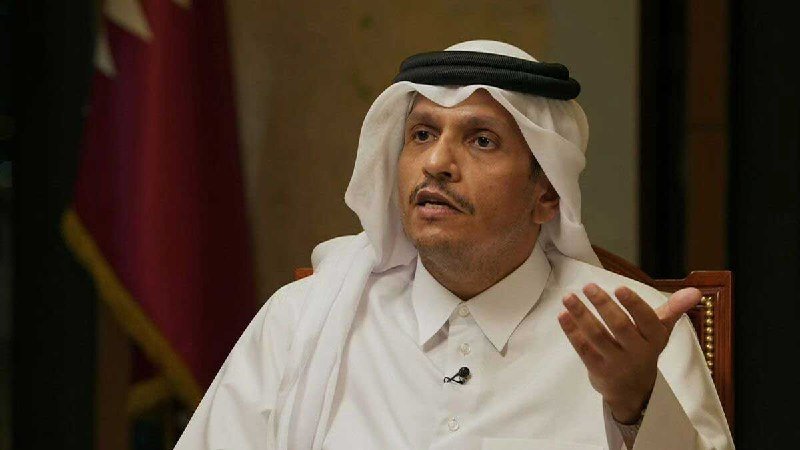
On 16 June 2026, two voices on opposite ends of the political spectrum reached for the same news, a freshly announced memorandum of understanding between the United States and the Islamic Republic of Iran, and reached very different verdicts on what it means. Pope Leo XIV, leader of the world's Catholics, publicly welcomed the agreement as a step toward ending the war, according to Iranian state-affiliated outlets Tasnim and Jahan-Tasnim. Hours later, Iranian opposition figure Sas Khersi used the same backdrop to denounce the deal and declare that he would bring down the Islamic Republic with or without American support.
The two reactions expose the fault line that any Iran deal must sit on: a diplomatic instrument negotiated between two states is read simultaneously as a humanitarian breakthrough and as a betrayal. One reading, codified in the Vatican's blessing, frames the memorandum as an end to bloodshed. The other, voiced by Khersi and a long line of opposition figures, frames it as a soft compromise that grants the Iranian state breathing room. Understanding which reading prevails will shape Tehran's domestic politics, Washington's regional posture, and the texture of dissent in the diaspora for months to come.
What the Vatican actually said
Tasnim News, the Iranian state-affiliated outlet whose English service is carried widely across regional wires, reported on 16 June 2026 that Pope Leo XIV "welcomed the achievement of the memorandum of understanding" between the United States and Iran, characterising it as a move toward ending the war. The Vatican's endorsement carries weight for two reasons. It attaches moral authority to an agreement negotiated under the shadow of an active conflict, and it places the Holy See on the side of de-escalation at a moment when most Western commentary was still parsing the deal's terms.
The Pope's intervention does not bind either government, but it shifts the diplomatic mood music. The Holy See rarely comments on bilateral security agreements in real time, and its decision to do so signals a Vatican judgment that the cost of continued fighting outweighs the cost of the concessions inside the memorandum. The framing Tasnim carried — that the Pope explicitly tied the agreement to ending the war — is significant because it locates the deal inside a humanitarian register rather than a strategic-balancing one.
The Iranian state-aligned coverage is, in this case, doing something specific: amplifying a foreign endorsement of a deal the regime needs to legitimise at home. A Western wire sceptical of Tehran's regional posture might have buried the same quote on page eighteen. Iranian state media placed it on the front of its cycle because the Pope's voice is one of the few internationally credible endorsements a regime in wartime can cite without inviting ridicule.
Khersi's counter-signal
Sas Khersi, an Iranian opposition figure, offered a pointed counter-narrative within hours. Tasnim Plus, the outlet's Persian-language commentary arm, summarised his position on 16 June: he condemned the negotiations and announced that he would overthrow the Islamic Republic with or without the support of America. The remark, packaged in Tasnim Plus's satirical framing — the outlet titled the segment "When Sas Khersi speaks louder than his mouth" — was nevertheless carried as a news item, which tells the reader something about how seriously the Iranian state takes the threat.
The structural point is that opposition figures outside the country have an interest in framing any US-Iran deal as too soft. A memorandum that ends fighting, prevents an escalation, and brings the regime in from the cold makes opposition leverage smaller. A memorandum that hardens the regime's position at home, by contrast, gives exiled dissidents a recruitment argument and a claim on continued Western pressure. Khersi's intervention is therefore not just a moral statement; it is a tactical positioning in the marketplace of opposition voices competing for Western and diaspora attention.
There is a fair counter-read: Khersi and his allies can plausibly argue that the deal rewards the regime without extracting the concessions that would matter most to ordinary Iranians — accountability for security-force conduct, the release of political prisoners, the unfettered operation of independent media. If the memorandum is principally about external de-escalation, the internal argument has a constituency and a moral logic. The Tasnim Plus coverage ridicules the framing rather than refutes it, which is itself a sign that the regime's media apparatus does not want the argument engaged on the merits.
A structural reading in plain prose
What is unfolding is not a single event but a layered negotiation. The state-to-state memorandum is one layer, conducted in technical language about verification, sanctions sequencing, and regional deconfliction. The Vatican-to-world layer is a moral endorsement that confers legitimacy on whatever the first layer produced. The opposition-to-regime layer is a domestic legitimacy contest conducted in front of a diaspora audience that has grown large enough to matter in three or four capitals.
The wire coverage routinely defers to the language of official spokespeople on all three layers, which is why a single Saturday produced both a papal welcome and a Tasnim-titled mockery of an opposition figure: the Iranian state press had every incentive to amplify the Pope and belittle the dissident, and Tasnim's editorial line did exactly that. Western readers who saw only the Pope headline missed the domestic Iranian framing contest happening on the same news cycle.
The structural pattern is familiar. Diplomatic settlements between adversarial great powers are read as a closing of the war but an opening of a political contest. The fighting ends before the legitimacy battle does, and the legitimacy battle is what determines whether the deal holds on the ground two, five, and ten years later.
Stakes and what to watch next
The immediate stakes are concrete. If the memorandum is implemented in the coming weeks, the regional architecture that has held since the last major escalation shifts: sanctions sequencing begins, frozen assets move in controlled tranches, and the Iranian state's external pressure profile is reset. Inside Iran, the regime can use the Pope's endorsement and the technical fact of a deal to claim vindication; opposition figures like Khersi will be forced to argue against a fait accompli.
The contested point that the available coverage does not resolve is the deal's substance. The Tasnim reports do not enumerate the memorandum's specific terms, and the Vatican's statement, as carried, does not reference operational details. The most consequential question — what Iran offered, what Iran received, and what happens if either side is judged to have violated the understanding — remains in the diplomatic cable traffic that public sources have not yet published. Until that record is visible, the Pope's welcome and Khersi's denunciation are both reacting to the existence of an agreement, not to its content.
The honest summary is that the two readings will cohabit for some time. A war-ending framework carries moral weight the Vatican recognises. A regime-survival instrument carries political weight the opposition recognises. Both can be true, and the public record on 16 June 2026 is consistent with both.
This article draws on Persian-language and English-language reporting from Tasnim and Jahan-Tasnim, both Iranian state-affiliated outlets. Where the framing tilts toward legitimising the memorandum, this publication notes that the source set is the same one the Iranian regime uses to amplify the deal. Monexus has not yet confirmed the memorandum's specific terms from a second, non-Iranian outlet, and readers should treat the details as preliminary until the diplomatic text is published.
Wire provenance
This editorial synthesis draws on the following public wire/social posts:
- https://t.me/tasnimnews_en
- https://t.me/tasnimplus
- https://t.me/JahanTasnim