Vozinha at 40: how a 50,000-fan goalkeeper became the face of Cabo Verde's World Cup debut
Cabo Verde's 40-year-old goalkeeper turned a long club career in Portuguese football's lower tiers into the defining performance of a 0-0 draw with Spain in Atlanta. The story behind the numbers says as much about the tournament as it does about him.
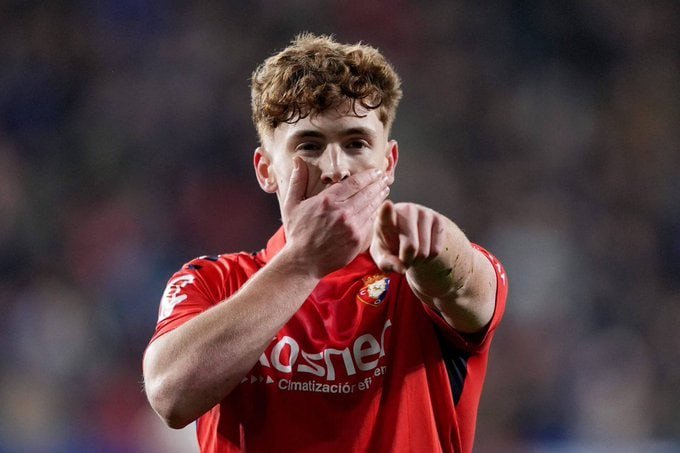
On 15 June 2026, at the Mercedes-Benz Stadium in Atlanta, a 40-year-old goalkeeper who had spent most of his career playing in front of crowds measured in the low thousands earned a share of the marquee match of the World Cup's opening day. Cabo Verde, a nation of roughly 600,000 people making its men's World Cup debut, drew 0-0 with Spain. The clean sheet belonged to Vozinha.
The number that does the work, and the one FIFA and The Athletic both highlighted in the hours that followed, is the contrast. According to FIFA's own post, the man turning out for the Blue Sharks in Atlanta now follows close to 5.3 million accounts across social platforms; the team he represented at the start of his senior career played in front of 50,000. Cabo Verde's football association has, over two decades, been pulled from regional competition into the continental bracket and now, finally, into the World Cup's group stage. Vozinha is the most visible face of that climb, partly because he has been around long enough to remember most of it.
A debut that read like a result, not a fairytale
Cabo Verde's group-stage point was not snuck. Spain, the 2010 world champions and the team widely tipped to top Group E, finished the evening having strung together 2,500 passes since their last World Cup goal, per the match-statistics summary published by BBC Sport on 15 June 2026. The Athletic and ESPN, the latter running its match report on 16 June, both credited Vozinha with the kind of evening that has become a small tradition at World Cups: a goalkeeper's name at the top of the ratings, his captain's armband in pictures from the dressing room, and a country that has never been to this tournament suddenly on every back page.
The framing in the English-language press is straightforward: journeyman keeper, late-career World Cup debut, keeps a clean sheet against one of the favourites. ESPN's own piece, filed at 02:17 UTC on 16 June, leans on the word "journeyman" and calls him "one of the World Cup's most beloved players." The choice of "beloved" rather than "best" matters. It is a tournament where narrative often runs ahead of analysis, and Vozinha's story is the kind that narrative was built for.
The counter-read: this is what Cabo Verde is now
The other read is less sentimental and more uncomfortable for the established powers. A team ranked outside the top 30 in the world holding Spain to a goalless draw in Atlanta is not a freak result to be explained by goalkeeping heroics alone. It is the kind of performance that has been building through the African qualifiers, where Cabo Verde topped a group that included Egypt. The country did not need Vozinha to be a wall; it needed Spain to be ordinary, and Spain, for 90 minutes, were ordinary enough.
The structural read sits somewhere between those two framings. Cabo Verde's football project is small but coherent: a domestic league that survives on diaspora support, a network of Portuguese-speaking talent that lets the squad draw on players raised in Lisbon and Rotterdam, and a federation patient enough to keep a 40-year-old in the team because he is, on the evidence of Atlanta, still the best option. The 5.3 million social followers that FIFA's post cites are a measure of diaspora reach as much as fanbase; a country that size cannot fill a stadium, but it can fill a phone screen. The growth number tells you something about the platform economy of African football as much as it does about Vozinha.
The structural frame, in plain language
Cabo Verde's first World Cup point is one data point in a much larger pattern. The 2026 tournament, expanded to 48 teams and staged across the United States, Canada and Mexico, was designed in part to give smaller football nations a path to the finals that the old 32-team format did not. Whether that expansion is a genuine redistribution of access or a marketing exercise depends on the next three weeks. If debutants such as Cabo Verde pick up the kind of point they picked up in Atlanta, the case for expansion will be easier to make. If they are routed in their next two fixtures, the critics — congestion, fixture pile-up, dilution of quality — will have a cleaner argument.
Vozinha sits awkwardly inside that debate. A 40-year-old goalkeeper is not, on the face of it, evidence of a deep talent pipeline. He is, though, evidence of a system that lets a player develop late, ship out to a mid-table Portuguese side, and come back to the national team a decade later still good enough to keep a clean sheet against Spain. That is a different argument than the usual expansion story, and it is the one his performance actually makes.
Stakes, forward view, and what remains uncertain
Cabo Verde's next fixture, against the third team in Group E, will determine whether Atlanta becomes a launchpad or a one-off. A second point would, by any reasonable projection, put them within touching distance of the knockout rounds. The squad has experience at this level: most of the starting eleven play professionally in Portugal, France or the lower English leagues. Vozinha, who has captained the side through two Africa Cup of Nations campaigns, is the oldest outfield player in the squad by some distance and the only one whose career began in the 2000s.
The numbers worth keeping hold of, beyond the 5.3 million and the 50,000, are 2,500 (Spain's passes since their last World Cup goal, per BBC Sport on 15 June 2026) and zero (goals conceded by Cabo Verde on debut). The rest is story, and the story will write itself over the next ten days.
How Monexus framed this: the wire led on "journeyman keeper stuns Spain." This desk leads on the debut itself — the result, the squad, the federation that got them there — and uses Vozinha as the through-line rather than the headline.
Wire provenance
This editorial synthesis draws on the following public wire/social posts:
- https://t.me/FIFAcom
- https://t.me/TheAthletic