A sprinkler malfunctions in Foxborough and the world hears about it: a note on who owns the 2026 World Cup feed
Two Iranian wire accounts of a halftime sprinkler failure at a Group-stage venue tell you almost everything you need to know about whose eyes are on this tournament, and whose infrastructure is being asked to hold it.
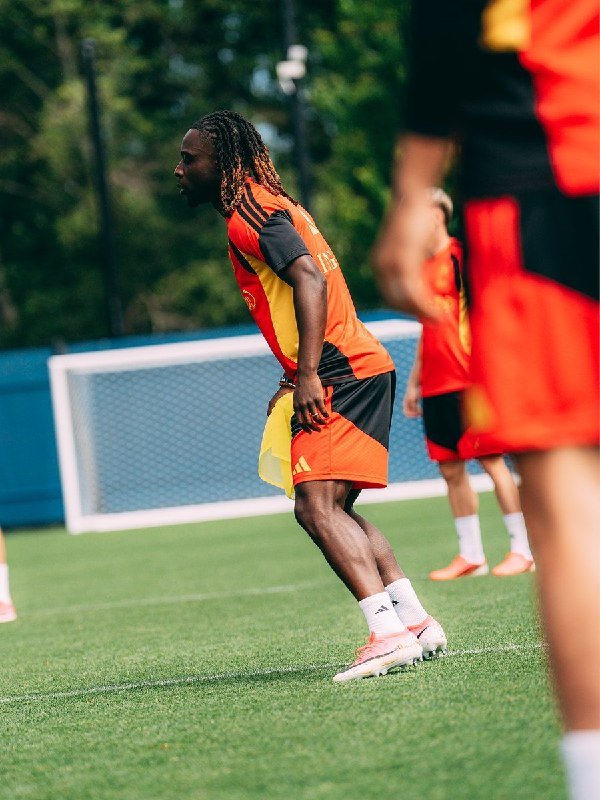
A sprinkler head popped up at the wrong moment on the pitch at the Boston stadium on Tuesday evening, soaked a swathe of turf between the two halves of Norway's group-stage meeting with Iraq, and within minutes two Iranian state-aligned wires — Tasnim and Mehr — had filed the moment to the world. That, more than the 3-1 scoreline, is the story of the 2026 World Cup so far.
The tournament's reach is the point. The match in question — Erling Haaland's brace, Leo Østigård's late header, Iraq's brief equaliser through Ayman Husein — was happening in Foxborough, Massachusetts, thousands of kilometres from Baghdad and Oslo. Iran has no direct sporting stake in the result. And yet the wires that move fastest when anything unusual happens at this tournament are not the Boston Globe or Fox Sports. They are Mehr News and Tasnim, beaming pitchside video to Persian-speaking audiences the moment the equipment stutters.
Who is actually watching this World Cup
The usual assumption is that the major football tournaments are dominated by the broadcasters of the host countries and the federations that grew up with the game. The 2026 edition is testing that. Co-hosted across sixteen cities in the United States, Canada and Mexico, the tournament is being staged in an infrastructure that does not belong to the footballing public — it belongs to NFL franchises, college athletic departments and municipal authorities — and it is being consumed by an audience that does not live in any of those three countries.
The Tasnim and Mehr dispatches from Foxborough on 16 June 2026 — minute-by-minute goal alerts in the 29th, 39th, 43rd and 76th minutes, plus a side-bar on the halftime sprinkler failure and the condition of the turf — are a small case study in how attentively that non-Western audience is reading the tournament. The match was a routine group fixture. The reporting cadence was that of a final.
The subtext is straightforward: for a billion-strong audience that has no Fox, no TUDN and no DAZN bundle, the on-the-wire text feeds from agencies friendly to their own political centres have become the primary view. They are not watching the World Cup. They are reading it.
The pitch is the message
The Foxborough sprinkler is, in itself, embarrassing rather than scandalous. Pitch irrigation systems fail; groundskeepers apologise; play resumes. What is interesting is which failures make the global feed and which do not. A three-minute delay at half-time in a match Norway wins comfortably does not normally clear the editorial bar of a wire service. It cleared the bar at Tasnim and Mehr because the visual — water arcing over a surface the United States has spent a decade telling the world it can stage anything on — is a usable artefact.
The structural point: the 2026 World Cup is the first mega-tournament staged in a country whose soft-power offer to the world is, in 2026, visibly diminished. The 2014 Winter Olympics in Sochi, the 2022 World Cup in Doha and the 2023 Asian Games in Hangzhou were, among other things, infrastructure showcases. This tournament is being asked to do the same work for the United States at a moment when confidence in US-built infrastructure, US-administered venues and US-controlled airspaces is no longer the default it was five years ago. Every misfiring sprinkler, every transport hiccup and every visibly strained stadium is now read for what it says about the country holding the event, not just the event itself.
The Western wire is the wrong lens
The standard read of any World Cup is dictated by the host country's press: which games matter, which refereeing decisions are controversies, which fan zones are good copy. That model assumes the audience is local and the press conference is the unit of coverage. The 2026 tournament breaks that assumption on its first full day of fixtures.
What the Mehr dispatch on the Foxborough sprinkler and the Tasnim minute-by-minute goal log actually tell you is that the editorial centre of gravity of this World Cup is not in Foxborough, not in Dallas, not in New York. It is in whichever capital most needs a usable narrative from the tournament on any given day. On 16 June 2026, the Foxborough pitch was a story in Tehran. The day's other results will be stories elsewhere, the moment a fan, a politician or a pitchside camera hands an editorial line to a wire that wants one.
This is not a complaint. It is the shape of the tournament. The 48-team format, the three-country footprint and the global broadcast distribution have made 2026 the first World Cup whose central nervous system is not the host. The nervous system is the set of national press corps that can reach a global audience in their own language faster than FIFA's own channels can.
The stakes for everyone else
For FIFA, the operational question is unchanged: can the venues hold up. For the United States, the question is reputational — every visible wobble gets logged by a press that has not historically covered American infrastructure with any sympathy. For non-Western footballing publics, the question is the one the Mehr and Tasnim feeds implicitly answer: this World Cup is being staged for us to read, as much as for the host to perform. The story of the tournament will be the gap between what the stadiums are built to say and what the wires report them saying.
The sprinkler at Foxborough did not, in the end, delay play long enough to matter. The question worth asking is why a broken irrigation head in Massachusetts on a Tuesday evening, in a match between Norway and Iraq, was the day's most-shared piece of pitchside footage across the Persian-language internet. The answer is that the 2026 World Cup is the first one whose periphery is the story.
— Monexus News framed this through the editorial centre-of-gravity question — who is doing the reading of the tournament — rather than the host-country press default.
Wire provenance
This editorial synthesis draws on the following public wire/social posts:
- https://t.me/tasnimnews_en/
- https://t.me/tasnimnews_en/
- https://t.me/tasnimnews_en/
- https://t.me/tasnimnews_en/
- https://t.me/tasnimnews_en/
- https://t.me/mehrnews
- https://t.me/mehrnews